

Diving accessories are the layer of equipment that rarely gets attention until something goes wrong. A clip that jams at depth, a reel that tangles mid-dive, a writing slate that is left on the boat — each of these small failures disrupts a dive in ways that better-chosen gear would have prevented. This section covers the practical hardware that experienced divers carry as a matter of habit: clips, retractors, reels, spools, writing slates, dry boxes, logbooks, and a range of signaling and utility tools.
-
Others (12)
-
Clips, retractors (28)
-
Reels, spools (8)
-
Writing slates (3)
-
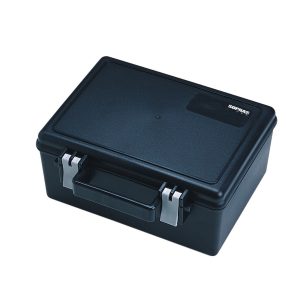
Dry boxes (4)
-
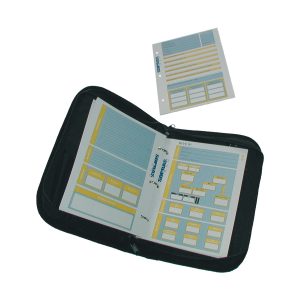
Logbooks etc. (2)
The Role of Small Hardware in a Complete Dive Setup
Primary dive gear — regulators, BCDs, masks — draws most of the attention when a diver is building or upgrading their kit. Accessories tend to be purchased reactively, often after a specific need makes itself obvious underwater. That approach works, but it tends to produce a collection of mismatched items that were chosen for availability rather than function. A more deliberate approach starts with understanding what each accessory category actually does and where it fits in a typical dive configuration.
Clips, Retractors
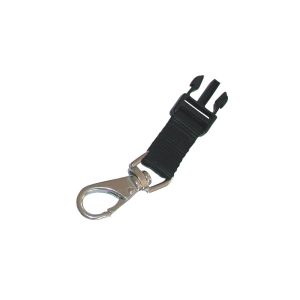
A large range of clips and retractors in aluminium, stainless steel, bronze, and nylon — covering standard snap links, side-opening spring clips, coil lanyards, and retractors with or without locking mechanisms. Used for attaching instruments, torches, and other accessories to a BCD or harness.
Reels, Spools
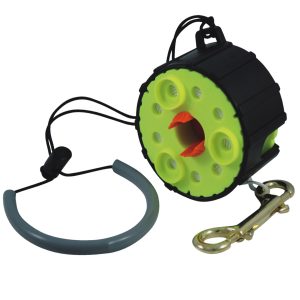
Finger spools and full-size reels in plastic, aluminium, and stainless steel for laying guideline in wrecks, caves, and low-visibility environments. Includes line sold separately in PES and PAD constructions.
Writing Slates
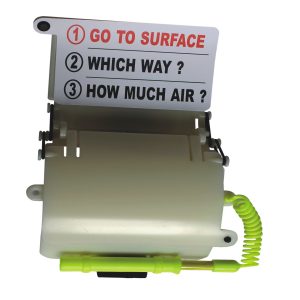
Wrist and hand-held slates for underwater note-taking and communication. Used both for dive planning reference and for conveying information to a buddy when hand signals are insufficient.
Dry Boxes
Sealed waterproof containers for protecting items that cannot get wet — car keys, phones, documents, or small valuables. Available in multiple sizes with secure locking closures.
Logbooks etc.
Dive logbooks for recording dive data including depth, bottom time, gas consumption, conditions, and personal notes. A consistent log is also required documentation for certain certification upgrades and dive site access.
Others
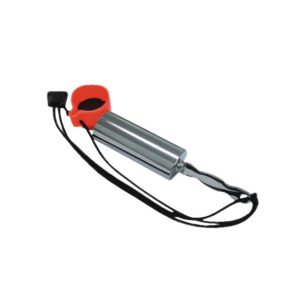
Signaling devices, multifunction tools, pointers, hooks, and other single-purpose items that do not belong to a larger category. Includes the Shaker, Tank banger, Whistle, Reef hook, and a range of dive tools from simple hex key sets to the 8in1 Multifunction dive tool.
Clip and Attachment Systems
A diving clip or carabiner performs a simple mechanical function — connecting two points — but the conditions under which it needs to function make material selection and gate mechanism important. Stainless steel clips such as the Inox spring clip with side opening handle saltwater exposure without corroding, while the gate geometry of a side-opening design allows single-handed operation even with thick neoprene gloves. Aluminium clips like the Aluminium spring 50 mm offer a weight reduction that matters when multiple clips are carried. Bronze spring clips with pulley are useful where the clip also needs to run along a line or webbing strap rather than remain fixed.
Retractors serve a different purpose from static clips. A retractor keeps an instrument or torch attached to the diver via a spring-loaded cord that extends when the item is in use and retracts when released. The standard Retractor covers most recreational use cases, while the Retractor with stop adds a mechanical pause function that holds the cord at a chosen length — useful for instruments that need to remain at reading distance for extended periods. The Retractor with lock provides a positive lock-off for situations where any cord movement would be disruptive. The Quick release coil lanyard takes a different approach: a coiled elastic cord with a quick-release buckle, suited for cameras or torches where complete detachment may sometimes be required.
Signaling and Communication Tools
Underwater communication between divers relies on hand signals for most standard exchanges, but situations arise where hand signals fail — low visibility, distance, or the need to attract attention immediately. A tank banger produces a sharp percussive noise by striking the cylinder, effective at short range in clear water. The Shaker creates a rattling sound through a sealed housing and can be clipped to a D-ring for ready access. The Rattle with pointer combines acoustic signaling with a directional pointer, reducing the number of items a diver needs to carry. For surface signaling, a Whistle is compact and provides an audible alert that carries further than voice over breaking waves.
Pointers and underwater sticks serve partly as communication tools — pointing out a subject to a buddy without touching it — and partly as practical probes for inspecting crevices or moving debris. The Pointer in colours is available in several colours for visibility against different backgrounds. The Reef hook and Hook for jonline are used in current diving: the reef hook attaches the diver to a stable substrate, allowing them to remain stationary in a strong current without continuous finning or damaging coral with their hands.
What to Look For
- Material compatibility with your dive environment. Stainless steel and high-grade aluminium alloys resist saltwater corrosion reliably over repeated dives. Cheaper steel will show surface rust within a season of salt use. Nylon components are corrosion-free but have lower load ratings and can become brittle at low temperatures over years of use.
- Gate mechanism and glove operability. Test any clip or retractor attachment mechanism while wearing the gloves you actually dive with. A side-opening gate, a thumb-operated lever, or a large-format gate opening all reduce the hand strength and dexterity required. Standard carabiner-style gates that require pinching can be difficult to operate in 5 mm or 7 mm gloves.
- Line capacity and material for reels and spools. The choice between a finger spool and a full-size reel depends on intended use. Spools in the 15–50 m range cover most recreational wreck and cavern penetrations; longer reels are needed for cave diving where runs can extend considerably further. Line diameter and construction — PAD braid versus standard PES — affects abrasion resistance and how the line handles under tension.
- Dry box seal quality and rated depth. Not all waterproof containers are rated to dive depths. A box adequate for storing keys on a boat deck may not maintain its seal at 30 m. Check the IP rating or manufacturer depth specification before relying on a dry box at depth. Latch design also matters — a box that opens easily on the surface may still open easily if knocked against equipment underwater.
- Signaling device accessibility. A tank banger or whistle that is clipped inside a BCD pocket provides no benefit in an emergency if accessing it requires both hands and significant time. Signaling devices should be positioned where they can be deployed with one hand in under five seconds.
Maintenance and Care
The most consistent maintenance step for all metal diving accessories is a thorough freshwater rinse after every salt dive. Stainless steel and aluminium are corrosion-resistant, not corrosion-proof — salt deposits that dry in gate mechanisms, pivot points, and spring housings accelerate wear and eventually cause seizure. Soak clips and retractors in fresh water for several minutes before rinsing to allow salt to dissolve from internal cavities rather than just from the surface. For retractors, extend the cord fully during the soak so the internal spring mechanism and cord guide are also flushed.
Reels and spools should be rinsed with the line fully paid out when possible, or at minimum cycled through extension and retraction under running fresh water. Line absorbs salt and will stiffen over time if not rinsed properly. After rinsing, allow spools to dry in a position where water can drain from the spool body — storing them sealed while still wet encourages mildew in braided line. Dry boxes should be opened after each dive, rinsed inside and out, and allowed to dry with the lid ajar before closing for storage. Check the O-ring seal periodically for deformation or debris, and apply a thin film of silicone grease to maintain its compression set.
FAQ
What is the difference between a retractor and a lanyard?
A retractor uses an internal spring mechanism to automatically retract a cord when the attached item is released, keeping the item close to the body without dangling. A lanyard is a fixed-length cord with no retraction — it tethers an item at a set distance and does nothing when released. Retractors are better for instruments and torches used frequently during a dive; lanyards are simpler and lighter for items that need only basic loss prevention without active cord management.
When should I use a spool versus a full reel?
A finger spool is compact, lightweight, and appropriate for most recreational penetration diving — typically runs up to 50 m in cavern or shallow wreck environments. A full reel provides larger line capacity and often a better handle for managing longer runs in cave diving or when laying a primary guideline across a significant distance. The Plastic reel with auto stop 50 m is a middle-ground option that combines moderate capacity with a locking mechanism that prevents uncontrolled line pay-out. If you are diving in open water and carrying a spool primarily as a safety measure for a delayed surface marker, a compact spool is sufficient.
Are writing slates useful for divers who know standard hand signals?
Hand signals cover routine communication effectively, but slates remain useful in several specific situations: passing information that has no standard signal equivalent (a compass bearing, a specific depth, a time), communicating with newly certified divers who may not recognise all signals, and underwater photography or videography where a subject needs precise direction. Wrist slates are the most practical format since they leave both hands free for equipment management while remaining readable without detaching from the diver.
What should I store in a dry box versus leaving in a BCD pocket?
BCD pockets are not waterproof — they are open mesh or zippered fabric compartments that flood on descent. Any item that cannot tolerate full immersion — car or boat keys, a phone, a document, a hearing aid, cash — needs a sealed dry box. Items that are themselves waterproof or inherently unaffected by water, such as a slate, a clip, or a surface marker, can go in a pocket without concern. The Dry box MEDIUM and similar sealed containers are also useful for fragile items like prescription dive computer sensors or medication that should not be exposed to saltwater regardless of their nominal water resistance.
How should I choose between the different multifunction dive tools?
The choice depends primarily on what maintenance tasks you perform yourself. The Hex keys multifunction tool covers the most common fastener types found on regulators, BCDs, and accessories — useful if you do field adjustments or basic servicing. The Dive tool and 8in1 Multifunction dive tool add functions such as a wrench, screwdrivers, and a bottle opener, which broadens their utility both underwater and at the dive site. For most recreational divers, a basic multifunction tool with the correct hex key sizes for their specific equipment is more practical than carrying the most comprehensive option available.