

Showing all 4 results
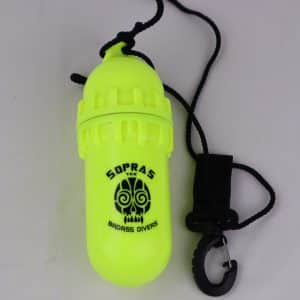
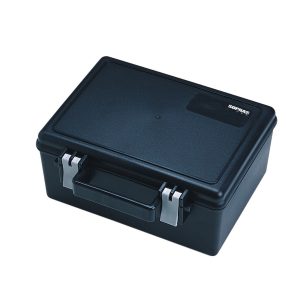
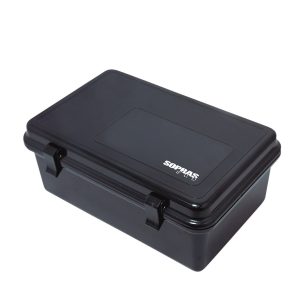
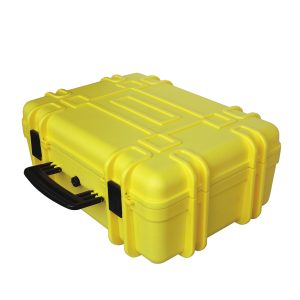
Every dive site involves a transition between water and land, and during that transition, certain items must stay completely dry regardless of what happens around them. Dry boxes provide a sealed, rigid enclosure for valuables, documents, keys, and sensitive electronics that cannot be left unprotected on a dive boat or beach. The range here covers four sizes from the compact extra small to the Heavy duty dry box — a substantially built option designed for professional or demanding expedition use.
Why Rigid Dry Boxes Outperform Soft Waterproof Cases
Waterproof bags and roll-top dry sacks provide splash and immersion resistance for items stored on the surface, but they have two weaknesses: they can be punctured by sharp objects, and the seal integrity depends on correct user technique at every closure. A rigid dry box with an O-ring sealed lid solves both problems. The hard polypropylene or ABS shell resists puncture and crushing, protecting contents against the mechanical impacts common on dive boats — equipment dropped on a bench, gear stacked for transport, weight belts carelessly placed. The O-ring seal provides a consistent, user-independent waterproof closure that does not depend on rolling technique or zipper alignment.
The four models in this category — Dry box extra small, Dry box small, Dry box medium, and Heavy duty dry box — cover a range from a small key-and-card enclosure to a robust expedition-rated case. Each has a latched lid with a perimeter O-ring seal. The Heavy duty dry box represents a different construction standard from the three smaller models: a reinforced shell with heavy-duty latches and a thicker O-ring groove, intended for repeated use in demanding conditions where the box will be subjected to pressure changes, significant temperature variation, or mechanical stress.
Selecting the Right Size
The Dry box extra small is adequate for a car key, a credit card, and a small amount of cash — the essential items most divers need to secure before entering the water. Its compact dimensions allow it to fit in a BCD pocket or be clipped to D-ring webbing without adding meaningful bulk. The Dry box small adds sufficient internal volume for a slightly larger key fob, a folded document, or a small mobile phone, while remaining easy to carry. The Dry box medium handles a standard smartphone, multiple documents, or small medication items that must remain dry. The Heavy duty dry box is in a different size category entirely — designed more for boat-side storage of professional equipment, documents, or valuables than for personal carry during a dive.
What to Look For
- O-ring condition and groove design. The waterproof seal depends entirely on the O-ring maintaining correct compression against a clean groove. Inspect the O-ring before each use — look for deformation, cracking, debris on the seating surface, or any sign that the groove has been damaged. A single piece of sand in the O-ring groove is sufficient to compromise the seal. Replacement O-rings should be available for any dry box used regularly.
- Latch mechanism security. A dry box that opens under lateral pressure from other equipment provides no protection. Test the latch by pressing on the lid from various angles before trusting the box with important items. The Heavy duty dry box uses a more robust latch design than the smaller consumer-grade models, which is a meaningful difference in environments where the box will be compressed or knocked.
- Internal dimensions versus stated external size. Shell thickness reduces usable internal volume, particularly in smaller boxes where wall thickness is proportionally significant. Measure the actual items you need to protect and compare against internal dimensions rather than external box size.
- Attachment point availability. A dry box carried during a dive should be attachable to the BCD via a clip or webbing loop rather than loose in a pocket. Check whether the box has an integrated lanyard hole or loop. A box that falls from a pocket at depth is unrecoverable in most situations.
- Temperature range and pressure rating. Standard ABS and polypropylene dry boxes perform adequately across recreational diving temperatures and depths. If the box will be exposed to significant pressure — carried to depths beyond 40 m, or subjected to the pressure cycling of repeated technical dives — verify the rated depth from the manufacturer. The Heavy duty dry box is the appropriate choice for demanding applications.
Maintenance and Care
After each dive, open the dry box, rinse the interior and exterior with fresh water, and allow it to dry completely before closing for storage. Storing a sealed box with residual moisture inside encourages mildew growth on any organic material and can cause corrosion on metal items placed inside. The O-ring should be removed from its groove periodically, cleaned with fresh water, dried, and then lightly lubricated with a silicone-based grease before reinserting. Do not use petroleum-based lubricants — they degrade nitrile and EPDM rubber over time. Inspect the O-ring groove for salt crystal buildup, which can be dislodged with a soft brush before the seal is replaced. The latch mechanism benefits from an occasional rinse with the lid open to flush salt from the pivot points.
FAQ
Can I take a dry box underwater?
The smaller dry boxes — extra small, small, and medium — are designed primarily for surface protection and transport rather than as dive-rated pressure vessels. They will resist incidental water exposure and splashing without difficulty, but their depth rating for sustained submersion should be checked against the manufacturer’s specification before carrying them underwater. The Heavy duty dry box has a more robust construction that handles pressure exposure better, but verify the rated depth before use at significant depths.
What items are suitable for storage in a dry box?
Any item that cannot tolerate salt water exposure belongs in a dry box: vehicle keys including electronic key fobs, smartphones, medication, hearing aids, passports and travel documents, cash, and small electronic accessories. Items that are already waterproof or that are not damaged by water — a spare mask strap, a clip, a pencil — do not need dry box protection and are better stored in an accessible BCD pocket.
How do I test whether my dry box seal is still working?
Place a dry paper towel inside the closed box and submerge it in a bucket of fresh water for several minutes. Remove the box, open it, and check the towel. Any moisture indicates a seal failure. Before performing this test, inspect the O-ring visually for damage and ensure the groove is clean. If the test reveals water ingress despite a clean, visually intact O-ring, the O-ring has likely lost its compression set and should be replaced.
What is the difference between the standard dry boxes and the Heavy duty dry box?
The extra small, small, and medium dry boxes use a standard consumer-grade ABS or polypropylene shell construction with a single-latch closure and a perimeter O-ring. They are adequate for recreational diving conditions — boat use, beach storage, incidental splash protection. The Heavy duty dry box uses a reinforced shell with multiple heavy-duty latches, a thicker O-ring, and a construction standard designed for professional field use, repeated submersion, and mechanical stress. The price difference reflects a substantially different product, not just a larger version of the same box.
Can I replace the O-ring on my dry box myself?
Yes. O-rings in dry boxes are standard cross-section rings in a fixed diameter that matches the lid groove. Take the original O-ring to a diving shop or hardware supplier and match the inner diameter and cross-section thickness precisely — a slightly undersized or oversized O-ring will not seal correctly even if it fits in the groove. Clean the groove thoroughly before fitting the replacement, and apply a thin coat of silicone grease to the new O-ring before seating it. Test the seal with the paper towel method before trusting the box with valuable items.