

Showing all 8 results
A diving reel or spool is essential equipment for any diver entering an overhead environment — wreck penetrations, cavern zones, cave systems — and a practical tool for open-water divers who deploy surface marker buoys from depth. The difference between a reel and a spool is primarily one of capacity and handle design: spools are compact, finger-held, and suited to shorter runs, while full reels carry more line and include a grip handle for managing tension over extended distances.
You can find more spools and reels here.
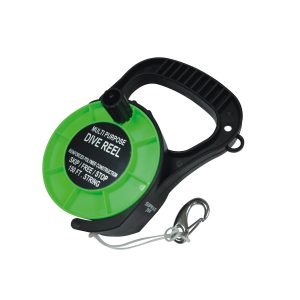
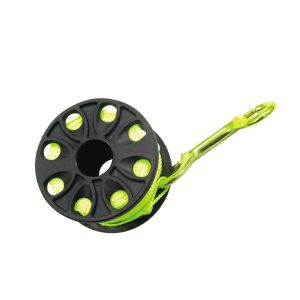
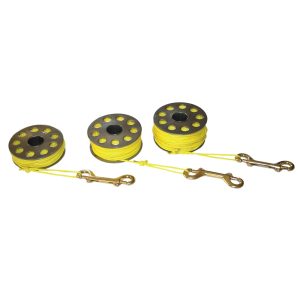
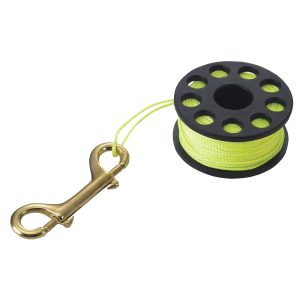
Reels and Spools in Overhead and Open Water Diving
In overhead environment diving — whether recreational wreck penetration or cave exploration — a guideline is not optional. It is the physical thread that connects the diver to the exit when visibility drops to zero due to silt disturbance. A spool or reel carries this line, pays it out as the diver moves inward, and allows controlled recovery on the return. The choice of reel type, line diameter, and construction needs to match the actual diving being done rather than the most demanding scenario imaginable.
In open water, a spool serves a different function: deploying a delayed surface marker buoy (DSMB) from depth. The diver inflates the SMB, feeds line from the spool as the buoy ascends, and maintains tension to signal position to the surface team during the ascent. Here, compact size and tangle resistance matter more than line capacity.
Spools: Finger Design and Materials
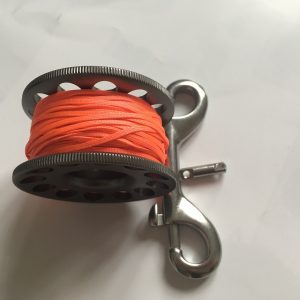
A finger spool is held between two fingers during deployment, with the line wrapping around a central barrel and the diver’s hand providing the drag and tension control. The anatomic Spool in its various sizes and the Standard spool cover the essential range for recreational use. The Stainless steel spool uses a 316-grade stainless body that resists corrosion in saltwater reliably over years of use and can accept significant line tension without deforming. The Alu spool 15, 30 or 50 m offers aluminium construction in three line capacities — the 15 m version for SMB work, 30 m and 50 m for cavern and light penetration diving.
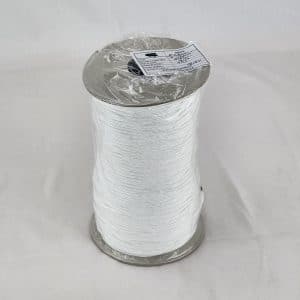
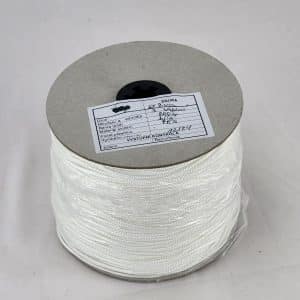
Line selection matters as much as spool selection. The Line PES 2mm white uses a polyester (PES) braid that resists UV degradation and maintains flexibility across a wide temperature range. The Line 2.6mm PAD white uses a polypropylene/polyamide blend with greater diameter, suitable where abrasion resistance is a priority — heavy wreck structure with sharp edges degrades thinner line faster than anticipated. Both are sold by the spool and can be used to replace worn line on existing reels or to load a new spool to a specific capacity.
Full Reels: Capacity and Auto-Stop Mechanisms
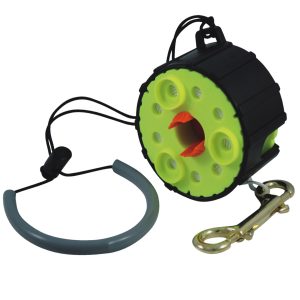
The Plastic reel with auto stop 50 m/165 ft is a full-size reel with a handle grip, a line tensioner, and an automatic stop mechanism that locks the spool against uncontrolled pay-out when the grip is released. The Anatomic reel uses an ergonomically shaped body that allows secure one-handed operation and reduces hand fatigue on longer sessions. The distinction between a 50 m capacity reel and the spools in the same capacity range is largely ergonomic: the reel handle allows better tension control when laying a primary line along a complex wreck route, whereas a finger spool becomes tiring to manage over the same distance.
What to Look For
- Line capacity relative to your actual dive profile. A 15 m spool is sufficient for DSMB deployment and short penetrations. Cavern dives typically use the rule that total penetration distance should not exceed one-third of the available line, meaning a 30 m spool supports a maximum 10 m penetration run. Assess the sites you actually dive before buying the longest available option — unused capacity adds bulk without benefit.
- Body material and its effect on buoyancy. Stainless steel spools are slightly negatively buoyant; aluminium spools are close to neutral; plastic reels are generally slightly positive. In a backmount configuration, a negatively buoyant spool clipped to the lower part of the BCD contributes to good trim without noticeable effect. In sidemount or when a diver carries multiple spools, cumulative buoyancy differences become more significant.
- Auto-stop or manual control. Auto-stop reels lock against reverse rotation, which prevents line from snarling back onto the reel during retrieval. For newer penetration divers, this is a useful safeguard. More experienced divers often prefer full manual control because it allows deliberate slack to be paid out when navigating around an obstacle. Consider your experience level and the complexity of the environments you are entering.
- Line diameter and abrasion site. Thinner line — 1.5–2 mm PES — is easier to manage on a compact spool and adequate for most conditions. In wreck environments with sharp metal edges, corroded fittings, or heavy traffic from other divers, 2.6 mm PAD line provides significantly better abrasion resistance. The load rating of the line should also be considered if the line will be used as a pull-through in a restriction.
- Ease of line replacement and compatibility. Choose a spool design where the line anchor point is accessible and the core diameter accepts standard line. Some spool designs make it difficult to attach new line securely, which creates a failure point at the anchor.
Maintenance and Care
Rinse spools and reels in fresh water after each salt dive. Ideally, pay out a significant portion of the line before immersing in rinse water — salt that has dried into a braided line cannot be removed by rinsing the outside of a tightly wound spool. After rinsing, allow the reel to dry with line paid out rather than wound; braid that is stored wet and compressed retains moisture and begins to degrade from the inside. Stainless components need no lubrication but benefit from an inspection of the axle bearing or pivot point for salt buildup. Plastic reel bodies can be cleaned with a soft brush to remove sediment from crevices around the line guide. Replace line at the first sign of surface wear — an abraded or discoloured section has reduced load capacity and should not be trusted as a primary penetration guideline.
FAQ
What is the difference between a reel and a spool?
A spool is a compact cylinder held between the fingers, relying on hand friction to control tension during deployment. A reel is a larger device with a handle, axle, and often a line management mechanism such as an auto-stop or tensioner. Spools are lighter and easier to carry, making them preferable for DSMB work and short penetrations. Reels are better for longer penetrations or cave diving where precise line laying and tension management over extended runs is required.
How much line do I need for wreck penetration diving?
The standard guideline for recreational wreck penetration is to penetrate no further than one-third of your total available gas, and to carry sufficient line to cover the entire penetration distance plus a safety margin. A 30 m spool allows a 10 m penetration run under this rule; a 50 m reel extends the possible range to approximately 16–17 m. Cavern diving certification courses specify maximum distances as part of the training — the line capacity needed follows from the site parameters, not the other way around.
Can the same spool be used for both DSMB deployment and penetration diving?
Yes, a single spool can serve both functions, but there are practical trade-offs. A spool used for DSMB deployment is typically loaded with 15–20 m of line, which limits its use as a penetration guideline. A 50 m spool loaded for penetration can be used for DSMB deployment, but its larger size and weight make it less convenient on a purely open-water dive. Many divers carry a dedicated compact spool for DSMB work and a separate penetration reel or spool for overhead environments.
What type of line is best for cave or wreck diving?
For cave diving, the standard is a 2 mm or larger white or high-visibility braided nylon or polyester line that remains readable even in low visibility and does not stretch significantly under load. The Line PES 2mm white meets these requirements for most cave and cavern applications. In wrecks with exposed metalwork, the 2.6 mm PAD line provides better abrasion resistance. Avoid monofilament line, which stretches unpredictably, is difficult to see in low visibility, and does not hold its position on a guideline arrow or cookie as reliably as braided construction.
How do I attach new line to a spool?
Most spools and reels have a slot, hole, or anchor peg on the barrel where the line is secured before winding. Thread the end of the line through or around the anchor point and tie a secure knot — an overhand knot backed by a half hitch is standard. Pull tension on the line to confirm the knot seats against the anchor before winding the line under tension onto the barrel. Loosely wound line tends to tangle during deployment; winding under light tension produces a compact, manageable load.