

Diving bags cover three functional requirements: transporting complete equipment sets to and from the dive site, protecting wet and dry gear during transit, and organising smaller items at the surface. The range is divided into three types — big travel bags for complete equipment transport including fins and BCDs, waterproof bags with sealed construction for wet gear and surface use in the splash zone, and other bags covering mesh gear bags, snorkelling bags, backpacks, and accessories pouches for everyday use.
Three Bag Types for Different Use Cases
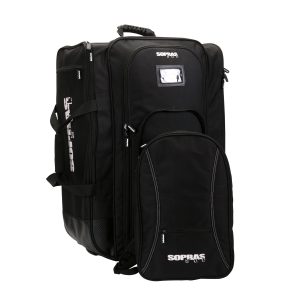
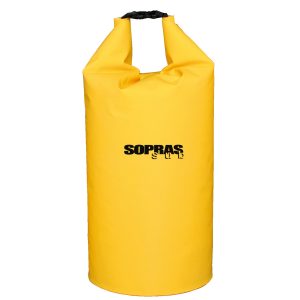
The right bag type depends on what you need to carry and where. Big travel bags are large-format, high-capacity bags for transporting a complete scuba or snorkelling kit — wetsuits, BCD, regulators, fins. The Sopras diving trolley adds integrated wheels and a telescoping handle, making it practical for airport transit and boat docks where carrying a heavy bag by hand is not feasible. These bags are not waterproof; they are designed for dry transport of packed equipment rather than use around water. Waterproof bags use welded seams and roll-top or sealed zip closures to prevent water ingress and egress — keeping wet gear contained after a dive and protecting dry contents in the splash zone or during surface swims. Other bags serve specific secondary purposes: mesh bags for rinsing and drying gear, snorkelling bags for day trips, backpacks for surface use, and small accessory pouches.
Big travel bags
Large-format bags for transporting complete dive kits. The Sopras diving trolley has integrated wheels and telescoping handle; the Travel bag is a high-capacity duffel. Both accommodate BCD, regulator, wetsuit and fins.
Waterproof bags
Sealed-construction bags in 10 to 80 litre capacities with welded or sealed closures. Waterproof backpack 60l, handle bag, multi-size roll-top bag and waterproof travel bag. Keep wet gear contained; protect dry gear at the surface.
Other bags
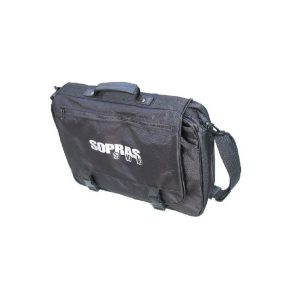
Mesh gear bags 60l for rinsing and drying, snorkelling bags for day trips, foldable mesh backpacks, waist bags, compass pouches, cycling backpacks, and a neoprene notebook protector.
Bag Materials and Construction
Large travel bags use durable woven polyester or nylon with reinforced base panels and corner protection. Zipper quality is the critical failure point on any large dive bag — salt water and sand degrade cheap zippers quickly; the Sopras trolley and travel bag use oversized corrosion-resistant zippers sized for heavily-loaded bags. Waterproof bags use either a PVC or TPU-coated fabric with heat-welded or RF-welded seams to eliminate stitched seam leakage points; the closure is either a roll-top seal (folded down and clipped) or a waterproof zip using a gasket. Neither construction is designed for submersion — they are splash-proof and immersion-resistant, not diving-rated. Mesh bags use open-weave polypropylene or nylon mesh that allows water to drain freely and air to circulate, which is important for drying wetsuit material and preventing mildew in enclosed bags.
What to Look For
- Capacity matched to your equipment volume. A full scuba kit — BCD, regulator, wetsuit, fins, mask, computer, accessories — fills approximately 100–120 litres when packed. The Sopras diving trolley and travel bag cover this requirement. A 60-litre mesh or waterproof bag is sufficient for a wetsuit, mask, fins, and snorkel for day trips or beach diving without a tank.
- Trolley vs. duffel for travel. The diving trolley is the better choice for any journey involving multiple transit points — airports, marinas, boat docks — where dragging a bag on wheels is significantly easier than carrying it. The duffel format of the travel bag is more flexible for loading into vehicles and fitting into overhead storage but requires carrying by hand or over one shoulder.
- Waterproof bag size for your use case. A 10–15 litre waterproof bag covers valuables and electronics (phone, wallet, camera) for surface use during a dive day. A 40–80 litre waterproof bag contains a full wetsuit and accessories post-dive without leaking onto other gear or the vehicle interior. The 60-litre waterproof backpack adds carrying comfort over longer distances from a boat or shore entry point.
- Mesh bags for drying, not transport. A mesh gear bag is not protective — it provides no padding and no weather resistance. Its function is post-dive organisation (collecting all wet gear in one place on the boat or shore) and drying (open mesh allows air circulation and water drainage during rinsing). Do not use a mesh bag as a primary travel bag for equipment that requires protection.
Maintenance and Care
Rinse all bags with fresh water after salt water exposure — salt crystallises in seams, zip tracks, and buckle mechanisms and causes premature failure. Leave bags open to dry fully before storing, particularly large travel bags which trap moisture in thick fabric and foam padding when closed wet. Periodically apply a zipper lubricant (silicone-based, not petroleum-based) to all zip sliders and teeth; this prevents corrosion and maintains smooth operation under load. Waterproof bag roll-top seals should be inspected for cracking or stiffness annually — a dried-out roll-top seal loses its waterproof closure property. Store large bags uncompressed and with zippers partially open to prevent zipper stress and allow air circulation.