

A buoyancy compensator device (BCD) is the central piece of scuba equipment that connects your tank, weights, and body into a single controllable system. It lets you achieve and hold neutral buoyancy at any depth, keeps you positively buoyant at the surface, and serves as the mounting platform for your regulator hoses, instruments, and accessories. Whether you’re a recreational diver looking for a jacket-style vest or a technical diver building a wing-and-harness setup from individual components, this category covers the full range — complete BCDs, modular harnesses, bladders, tank belts, accessories, and spare parts for long-term maintenance.
-
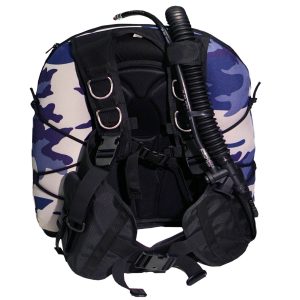
Complete BCD (9)
-
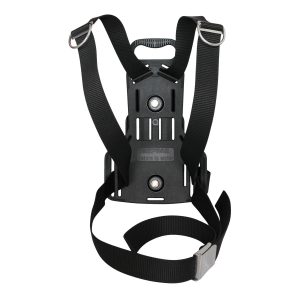
Harnesses (2)
-
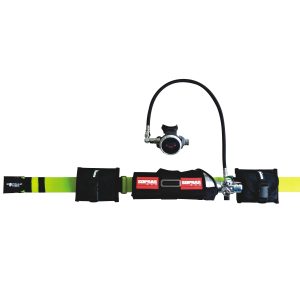
Accessories (10)
-
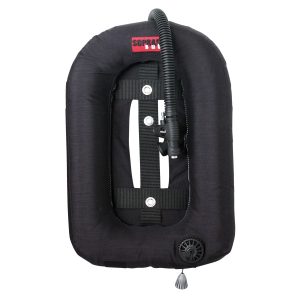
Bladders (2)
-
Spare parts for jackets (8)
-
Belt for tanks (7)
How a BCD Fits Into Your Dive System
Unlike most dive gear, a BCD doesn’t do one thing — it does several simultaneously. The bladder inflates and deflates to manage buoyancy, the harness distributes the weight of the cylinder across your torso, the pockets and D-rings carry your instruments and accessories, and the integrated weight pockets (on jacket-style models) replace a separate weight belt. Getting this right requires matching the BCD’s design to your diving style, not just your body size.
Recreational divers typically gravitate toward jacket-style BCDs like the DIVECENTER, DIVECENTER DELUXE, LZ 420, LZ 1000, or PX 500, where the bladder wraps around the sides and back, providing stable surface flotation and a familiar fit. Technical and advanced recreational divers often prefer a wing-and-harness configuration — a dedicated back-inflate wing bladder mounted to a rigid or semi-rigid backplate with a webbing harness — because this setup allows precise trim adjustments and works cleanly with double cylinders or sidemount configurations.
Complete BCD
Fully assembled buoyancy compensators ready to dive, including jacket-style vests (DIVECENTER, LZ series, SILVER 3000/4000, PX 500) and the SPELEO 1500 TEC WINGS for technical diving. All models include inflator, exhaust valves, and harness system.
Harnesses
Modular webbing harnesses and backplate systems for divers who build their BCD setup from components. Includes the Harness DIR on plastic back plate and the Plastic back plate with straps — suited for wing bladder configurations.
Accessories
Add-on components for existing BCD setups: harnesses for extra air sources, additional D-rings, attachment systems, and supplementary lift accessories that extend the functionality of your current vest.
Bladders
Replacement and standalone inflation bladders, including donut-style technical bladders. Used as direct replacements in existing BCD housings or as the lift component in custom wing-and-harness builds.
Spare Parts for Jackets
Overpressure valves, dump valves, inflator components, and other serviceable parts for jacket-style BCDs. Keeping these on hand extends equipment lifespan and reduces downtime between service intervals.
Belt for Tanks
Tank retaining straps and cylinder bands that secure single or double cylinders to a backplate or BCD back unit. Available in multiple configurations to fit different cylinder diameters and mounting setups.
Jacket BCDs vs. Wing-and-Harness Systems
The two dominant BCD architectures serve different purposes. A jacket-style BCD wraps the bladder around the diver’s sides and back, which pushes you upright on the surface — useful for students, divemasters, and anyone spending significant time at the surface. The trade-off is that air in the side chambers can interfere with horizontal trim underwater, requiring deliberate buoyancy adjustment to maintain a flat position. Models like the SILVER 3000 and SILVER 4000 address this with refined bladder geometry and well-positioned exhaust valves that make venting from any orientation easier.
A wing bladder mounted behind a backplate inflates only behind the diver, which naturally promotes a horizontal swimming position — the standard for technical diving and a significant advantage for photographers and underwater videographers who need consistent trim. The SPELEO 1500 TEC WINGS takes this further with a donut-style toroidal bladder that provides symmetrical lift without the bladder collapsing at the sides during ascent. The Horse shoe REC BCD bridges the gap, offering a horseshoe wing geometry in a recreational package with a user-friendly inflator and conventional harness.
Inflator Mechanisms and Exhaust Valves
The direct system inflator (DSI) is the primary control interface for your BCD — it connects to the low-pressure port on your first stage and lets you add air via the inflate button or orally via the mouthpiece. Reliability here matters: a sticking inflate button is one of the more common causes of uncontrolled ascents in entry-level equipment. Quality inflators use corrosion-resistant internal components and are designed for field disassembly without special tools.
Exhaust valves — both the corrugated hose dump at the top of the inflator and the overpressure relief valve (OPV) at the lower rear of the bladder — must vent reliably to prevent overinflation during ascent. The OPV opens automatically when internal pressure exceeds a set threshold, typically around 1.5–2 bar above ambient. Divers who skip BCD maintenance often discover valve issues only when they fail underwater; regular rinsing and periodic valve replacement (covered in the Spare Parts for Jackets subcategory) prevents this.
What to Look For
- Lift capacity matched to your gear weight. Calculate the combined weight of your cylinder, weights, and equipment, then choose a BCD with lift capacity that exceeds it by a reasonable margin — typically 20–30% headroom. A 12-liter steel cylinder with a full valve weighs approximately 18 kg in air; your BCD must comfortably offset this plus your exposure suit’s negative buoyancy at depth.
- Harness fit and adjustability. A BCD that moves around underwater drains energy and disrupts trim. Look for a harness with independent shoulder, chest, and waist adjustments. For modular setups, the Harness DIR on plastic back plate allows continuous webbing routing — meaning the harness can be adjusted to fit virtually any body size without swapping components.
- Number and placement of dump valves. More exhaust points give you more control over venting orientation. A rear lower dump is critical for feet-up ascents (common in cave and wreck diving); a shoulder dump handles standard vertical ascents. Verify that all valves are accessible with gloved hands.
- D-ring count and placement. Stainless steel D-rings should be positioned where you actually clip accessories — typically at the chest, lower front, and shoulder. Avoid BCDs where D-rings are sewn onto flexible webbing that rotates when loaded; they should be mounted on rigid loops or housings so the gate faces outward regardless of load.
- Integrated weight system design. If you plan to use integrated weights, verify the pocket release mechanism is operable single-handed with a gloved hand under stress. Quick-release pockets that require two hands or precise grip are a safety liability. Also check the secondary trim weight pockets — useful for fine-tuning without adjusting the main release pockets.
Maintenance and Care
After every dive in salt water, rinse the exterior of the BCD thoroughly with fresh water, paying particular attention to the inflator mechanism, exhaust valves, and any metal hardware. Salt crystals that dry inside the inflator corrugated hose will eventually bind the inflate/deflate buttons or cause the oral inflate valve to leak. To flush the bladder interior, partially inflate the BCD, introduce fresh water through the oral inflate mouthpiece, slosh it around, then drain through the lower dump valve with the BCD inverted. Repeat this at least twice per diving trip.
Store BCDs partially inflated — enough to keep the bladder walls from sticking together — in a cool, dry location away from direct UV exposure. Neoprene and coated nylon bladder materials degrade faster under sustained UV load. Hang the BCD rather than folding it; fold lines in the bladder can develop micro-cracks over time, especially in older nylon-laminated materials.
Inspect overpressure valves and dump valves annually, or after any dive where you noticed erratic buoyancy behavior. The spring tension in OPVs weakens over time, causing the valve to open at lower-than-rated pressure — meaning you may lose gas from the bladder during deep portions of a dive. Replacement valves and inflator service kits are available in the Spare Parts for Jackets subcategory. Full bladder pressure testing should be part of any professional BCD service every two to three years.
FAQ
What is the difference between a jacket BCD and a wing BCD?
A jacket BCD distributes its bladder around the sides and back of the diver, which pushes you upright at the surface and provides lateral stability. A wing BCD concentrates all lift directly behind the diver on a dedicated bladder mounted to a backplate, which promotes a horizontal trim position underwater. Jacket BCDs are generally better suited to recreational diving, particularly for newer divers, while wing setups are preferred for technical diving, overhead environments, and divers who prioritize trim over surface stability.
How much lift capacity do I need in a BCD?
Lift capacity requirements depend on your cylinder material and size, your exposure suit, and how much weight you carry. As a rough guideline, a diver using a single aluminum 12-liter cylinder with a 5mm wetsuit and 4–6 kg of ballast weight typically needs 15–20 kg of lift capacity. Drysuit divers and those using steel doubles need significantly more. Always check the manufacturer’s specifications and err on the side of more lift — an oversized bladder doesn’t cause problems, but an undersized one can leave you unable to surface with a flooded suit or lost weights.
Can I replace just the bladder in my BCD?
In many modular BCD designs, particularly wing configurations, the bladder is a separate replaceable component. The Bladders subcategory includes both replacement bladders for specific jacket models and standalone wing bladders. For jacket-style BCDs, bladder replacement is typically a repair-center procedure because the bladder is bonded or sewn into the outer shell. If your jacket bladder has a pinhole leak, it may be repairable with a patch kit before replacement becomes necessary.
What is a DIR harness and who uses it?
DIR (Doing It Right) is a set of diving standards developed within the technical diving community that emphasizes streamlined, standardized equipment configurations. A DIR harness uses a single piece of continuous webbing routed through a backplate in a specific pattern that creates a secure, adjustable fit with no excess straps or buckles to snag on lines or wreck structure. The Harness DIR on plastic back plate available here follows this configuration, making it suitable for technical divers, cave divers, and advanced recreational divers who want a cleaner equipment profile.
How often should a BCD be professionally serviced?
Most manufacturers recommend a full professional service every two to three years, or after 200–300 dives, whichever comes first. Service typically includes inflator disassembly and cleaning, valve inspection and replacement as needed, bladder pressure testing, and inspection of all webbing and hardware for wear or corrosion. Between professional services, divers should inspect their own equipment regularly — particularly the inflator buttons, exhaust valve function, and the condition of all metal components. Catching a stiff inflate button or a slow-leaking OPV early prevents failures during a dive.