

Showing all 7 results
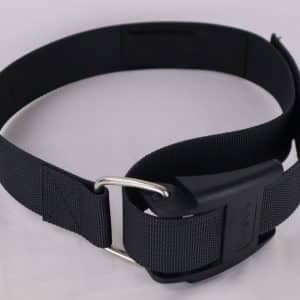
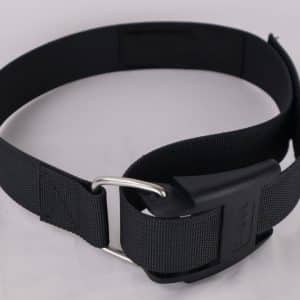
A tank belt is the retaining strap that secures a scuba cylinder to the back unit of a BCD or backplate. It passes through the tank band slot on the back unit and cinches around the cylinder body, preventing the tank from shifting position during a dive. Available in multiple lengths and buckle configurations to match different cylinder diameters, back unit designs, and diver preferences.
Tank Belts and Cylinder Retention
Every scuba cylinder mounted to a BCD or backplate relies on at least one tank belt to stay in place. The belt threads through a slot or loop on the back unit and wraps around the cylinder body, held by a buckle that must maintain tension throughout the dive — including during negative-pressure events like rapid descents, buoyancy fluctuations, and physical handling. A belt that slips or releases unexpectedly can cause the cylinder to rotate or shift, changing your balance and potentially interfering with regulator hose routing.
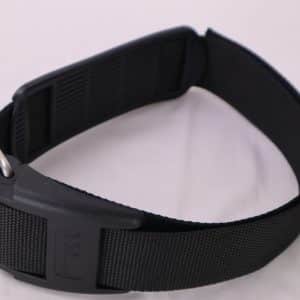
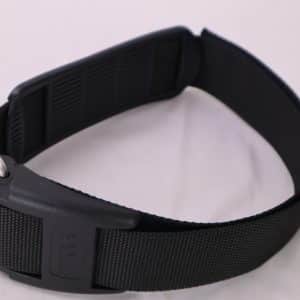
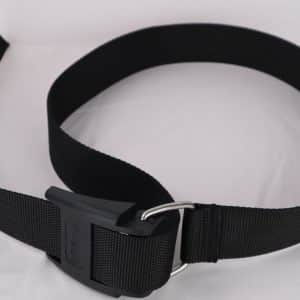
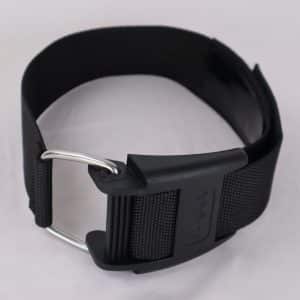
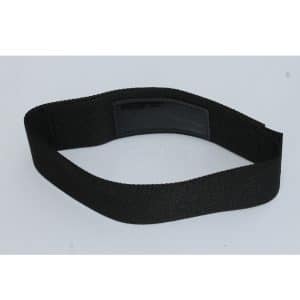
The belts in this category come in lengths from 85 cm to 130 cm and use different buckle systems suited to different applications. The hard plastic buckle (FP) variants — the Tank belt (100 cm) and Tank belt (85 cm) — use a rigid cam buckle that locks under tension and releases with a single lever action. The “FP” designation indicates a fixed-position buckle configuration. The soft plastic buckle with removable pad (rem pad) variants — available in 105 cm and 112 cm — use a padded inner face that contacts the cylinder, distributing clamping force over a larger area and reducing the risk of marking or denting cylinder bodies with softer alloy construction. The Tank belt (130 cm) soft plast buckle no pad is the longest option, suited to larger cylinder diameters or configurations where the belt routes through a back unit with a longer path. The Tank belt no buckle FP is raw webbing without a buckle, used when the buckle is provided separately — for example, when pairing with the stainless steel quick release cam buckle available in the BCD Accessories subcategory.
Choosing the Right Length and Buckle Type
Belt length selection depends on cylinder body diameter and back unit geometry. Standard 12-liter steel cylinders have a body diameter of approximately 171–184 mm; aluminum 12-liter cylinders are typically 203 mm in diameter. A wider cylinder requires a longer belt to wrap around and still reach the buckle with enough webbing for adjustment. The 105 and 112 cm belts cover the majority of standard single-cylinder configurations; the 130 cm belt is appropriate for larger diameter cylinders or twin cylinder staging setups where both cylinders share a single wide belt.
Hard buckle designs are appropriate where fast removal isn’t the primary concern and where simplicity is preferred — they have fewer moving parts than cam buckle systems. The soft buckle with removable pad is the better choice for aluminum cylinders, which have softer alloy bodies that can be marked by a hard buckle edge under repeated pressure. The removable pad also allows the belt to be used without the pad when a slimmer profile is needed for routing through tighter back unit slots.
What to Look For
- Correct belt length for your cylinder and back unit. Measure your cylinder’s body circumference (not diameter) and add the routing path through your back unit’s tank band slot. The belt should allow several centimeters of webbing through the buckle when the cylinder is fully tightened — if the belt is adjusted to its minimum, there’s no safety margin if the webbing stretches slightly with use.
- Buckle release force and single-hand operation. In an emergency, you may need to release the cylinder quickly or with one hand. Test that the buckle releases cleanly under load with a gloved hand. Cam buckles that require two hands or precise grip pressure under tension are a liability, particularly for divers using thick gloves in cold water.
- Webbing condition and stitching at load points. The webbing at the buckle attachment point and at the loop end is under the highest tension. Inspect these points when receiving the belt and at regular intervals — fraying or elongation here indicates the webbing is approaching the end of its service life.
- Pad material durability. Removable pads on soft buckle variants are typically neoprene or closed-cell foam bonded to the webbing. Check that the pad material is fully bonded with no peeling edges — a partially detached pad can slip during diving, creating uneven pressure on the cylinder body and potentially allowing the belt to loosen.
- Compatibility with your back unit’s tank band slots. Not all back units accept the same webbing width. Standard 38 mm webbing fits most BCD back units; confirm that your BCD’s tank band slot accepts the belt width before purchasing.
Maintenance and Care
Rinse tank belts with fresh water after every salt water dive, running water through the buckle mechanism while actuating it several times to flush salt from the cam teeth and spring components. Salt that dries in the buckle mechanism can make release stiff or unreliable — this is critical to address because a jammed buckle makes fast cylinder removal impossible. For belts with removable pads, remove the pad before rinsing and dry both components separately to prevent moisture retention between the pad and webbing.
Inspect the full length of webbing annually for UV degradation, abrasion wear, and any permanent elongation around the buckle attachment. Webbing that has lost its original texture and stiffness — appearing gray or feeling slick — has lost UV resistance and should be replaced. Store belts dry, coiled loosely rather than folded at sharp angles, which can introduce permanent creases in the buckle attachment webbing.
Plastic buckle components should be checked for cracks, particularly at the cam lever pivot point and at the webbing slot edges where repeated loading creates stress concentration. Cracked or deformed buckle bodies should be replaced immediately — a buckle failure during a dive releases the cylinder without warning.
FAQ
How many tank belts do I need?
Most single-cylinder recreational BCDs use one tank belt. Technical BCDs with a taller back unit, and modular backplate systems, often use two belts positioned at different heights on the cylinder for more secure retention — particularly important with heavier steel cylinders or when diving in current where the cylinder might be subjected to lateral forces. The appropriate number depends on your BCD’s design and the manufacturer’s recommendation for your cylinder size.
What length belt fits a standard aluminum 12-liter cylinder?
A standard aluminum 12-liter cylinder has a body diameter of approximately 203 mm, giving a circumference of about 638 mm. Adding the routing path through the back unit’s tank band slot (typically 100–150 mm depending on the BCD design), a 100–112 cm belt is generally appropriate. If you’re using a backplate-only system where the belt must pass through the plate’s slot and back around, the 105 or 112 cm variants are the safer choice.
What is the difference between FP and rem pad buckle variants?
FP (fixed pad) belts have a hard buckle that contacts the cylinder directly or through a permanently attached pad. Rem pad (removable pad) variants include a separate neoprene pad that cushions the buckle contact point against the cylinder body. The removable pad reduces the risk of marking soft alloy cylinder bodies under repeated pressure and can be taken off when a thinner belt profile is needed. For steel cylinders, either variant works; for aluminum cylinders, the rem pad variant is preferable.
Can I replace just the buckle on an existing belt?
Yes — the Tank belt no buckle FP provides webbing without a buckle, and the stainless steel quick release cam buckle in the BCD Accessories subcategory can be used to assemble or repair a tank belt. This is useful when an existing belt’s webbing is in good condition but the buckle has cracked or worn, or when you want to upgrade from a standard plastic buckle to a stainless steel quick-release design for easier single-hand operation.
How tight should a tank belt be?
The cylinder should not rotate or slide when you grasp it and try to move it. A common test is to hold the cylinder with both hands and attempt to rotate it in the belt — any movement indicates the belt is too loose. However, overtightening compresses the webbing and can crease the buckle attachment point, accelerating wear. The correct tension is firm enough to eliminate cylinder movement under normal diving forces, not so tight that the webbing is visibly flattened against the cylinder body.