

Showing all 2 results
A diving harness is the webbing-and-backplate structure that positions your cylinder against your back and distributes its weight across your body. Unlike an integrated BCD vest where the harness is sewn into the outer shell, a modular harness lets you pair the webbing and backplate independently with a wing bladder of your choice — the core principle of the backplate and wing system used across recreational and technical diving.
Backplate and Harness Fundamentals
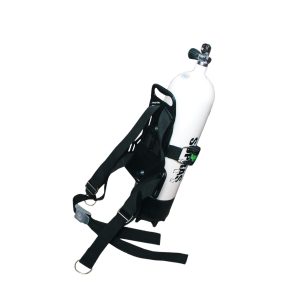
In a backplate and wing (BP/W) system, the backplate is a rigid panel — typically aluminum, stainless steel, or plastic — that mounts between the diver’s back and the cylinder. The harness is a continuous length of webbing routed through and around the backplate in a pattern that forms shoulder straps, a waist belt, and optionally a crotch strap. The wing bladder clips or bolts onto the backplate separately. This modular architecture means each component can be replaced, upgraded, or repaired without touching the rest of the system.
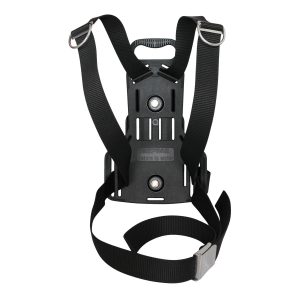
The Harness DIR on plastic back plate uses a single piece of continuous webbing routed in the DIR (Doing It Right) configuration. In DIR routing, the webbing passes through both shoulder loops and across the chest in a way that creates a fixed, body-conforming fit with no extra buckles or adjustment loops that could snag on lines or wreck structure. The fit is adjusted by moving the sternum strap position and setting the waist webbing length — once set for your body, the harness holds that fit consistently across all dives without readjusting. The plastic backplate keeps the system lightweight and corrosion-free, suitable for divers who want DIR configuration without the weight penalty of an aluminum or steel plate.
The Plastic back plate with straps is a simpler harness system using a standard buckle-based webbing configuration rather than continuous DIR routing. This is appropriate for divers who prefer conventional strap adjustment mechanisms or who are building a modular wing setup without adopting a full DIR equipment standard.
Who Uses a Modular Harness System
The BP/W system is the standard configuration in technical diving — cave, wreck, decompression, and mixed gas diving — because it provides a stable, streamlined platform that can be configured identically by every diver in a team. Standardized equipment positioning reduces the cognitive load of buddy assistance during an incident. In cave diving specifically, where retrieving a team member’s gear in overhead environments requires knowing exactly where every component is located, equipment standardization is a safety factor, not a preference.
Advanced recreational divers increasingly use harness systems for the improved trim they provide over jacket BCDs. A correctly fitted DIR harness holds the diver in a natural horizontal position without requiring constant fin correction. For photographers, videographers, or anyone doing extended bottom time, this translates directly into reduced gas consumption and less physical effort per dive.
What to Look For
- Backplate material and buoyancy. A plastic backplate is essentially buoyancy-neutral in water, which suits divers using wetsuits who are already carrying significant ballast. Aluminum plates are slightly negative (approximately −700 g), allowing some divers to reduce their weight belt load. Stainless steel plates (not in this category) are strongly negative and primarily used by drysuit divers or those diving heavy steel doubles who need the ballast.
- Webbing quality and width. Standard harness webbing is 50 mm nylon. Look for even weave density and no fraying at cut edges — poorly finished webbing frays quickly with salt water exposure and can weaken at stress points. Polypropylene webbing is lighter but less durable under UV and heat; nylon is the standard for dive harnesses.
- Crotch strap inclusion. A crotch strap prevents the harness from riding up when you enter the water or when you’re inverted. For overhead environments this is essential; for recreational diving it’s a comfort and security addition. Verify whether a crotch strap is included or available as an add-on.
- D-ring placement and material. Stainless steel D-rings on the chest and waist are load points for stage bottles, lights, and instruments. Verify that D-rings are mounted on rigid webbing loops — not flexible sections — so the gate faces outward when loaded and is accessible single-handed with a gloved hand.
- Wing bladder compatibility. The harness and backplate must have the right bolt pattern and dimensions to accept the wing bladder you plan to use. The plastic backplates here are designed to work with the wing bladders and modular accessories in the broader BCD range; confirm fitment before combining components from different systems.
Maintenance and Care
Rinse all webbing harness components thoroughly with fresh water after every salt water dive. Salt crystals that dry in webbing accelerate UV degradation and abrasion — the fibers cut each other as the webbing flexes under load. Pay particular attention to buckle housing interiors and any location where two webbing layers overlap; salt accumulates in these areas and is not removed by a surface-level rinse.
Plastic backplates should be rinsed and dried completely before storage. Although they don’t corrode, salt and sand accumulation in bolt holes and webbing routing slots can cause abrasion against the webbing over time. Metal hardware on harnesses — D-rings, buckles, and bolts — should be inspected annually for stress corrosion cracking, which appears as white deposits or surface pitting on stainless steel parts exposed to chlorinated or high-salinity water.
Inspect the entire harness webbing annually for signs of UV degradation (graying, stiffness, or surface fuzz on nylon fibers), wear at contact points with the backplate routing slots, and integrity at any stitched sections. Webbing that shows significant fading, fraying at load-bearing sections, or loss of flexibility should be replaced. Continuous webbing harnesses can typically be re-routed using new webbing of the same specification if the backplate remains in good condition.
FAQ
What is a DIR harness configuration?
DIR (Doing It Right) is a set of equipment and procedural standards developed within the technical diving community, particularly for cave diving. A DIR harness uses a single piece of continuous 50 mm webbing routed through the backplate in a specific pattern that creates shoulder straps, a chest strap, and a waist belt without separate buckle assemblies on the shoulder straps. The result is a clean, snag-free profile with no excess webbing. The sternum strap is the only positional adjustment; fit is largely determined when the harness is initially built to the diver’s measurements.
Can I use this harness with any wing bladder?
Compatibility depends on the bolt spacing and mounting geometry of both the backplate and the wing. The plastic backplates here are designed around a standard mounting configuration used across the Soprassub BCD range — the Tekno Donut bladders in the Bladders subcategory are compatible. If you’re pairing components from different manufacturers, verify the bolt pattern dimensions before purchasing.
Is a plastic backplate suitable for technical diving?
Yes — plastic backplates are widely used in technical diving, particularly by warm-water technical divers and those using wetsuit exposure protection who don’t need the ballast contribution of a metal plate. The structural requirement for a backplate is rigidity sufficient to prevent the wing from pulling the cylinder away from your back when inflated; a properly constructed plastic plate meets this requirement for single-cylinder and light technical configurations.
Do I need a crotch strap?
For overhead environments, yes — without a crotch strap, the harness can ride upward when you’re inverted or neutrally buoyant in a horizontal position, shifting the weight of the cylinder off your hips and creating an unstable platform. For recreational open-water diving, a crotch strap is a comfort and security addition rather than a strict requirement, but most experienced divers who switch to BP/W systems add one after experiencing the difference in positional stability it provides.
How is a modular harness different from the harness on a jacket BCD?
A jacket BCD harness is sewn into the outer shell of the BCD — the webbing, padding, and pockets are all part of a single assembly. If the harness wears out, the entire BCD typically needs to be replaced or sent for major repair. A modular harness is an independent component that can be replaced, re-webbed, or reconfigured without touching the backplate or wing bladder. This repairability is a significant long-term durability advantage for divers who put significant hours on their equipment.