

Showing all 8 results
Serviceable components for jacket-style BCDs — inflators, overpressure valves, back plates, cam buckles, and tooling for field and workshop maintenance. Keeping critical parts available between service intervals extends equipment lifespan and reduces dependence on manufacturer turnaround times for repairs that can be completed by a trained technician or a knowledgeable diver.
Why Spare Parts Matter for BCD Longevity
A jacket BCD in regular use undergoes significant mechanical stress: the inflator mechanism is operated hundreds of times per season, overpressure valves cycle with every ascent, buckles are loaded and released with every dive, and all of these components are repeatedly exposed to salt water, sand, UV radiation, and chlorine. The components that fail most commonly are also, fortunately, the ones that are most straightforward to replace: inflator assemblies, OPVs, and cam buckles are all field-serviceable parts that don’t require the entire BCD to be returned for replacement.
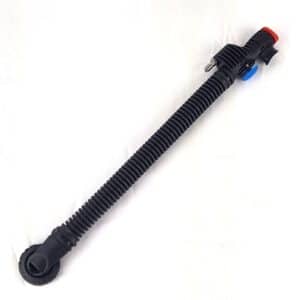
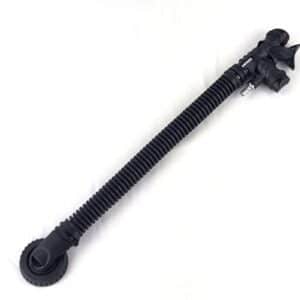
Having the correct spare parts available extends the operational life of a BCD significantly. A jacket that develops an inflator fault can be repaired in a single service session using the Inflator V01 Base 340 or Inflator V02 (340–400) — the two inflator assemblies here cover different corrugated hose length ranges (V01 for 340 mm hose length, V02 for 340–400 mm adjustable), accommodating the inflator specifications used across the DIVECENTER, LZ, SILVER, and PX 500 BCD series. An OPV that fails to seal reliably — resulting in gas bleeding from the bladder during a dive — is replaceable with the Over pressure valve using standard tools without disassembling the entire vest.
Inflator Assemblies and Service Tooling
The inflator is the most mechanically complex component of a jacket BCD and the most likely to require periodic replacement. Internal valve seats in the inflate button accumulate debris and salt crystal deposits that eventually cause sticking — either holding the inflate button open (which causes continuous bladder inflation and an uncontrolled ascent risk) or preventing full actuation. The oral inflate valve similarly develops seat wear over time, resulting in a slow gas leak through the mouthpiece that can be detected during a pre-dive inflation test.
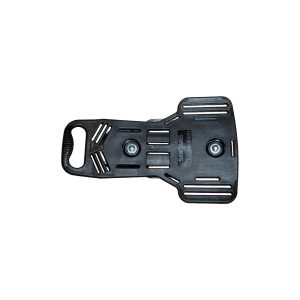
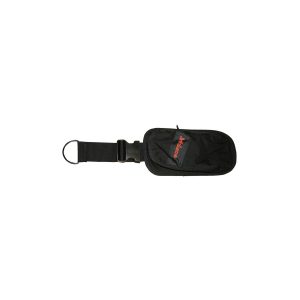
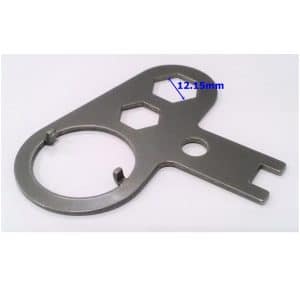
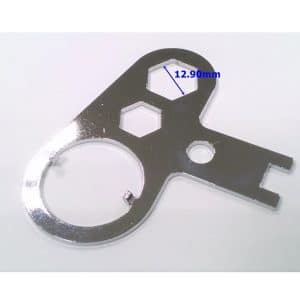
The MULTIPLE TOOL FOR POWER INFLATOR SS420 (available in two variants) is a purpose-made tool for disassembling the SS420-series inflator mechanism — the inflator used on current SILVER 3000, SILVER 4000, DIVECENTER, and PX 500 models. Having the correct tool prevents thread damage during disassembly that can occur when using improvised tools on plastic inflator components. Both tool variants address different stages of the service process; consult the technical documentation for the appropriate application. The Back plate for jacket is the structural rear panel of the BCD back unit — rarely replaced, but available when the original is damaged or cracked from impact or prolonged UV exposure. The Dump pocket for Silver 3000 covers the right-side dump valve pocket assembly specific to the SILVER 3000 model.
What to Look For
- Correct inflator hose length compatibility. The V01 and V02 designations refer to the corrugated hose length range the inflator fits. Measuring your existing corrugated hose before ordering is essential — an inflator that’s too short will put tension on the low-pressure hose connection; one that’s too long creates excess hose that can catch on equipment. The V02’s adjustable range (340–400 mm) covers the majority of modern jacket BCDs.
- OPV opening pressure specification. Overpressure valves are rated to open at a specific differential pressure above ambient, typically in the 0.5–1.5 psi range for BCD bladders. A replacement OPV must match the opening pressure of the original — a valve that opens too easily will bleed gas during descent or level swimming; one that opens too late can allow over-pressurization. Confirm the OPV specification matches your BCD model’s requirement.
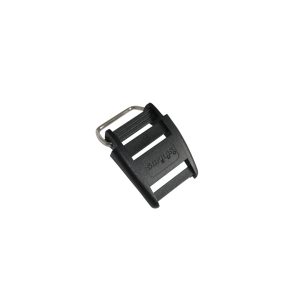
- Cam buckle load rating. The cam buckle here is a tank retention buckle used on tank belts. Its load rating should exceed the expected tension in the tank belt under normal diving conditions. Standard cam buckles for scuba use are rated to at least 150 kg; verify the replacement part matches or exceeds the original specification.
- Correct service tool variant. The SS420 inflator has two service tool variants for different disassembly stages. Using the wrong tool risks cross-threading or cracking the plastic inflator body. Confirm which tool is required for your service step before ordering — the product detail page specifies the application for each variant.
- Compatibility with your specific BCD model. The Dump pocket for Silver 3000 is model-specific. Other parts — inflators, OPVs, cam buckles — are more universal but still have dimensional requirements. If you’re unsure whether a part is compatible with your BCD model, confirm with the supplier using your BCD model name and serial number before ordering.
Maintenance and Care
Store spare parts in a sealed container in a cool, dry environment away from UV exposure. Rubber O-rings and valve seats in inflator assemblies and OPVs degrade with UV and ozone exposure even before installation — a spare inflator stored on a shelf next to a window for two years may have degraded seals that cause immediate leaking when installed. Seal spare inflator assemblies in a ziplock bag with a desiccant sachet to prevent moisture-induced corrosion on metal components and seal degradation.
When replacing an OPV, clean the valve seat in the bladder before installing the new valve. Old valve seats often have salt crystal deposits or rubber residue from the previous valve that will prevent the new valve from sealing correctly. Use a clean cloth dampened with fresh water to wipe the seating surface, then install the new valve per the manufacturer’s torque specification — overtightening can crack the plastic valve housing; undertightening allows leakage around the threads.
After any inflator replacement, perform a full function test before the first dive: connect to a regulator, inflate via power inflator to maximum capacity, verify no gas leaks from any point on the inflator assembly, then deflate via the inflator deflate button, the shoulder dump pull, and orally through the mouthpiece. Confirm the oral inflate valve seals completely after removing your mouth. Any leakage at this stage indicates an installation issue that must be resolved before the equipment is used underwater.
FAQ
How do I know if my BCD inflator needs replacing?
Common signs include an inflate button that sticks or requires excessive force to release, a slow continuous leak from the oral inflate mouthpiece when the BCD is inflated and disconnected from the regulator, difficulty achieving a complete seal when orally inflating, or visible corrosion on the low-pressure hose connection fitting. A sticking inflate button is the most safety-critical symptom — it can cause continuous bladder inflation underwater, leading to an uncontrolled ascent if not caught immediately.
Can I replace the OPV myself or does it need a service center?
OPV replacement on jacket BCDs is generally a straightforward procedure that a mechanically confident diver can perform using standard tools and the correct replacement part. The valve typically unscrews from the bladder housing with a large-diameter socket or specialized OPV wrench. The critical requirements are correct torque on installation (overtightening cracks the housing), clean seating surfaces, and a post-installation pressure test. If you’re not confident in performing the pressure test correctly, have the replacement verified by a service center before using the BCD.
What is the difference between the Inflator V01 and V02?
Both are complete inflator assemblies but cover different corrugated hose length ranges. The V01 Base 340 is a fixed 340 mm hose length, suited to BCDs where the original inflator uses a 340 mm corrugated hose. The V02 (340–400) covers an adjustable range from 340 to 400 mm, making it compatible with a wider range of jacket BCD models — including the SILVER, PX 500, and DIVECENTER series that use slightly different hose lengths depending on variant and harness adjustment.
Do I need special tools to service a jacket BCD inflator?
For the SS420-series inflator used on current SILVER, DIVECENTER, and PX 500 models, the MULTIPLE TOOL FOR POWER INFLATOR SS420 is the purpose-made tool for disassembly. Using improvised tools on plastic inflator components risks thread damage that can make the unit unrepairable. For older inflator models, a standard large-diameter adjustable spanner and a brass rod for internal valve seat removal are typically sufficient — consult the service documentation for your specific BCD model.
How often should I replace OPVs proactively?
At every full service interval — typically every two to three years or 200–300 dives. OPV springs lose tension over time, causing the valve to open at progressively lower differential pressures. This means the bladder begins losing gas earlier in an ascent, reducing lift reserve when you need it most. Proactive OPV replacement at service intervals costs a few euros and eliminates the failure mode entirely; reactive replacement after the valve fails underwater is far more consequential.