

Showing 1–12 of 17 results
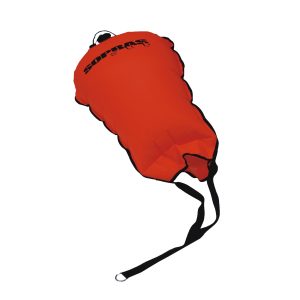
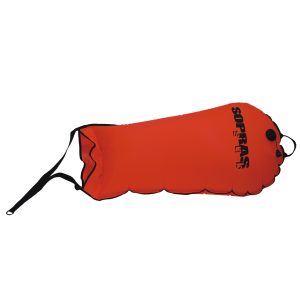
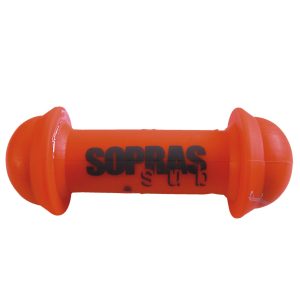
This category covers inflatable signalling and lifting equipment for scuba and freediving: SMBs (surface marker buoys) for diver position signalling during ascent and at the surface, deco/lifting buoys for decompression stop marking and light object recovery, lift bags from 14 kg to 3000 kg capacity for underwater object recovery, and supporting items including a dive flag, lead reel, and snorkelling vest.
For more buyos and liftbags please check SoprasApnea.
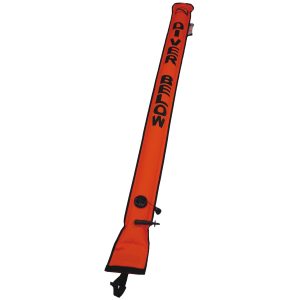
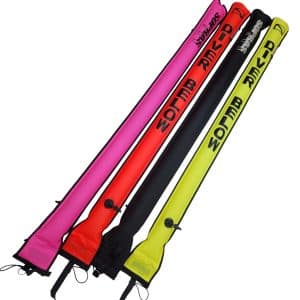
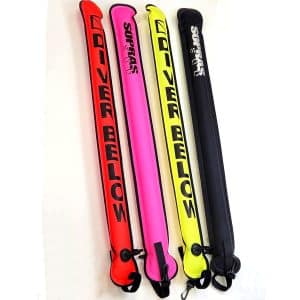
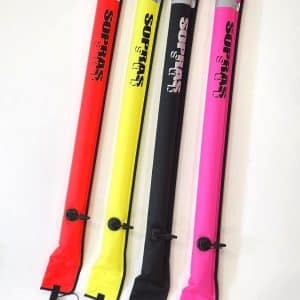
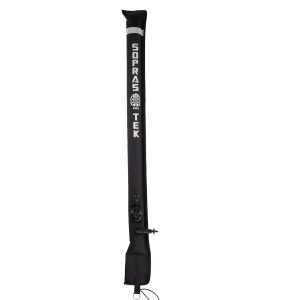
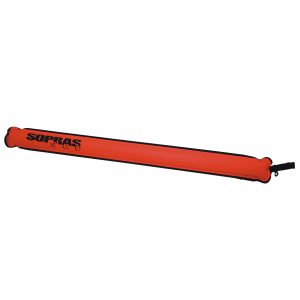
SMBs: Surface Marker Buoys for Diver Signalling
An SMB is a brightly coloured inflatable tube deployed at depth by the diver and sent to the surface on a reel line to mark the diver’s position during ascent and safety stop. It signals to boat traffic and dive boats that a diver is ascending in the area. The range includes closed-bottom SMBs (inflated orally through a mouthpiece valve), open-bottom SMBs (inflated from the second stage regulator’s exhaled gas or directly from the regulator purge), and models with combined deflation/inflation valves for controlled deployment. Sizes are 100×10 cm and 105×10 cm (diameter × width when rolled), and a larger PVC model at 128×16 cm.
Specific models: the SMB 100×10 cm (85270) and SMB 105×10 cm (85272) both feature a defl/infl valve and are available in four colours (yellow/pink/orange/black). The SMB closed orange 100×10 (852532) and SMB closed pink 100×10 (852551) are closed-bottom models with oral inflation valves. The SMB orange 105×10 (852534) and SMB black 105×10 (852552) are open-bottom models inflated from the regulator. The SMB PVC 128×16 (852542) is a larger-diameter PVC model providing higher surface visibility. The Standard buoy (852510) is a simpler entry-level model for basic surface signalling. A small lead reel 50m (SKU 805026) is stocked in this category for use as the SMB deployment reel.
Deco/Lifting Buoys
The Deco/lifting buoy (SKU 852533) and DECO/Lifting buoy with defl/infl valve (SKU 85274, four colours) are dual-function inflatable bags: they can be used as larger-format surface marker buoys for decompression stops and as light-duty lifting bags for recovering small objects from the seabed. The defl/infl valve version allows controlled inflation and deflation, which is important during a controlled ascent when managing buoyancy of the inflated bag on the reel. These are distinct from the heavy-duty lift bag range — deco/lifting buoys are appropriate for signalling and light recovery tasks, not for heavy salvage operations.
Lift Bags for Object Recovery
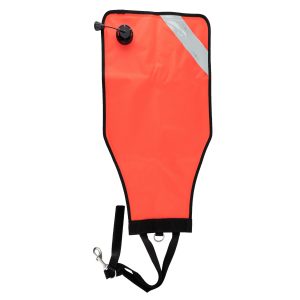
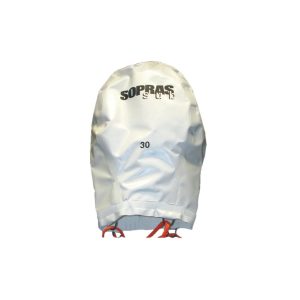
Lift bags are open-bottom inflatable bags used to raise heavy objects from the seabed by trapping exhaled gas or regulator-supplied gas beneath the bag. As the bag ascends, expanding gas vents from the open bottom, preventing uncontrolled runaway ascent. The range spans four sizes: 14 kg extra small (SKU 852608, 30 lbs), 30 kg small (SKU 852609, 60 lbs), 60 kg large (SKU 852622, 125 lbs), and a PVC lift bag series 30–3000 kg (SKU 852611-86) covering professional salvage requirements from 30 to 3000 kg capacity. The PVC series spans the commercial salvage range and is the appropriate selection for any operation requiring lift capacity above 60 kg.
Additional Items
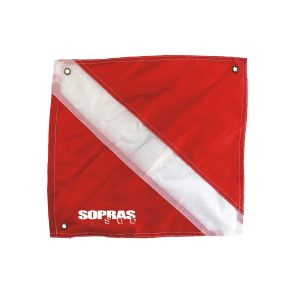
The Dive flag (SKU 852535) is a red-and-white standard diver-down flag for surface deployment from a buoy or float to alert boat traffic that a diver is below. The Snorkelling vest (SKU 80722, sizes 0–3) is an inflatable foam-assisted surface buoyancy aid for snorkelling and freediving — it provides passive buoyancy at the surface and can be orally inflated to additional positive buoyancy if needed. It is a surface safety device, not a scuba BCD.
What to Look For
- Every scuba diver should carry an SMB on every dive. An SMB is standard safety equipment for any boat diving situation. The correct minimum is one SMB per diver plus a reel; where buddies dive together, each diver carrying their own SMB provides redundancy if one fails to deploy or is lost. For recreational diving, the 100–105×10 cm format is entirely adequate for surface visibility in normal conditions. The larger PVC 128×16 model provides additional freeboard and visibility for rougher sea states.
- Closed-bottom vs. open-bottom SMB for your inflation method. Closed-bottom SMBs are inflated by mouth via a valve — they require the diver to surface or exhale into the valve while at depth. Open-bottom SMBs trap exhaled gas or regulator-purge gas under the open hem — the diver can inflate the bag from the second stage regulator at any depth without surfacing. For deployment at depth during a safety stop or decompression stop, an open-bottom or defl/infl valve SMB is significantly more practical than a closed oral-inflation model.
- Defl/infl valve for controlled deployment. The combined deflation/inflation valve allows the diver to add and release gas during deployment, controlling ascent speed of the bag and preventing the bag from rocketing to the surface. For divers who deploy SMBs during stops at depth, the valve-equipped models are the safer choice.
- Lift bag capacity for the mass of the object. A lift bag provides buoyancy equal to the mass of water displaced by the bag when fully inflated. Select a bag capacity at least equal to the mass of the object being lifted, accounting for the object’s own negative buoyancy (dense objects like engine blocks require more lift per kilogram than less dense materials). The 60 kg bag covers most recreational recovery tasks; above this, the PVC commercial series is appropriate. Using an undersized bag risks partial lift and uncontrolled tipping of the object.
- Dive flag for boat dive sites. A dive flag deployed from a float or fixed buoy marks the dive area to surface boat traffic. In many jurisdictions, dive flag display is required or strongly recommended when diving from a boat or at a dive site with surface boat traffic. The standard red-and-white alpha flag (diver-down flag) is recognised internationally.
- Snorkelling vest for surface safety in open water. The snorkelling vest provides positive surface buoyancy for snorkellers and freedivers without a full BCD — it is the appropriate surface flotation aid for day trips, freediving instruction, and snorkelling with non-swimmers or children. It provides no buoyancy compensation underwater and should not be confused with a scuba BCD.
Maintenance and Care
Rinse SMBs, deco buoys, and lift bags in fresh water after every salt water use. Inflate SMBs partially during rinsing to access interior surfaces, then deflate fully and dry before rolling for storage — moisture trapped in a rolled SMB promotes mildew growth on the nylon or PVC fabric. For open-bottom SMBs, flush the interior by submerging in fresh water during rinsing. Inspect all seams and the valve housing annually for cracking, delamination, or valve seal failure. A valve that leaks slowly will cause the SMB to partially deflate during a safety stop, reducing its surface-marking function. Store SMBs loosely rolled or folded, not compressed under heavy items — prolonged compression of folded inflatable fabric causes crease-line delamination over time. Lift bags should be inspected at the seams after each use — the inflation forces on a fully-loaded lift bag are substantial, and seam failures under load are the primary failure mode.
FAQ
How do I deploy an SMB from depth during a safety stop?
To deploy an open-bottom or defl/infl valve SMB at depth: unroll the SMB and hold it open at the hem, exhale a breath of gas into the open bottom while holding the bag upright, or press the regulator purge button briefly into the open hem. This traps enough gas to give the bag initial positive buoyancy. Maintain a loose grip on the reel line as the bag ascends — do not grip the line tightly, as the ascending bag can pull the diver off their stop depth if the reel is not allowed to run freely. The reel line is not clipped to the diver’s body; it is held in the hand and allowed to pay out freely until the bag reaches the surface. If the bag ascends too fast, the defl/infl valve on valve-equipped models allows you to vent gas by pressing the deflation side of the valve briefly. Never let an SMB line wrap around the hand or any body part during a free-running deployment.
What is the difference between an SMB and a lift bag?
An SMB (surface marker buoy) is a narrow-diameter inflatable tube primarily designed for surface signalling — marking the diver’s ascent position for boat traffic and dive boat pickup. Its diameter and lift capacity are sized for the purpose of floating vertically on the surface with high visibility, not for lifting significant weight. A lift bag is a wide, open-bottom bag designed specifically to provide enough buoyancy to raise a heavy object from the seabed — it is sized by lifting capacity (kilograms or pounds) rather than visibility, and its open-bottom design allows gas to vent during ascent to prevent runaway lift. Some products in this range (the deco/lifting buoy) are designed to perform both functions at a moderate scale, but for any serious recovery task above 10–15 kg, a dedicated lift bag of appropriate rated capacity is the correct tool.