

Showing all 12 results
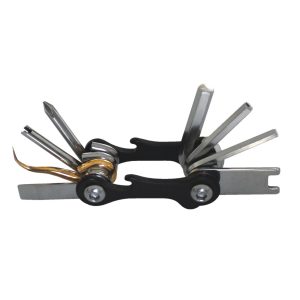
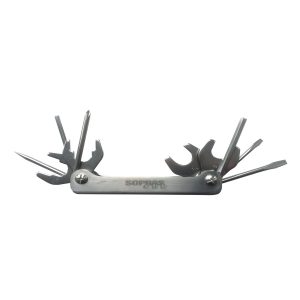
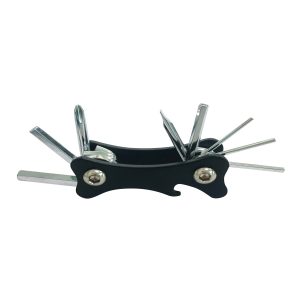
This section covers the items that do not belong to a single product category but are genuinely useful in specific diving contexts: signaling devices, underwater tools, hooks, and pointers. Products here include the Shaker, Tank banger, Whistle, Reef hook, Hook for jonline, Rattle with pointer, Pointer in colours, Underwater stick, Watch protector, and multifunction dive tools — the Dive tool, Hex keys multifunction tool, and 8in1 Multifunction dive tool.
Signaling Devices Underwater and at the Surface
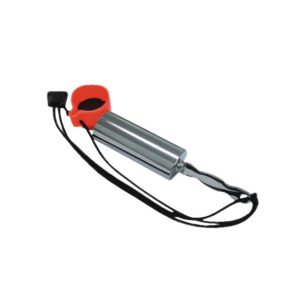
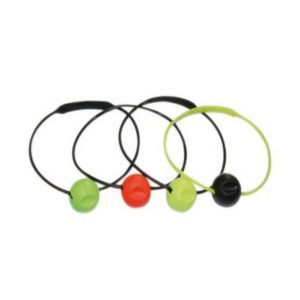
Attracting a buddy’s attention underwater requires producing a sound or visual signal that carries through water more effectively than waving. Water is a dense medium that transmits sound efficiently but also attenuates it rapidly with distance — a signal that is audible at 3 m may be inaudible at 10 m depending on ambient noise and the material being struck. The Tank banger is the simplest solution: a rubber ring fitted around the cylinder that, when pulled and released, strikes the metal tank and produces a sharp knock audible to nearby divers. It requires no battery, no deployment time, and no additional equipment — it is always on the tank when the diver is in the water.
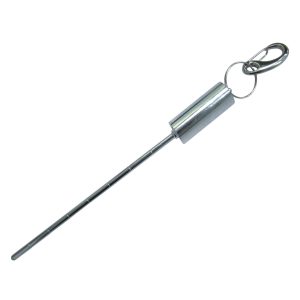
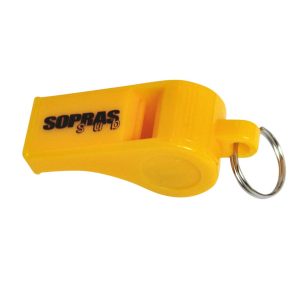
The Shaker produces a rattling sound through a sealed housing that the diver shakes in hand. The Rattle with pointer combines the acoustic function of a shaker with an attached pointer stick, reducing the number of items a diver carries while maintaining both communication and directional pointing capability. For surface signaling — attracting the attention of a boat or surface support when a diver surfaces away from the entry point — the Whistle is compact, clips to a BCD D-ring, and produces a sound that travels further over water than voice in wind and swell.
Hooks: Reef and Jon-Line Applications
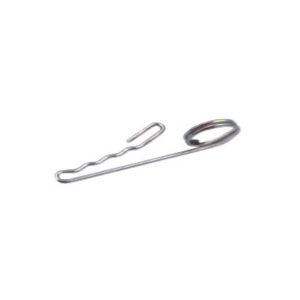
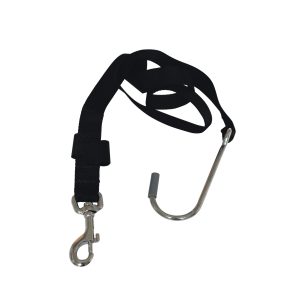
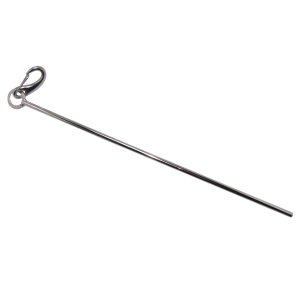
The Reef hook and Hook for jonline address a specific technique used in current diving. A reef hook is a stainless steel hook on a line that attaches to a D-ring on the BCD — the diver hooks onto a stable substrate (coral rubble, rock, or a fixed mooring anchor point specifically designed for this purpose) and maintains position in a current without finning. This technique is standard for drift dives on walls and pinnacles where sustained finning would exhaust the diver or disturb the bottom. The hook point allows detachment with a single hand movement when the diver is ready to continue.
The Hook for jonline serves a different purpose. A jon line is a short tether used during decompression stops — the diver clips one end to the anchor line or a fixed point and the other to the BCD, allowing them to maintain stop depth without having to hold onto the line manually in a current. The hook fitting at the BCD end of a jon line needs to be large enough to clear most D-rings and quick to operate with gloves. The stainless construction of this hook handles the repeated saltwater exposure inherent to decompression diving.
Pointers, Sticks, and Multifunction Tools
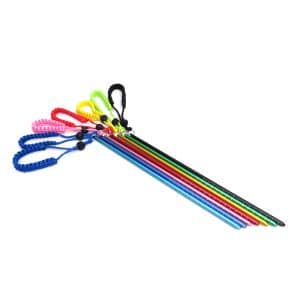
The Pointer in colours and Underwater stick serve overlapping functions. Both are used to indicate objects to a buddy without making physical contact — important near marine life and fragile substrate. The Pointer in colours is a compact rigid rod available in several colours for visibility contrast against different backgrounds. The Underwater stick is longer and can also be used to probe a crevice, move debris, or stabilise the diver’s position by pushing gently against a substrate — a technique used by photographers steadying themselves for a shot without using their hands on the reef.
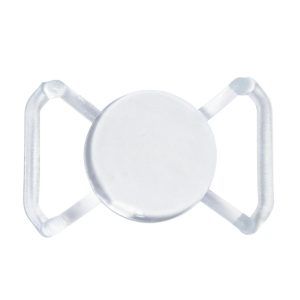
The Watch protector is a protective sleeve fitted over a watch or dive computer on the wrist to prevent impact damage during the dive or during equipment handling. The three multifunction tools — Dive tool, Hex keys multifunction tool, and 8in1 Multifunction dive tool — cover the range of field maintenance tasks a diver might need to perform at a dive site. The Hex keys multifunction tool provides the most commonly needed fastener sizes for regulator, BCD, and accessory maintenance. The Dive tool and 8in1 Multifunction dive tool add screwdrivers, a wrench, and additional implements, covering a wider range of servicing and field repair tasks in a single compact unit.
What to Look For
- Signaling device accessibility on the BCD. A signaling device that cannot be reached with one hand in under five seconds provides no useful function in an emergency. Tank bangers are always deployed because they are fixed to the cylinder; handheld devices like the Shaker need a clip point on the BCD where they are immediately reachable. Position signaling devices on the chest or upper arm area where they can be accessed without looking down.
- Reef hook line length and attachment hardware. A reef hook is only as useful as the line it is on — too short and it cannot reach a suitable attachment point; too long and it creates a loop that can snag other equipment or marine life. Standard reef hook lines are 1–2 m. Confirm the attachment hardware at the BCD end is compatible with your D-ring size and can be clipped and unclipped with gloves on.
- Multifunction tool hex key sizes. Before purchasing a multifunction tool for field maintenance, identify the specific hex key sizes required by your regulator, BCD inflator, and accessory hardware. The Hex keys multifunction tool covers the most common sizes, but verify against the fasteners you actually use. An incorrect size provides no benefit and creates a false sense of preparedness.
- Pointer colour visibility in your typical diving environment. The Pointer in colours is available in multiple colours. In blue-water open ocean diving, a yellow or orange pointer is highly visible. In green or brown freshwater visibility conditions, a bright colour with high saturation contrast works better than one that blends with ambient light. Match pointer colour to typical dive conditions rather than personal preference.
- Material corrosion resistance for hooks. Both the Reef hook and Hook for jonline are stainless steel — appropriate for saltwater. Inspect hooks periodically for surface rust at non-marine-grade welded points, which are more susceptible to crevice corrosion than the main body of the hook. A hook that shows significant rust should be replaced rather than trusted with a load-bearing application.
Maintenance and Care
Rinse all items in this category in fresh water after each salt dive. Tank bangers should be removed from the cylinder periodically, the rubber ring rinsed and inspected for cracking or deformation, and the inner surface of the ring checked where it contacts the cylinder — salt and abrasion at this point can wear through the rubber faster than external exposure. Stainless hooks benefit from an annual inspection of all welded or crimped points for early signs of crevice corrosion. Multifunction tools should be cycled through their full range of motion during the rinse process to flush salt from pivot points and locking mechanisms. A small amount of silicone lubricant on pivot points annually prevents the progressive stiffening that makes a multi-tool difficult to deploy under time pressure.
FAQ
What is the difference between a tank banger and a shaker?
A tank banger is fixed to the cylinder and struck against the metal tank to produce a sharp knocking sound — it is always available without deployment and produces a higher-energy impact sound that carries well in clear water. A shaker is a handheld device that produces a rattling sound when moved — it requires the diver to retrieve it from a clip point before use, but it can be directed toward a specific buddy rather than broadcasting in all directions equally. Both are useful; many divers carry both for different signaling situations.
When should I use a reef hook versus a jon line?
A reef hook is used during drift dives to anchor temporarily to a fixed substrate — natural rock, coral rubble, or a purpose-built mooring point — allowing the diver to remain stationary in a current and observe marine life without finning. A jon line is used during planned decompression stops to maintain stop depth by tethering to an anchor line or fixed point. The reef hook is a dive positioning tool; the jon line is a decompression safety tool. They are used in different phases of a dive and are not interchangeable.
Is the 8in1 Multifunction dive tool suitable for regulator servicing?
The 8in1 Multifunction dive tool covers common field maintenance functions including hex keys and basic wrench sizes. It is adequate for minor adjustments and accessory installation at a dive site but is not a substitute for a proper regulator service toolkit. First-stage and second-stage regulator servicing requires dedicated tools — torque wrenches, specific seat tools, and O-ring picks — that no compact multifunction tool provides. Use the multifunction tool for field fixes and carry your equipment to a qualified service technician for annual servicing.
Can I use the Underwater stick to touch marine life?
No. The Underwater stick — like the Pointer — is specifically intended for non-contact interaction with the underwater environment. Touching marine life causes physical damage to organisms, disturbs natural behaviour, and in many dive sites is prohibited by local regulation or dive operator rules. The stick is used to point, to probe substrate for navigation purposes, and to provide a stabilisation point for photographers — not to handle or move marine animals. Responsible diving practice treats all living marine organisms as off-limits for physical contact.
Does the Watch protector fit over a dive computer?
The Watch protector is sized for standard watch case dimensions. Whether it fits over a specific dive computer depends on the computer’s case diameter and strap configuration — wrist-mounted dive computers vary considerably in size. Measure the external dimensions of your dive computer case and compare against the internal dimensions of the Watch protector before purchasing if fitting the computer rather than a standard watch is the intended use.