

Showing all 6 results
Wetsuit accessories beyond storage — rash guards, undervests, knee protection, and torch-specific hood accessories. Six items that extend the capability of a standard wetsuit system: thermal underlayers for extra warmth, protective layers for skin under neoprene, reinforced patches for abrasion-prone areas, and purpose-built neoprene items for torch mounting.
Layering and Protection Accessories
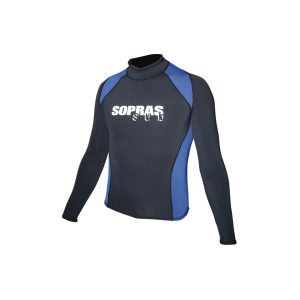
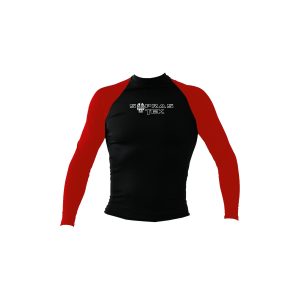
The Rash guard lycra is a thin lycra full-body suit worn under a wetsuit to prevent chafing — particularly at the armpit, inner thigh, and neck areas where neoprene-to-skin friction over an extended dive creates discomfort. It also makes donning a wetsuit significantly easier by providing a smooth, low-friction surface for the neoprene to slide over instead of gripping bare skin. The Rash guard 0.5mm is a neoprene version of the same concept — slightly thicker than the lycra variant, it adds a small amount of thermal value as an underlayer while still primarily serving as a friction-reduction and chafe-prevention layer. Both are worn beneath the wetsuit, not over it.
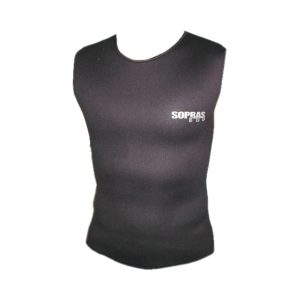
The Undervest 3mm is a dedicated thermal underlayer — a sleeveless 3 mm neoprene vest worn beneath the wetsuit to add torso warmth without the difficulty of layering two full suits. The addition of a 3 mm undervest beneath a 5 mm suit effectively increases core thermal protection to approximately 8 mm at the torso while leaving arms and legs at 5 mm. This is a more practical approach to cold-water extension than wearing two full suits — the undervest’s sleeveless design creates no joint restriction and is easy to don beneath the outer suit.
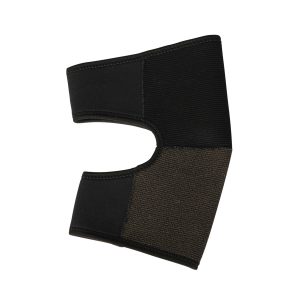
The Knee protection pads are external neoprene pads with reinforced surfaces worn over the wetsuit at the knee area. They are relevant for divers who frequently kneel on underwater surfaces — underwater archaeologists, photographers who stabilize on the bottom, and cave divers. The knee protection extends the life of the wetsuit at the knee (the highest-abrasion area) and protects the diver’s knees during extended kneeling. They are worn over the suit exterior, typically secured with straps.
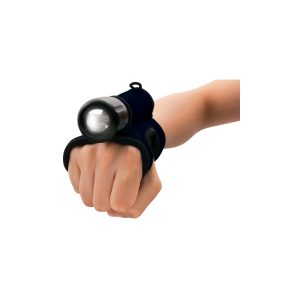
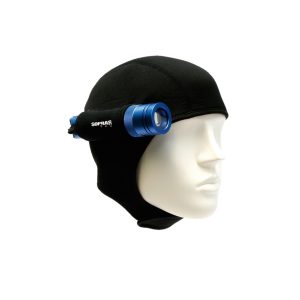
The Hood for single, double torch and Goodman’s glove for torches are specialist accessories for mounting diving torches. The torch hood is a neoprene hood with a built-in torch bracket mount at the forehead — allowing a primary or backup torch to be worn on the head for hands-free illumination, used in cave diving, night diving, and overhead environments. Available in single and double torch mount configurations. The Goodman’s glove is a neoprene glove with a rigid torch mount on the back of the hand — allowing a canister light or primary torch to be held against the hand without gripping, so the fingers remain free for equipment handling. Both are used primarily in technical and cave diving configurations.
What to Look For
- Rash guard vs. undervest based on your need. If chafing is the primary issue, a lycra rash guard is the lightest and most comfortable solution. If warmth is the issue, a 3 mm neoprene undervest adds meaningful thermal value that a lycra layer cannot. If both are issues — common in frequent cold-water divers — layering the lycra rash guard under the neoprene undervest and the undervest under the wetsuit provides both friction reduction and thermal benefit, though donning this three-layer configuration requires patience and time.
- Torch mount compatibility. The torch hood and Goodman’s glove mount configurations must be compatible with the torch you’re using. Verify the mounting system (typically a bar or bracket standard) before purchasing — canister lights, primary torches, and backup torches use different mounting hardware that may not be interchangeable across all hood and glove designs. Contact Soprassub with your specific torch model to confirm compatibility.
- Knee protection fit over your suit. Knee protection pads are sized for use over a wetsuit — they must fit the external dimensions of your suit-covered knee, not your bare knee. Verify that the pad covers the kneecap area completely and that the securing straps are long enough to fasten correctly over 5–7 mm neoprene without cutting into the suit material at the strap edges.
Maintenance and Care
Rinse all items with fresh water after salt water use and dry completely before storage. Lycra rash guards are the most delicate item — avoid abrasive contact during rinsing, as lycra fabric surface damage is not repairable. Wash with a small amount of suit shampoo or mild detergent every few uses to remove salt and organic buildup. The Goodman’s glove and torch hood should have their mounting hardware inspected after every few dives for corrosion — metal components in a salt water environment corrode quickly without maintenance. Rinse the mounting hardware thoroughly and apply a light coat of silicone or protective oil to the metal surfaces periodically. The Knee protection pads should be checked for delamination at the reinforced surface edges and for strap condition — a broken strap underwater leaves the pad floating free and dangling, which is both a snag hazard and frustrating.
FAQ
How much warmth does the 3mm undervest actually add?
A 3 mm undervest beneath a 5 mm suit increases effective torso thermal protection from 5 mm to approximately 8 mm at the core. The practical effect depends on individual thermal sensitivity, but most cold-water divers report a meaningful difference in comfort over a 45-minute dive at 12°C — similar to upgrading from a 5 mm to a 7 mm suit at the torso, while maintaining the greater arm and leg mobility of the 5 mm outer suit. For divers who find their 5 mm suit borderline comfortable at local temperatures but don’t want to commit to a 7 mm suit for warmer-water travel, the undervest is a flexible solution that can be added or left behind based on conditions.
What is a Goodman’s glove and why is it used?
A Goodman’s glove (also called a goodman handle) is a neoprene glove or hand-strap with a rigid mount on the back of the hand that holds a canister light or primary torch against the hand without gripping. In cave and technical diving, the primary torch is typically a large canister light that requires a firm hold — holding it in a gripped fist creates hand fatigue over a long dive and occupies the hand such that other equipment cannot be handled without setting the torch down. The Goodman mount allows the torch to ride against the back of the hand while the fingers remain free for guideline work, valve manipulation, and navigation tool use. It is standard equipment for serious cave divers.
Will wearing a rash guard make my wetsuit harder to put on?
A lycra rash guard makes a wetsuit significantly easier to put on, not harder — the smooth lycra surface slides against the interior neoprene lining with far less friction than bare skin against neoprene. This is actually one of the primary practical benefits beyond chafe prevention. A 0.5 mm neoprene rash guard is slightly more resistant than lycra due to its texture, but still significantly easier than donning a wetsuit over bare skin. The only configuration that adds donning difficulty is the 3 mm undervest beneath a thick outer suit, where the combined thickness and stiffness requires more effort to work the outer suit over the undervest.