


Showing all 5 results
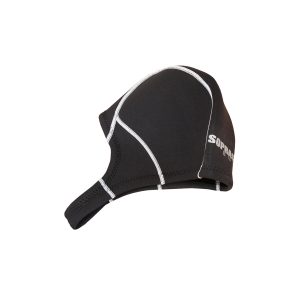
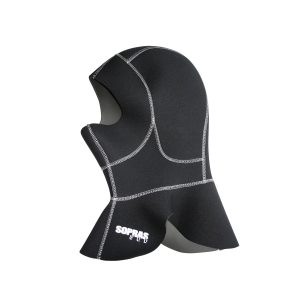
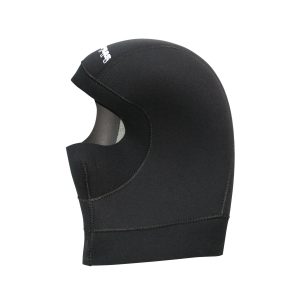
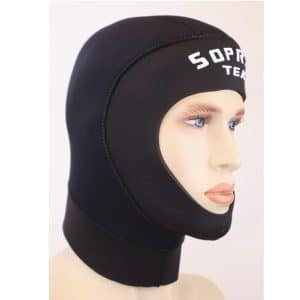
The head accounts for a disproportionate share of heat loss in cold water — covering it with a neoprene hood is often the most effective single step a diver can take to extend comfortable bottom time. Five hood models here cover the range from a 3 mm light hood for cool-water snorkeling and recreational diving through a 7 mm heavy hood for the coldest diving conditions, including stretch variants and a long-skirted design for optimal suit integration.
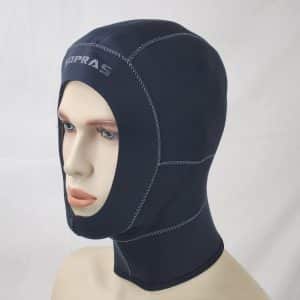
Hood Construction and Thermal Significance
The head represents approximately 30–40% of total body heat loss in cold water because the skull is close to the skin surface with no significant insulating muscle or fat layer, and because the brain maintains a high metabolic rate that generates significant heat — heat that cold water around an unprotected head draws away efficiently. Adding a hood to a 5 mm wetsuit in 12°C water can extend comfortable dive time by 15–25 minutes — more than any other single piece of thermal equipment at the same price point.
The Hood 3mm light is the warmest-water hood in the range — appropriate for water in the 18–22°C range where a full suit is already being worn and head protection adds marginal warmth without overheating on the surface. It uses standard 3 mm neoprene with a basic face opening and standard neoprene skirt. The Hood 4.5mm long uses a longer skirt (the “long” designation) that extends further down the neck and over the shoulders, creating a larger overlap area with the suit collar — this longer skirt significantly reduces the water entry gap at the neck-to-suit junction that is the primary failure point of standard hoods.
The Hood 5mm stretch and Hood stretch 5mm (two variants at 5 mm in stretch neoprene) provide cold-water protection with improved comfort and donning ease over standard 5 mm neoprene. Stretch hoods are easier to pull over the head and maintain face pressure more evenly — a hood that’s too tight across the temples causes headache within 20–30 minutes, while a stretch hood distributes pressure more uniformly. The Hood 7mm is the cold-water maximum — appropriate for water below 10°C or for divers who are particularly sensitive to cold at the head. At 7 mm, the hood is noticeably stiffer and more confining than thinner hoods; some divers find 7 mm hoods claustrophobic and prefer a well-fitted 5 mm stretch hood with an additional thermal layer under it.
What to Look For
- Hood thickness matched to your suit system. Wearing a 3 mm hood with a 7 mm suit creates a significant thermal discontinuity at the head — the neck area between the suit collar and hood face opening is the coldest point in the system. Match hood thickness to suit thickness: 3 mm hood with 2–3 mm suits, 5 mm hood with 5 mm suits, 7 mm hood with 7 mm suits or semi-dry configurations. For extra cold-water margin, go one thickness above your suit at the hood.
- Long skirt vs. standard skirt for suit integration. The Hood 4.5mm long’s extended skirt is worth the consideration for cold-water diving where the neck junction is a critical thermal point. Try the hood with your wetsuit before committing — the skirt should extend 8–12 cm below the suit collar line and remain in contact with the suit exterior throughout the range of head movement. A skirt that lifts away from the suit body during turning or nodding allows water channeling at the gap.
- Face opening shape and size. The face opening should seal against the forehead, temples, cheeks, and chin without creating painful pressure points in any of these locations. The temple area is the most common pressure point — a hood that’s slightly too small across the forehead-to-chin dimension squeezes the temples. Conversely, a hood that’s too large creates folds or gaps at the chin and cheeks. There should be no gap between the hood and the face anywhere around the opening perimeter when the head is in neutral position.
- Stretch construction for active diving. Any diving that involves significant head movement — looking sideways for navigation, looking down for work or photography — benefits from a stretch hood that allows the face opening to deform and reseal without the entire hood shifting on the head. Standard neoprene hoods can shift during movement, which creates a gap at one side of the face opening even when the initial fit was correct. Stretch hoods maintain their seal position more consistently during active movement.
- Interaction with mask seal. The most common problem with hoods and masks is hood material caught between the mask skirt and the face, breaking the mask seal. The hood face opening perimeter should be thin enough to slide under the mask skirt without creating a ridge that breaks the seal. Test the hood-and-mask combination before the first dive — press the mask to the face with the hood in position and verify the seal test (suction hold without strap) succeeds with the hood in place.
Maintenance and Care
Rinse hoods with fresh water after every salt water dive, paying attention to the interior lining at the face opening edge — salt deposits here cause the neoprene to stiffen and can cause skin abrasion around the face over time. Dry hoods inside out on a wide form (a balloon or ball placed inside the hood helps maintain the dome shape during drying) rather than flat, which causes the interior to dry slowly. Do not store hoods with the face opening compressed or folded — the thin neoprene at the face opening perimeter develops permanent compression folds that distort the sealing geometry. Store on a shelf or suspended by the skirt rather than folded or rolled.
Inspect the face opening perimeter annually for small tears or cracks at the inner edge — this area is under repeated tension as the hood is pulled on and off, and it is the first location to develop small tears in aging neoprene. Small tears at the face opening edge can be temporarily sealed with neoprene adhesive, but the repeated stress of donning and doffing usually causes them to propagate despite repair. A hood with significant face opening edge damage should be replaced, as a torn face seal creates cold water flushing at the worst possible location.
FAQ
Do I always need a hood when diving in cold water?
There is no strict rule, but for water below 18°C a hood is strongly recommended for dives longer than 20–25 minutes. Below 12°C, a hood is effectively essential for maintaining comfortable bottom time — even experienced cold-water divers who tolerate cold well find that an unprotected head in 10°C water limits comfortable dive time to 15–20 minutes regardless of suit thickness. A hood adds relatively little equipment volume and weight compared to the thermal benefit it provides.
How do I stop my hood from causing headaches?
Hood headache is almost always caused by excessive pressure at the temples or forehead from a hood that’s slightly too small. The solution is a hood with a larger face opening or, better, a stretch neoprene hood that distributes pressure more evenly around the full face opening perimeter rather than concentrating it at the tightest points. Verify that you’re not overtightening your mask strap in response to hood-induced seal problems — a mask strap that’s too tight compounds the temple pressure from the hood. The mask strap should be snug but not tight; the mask seals from the skirt conforming to the face, not from strap pressure.
Should the hood go inside or outside the suit collar?
Generally, the hood skirt goes outside the suit collar — the suit collar sits against the neck, and the hood skirt lays over the outside of the suit collar. This creates a physical overlap that water must travel up and over before entering the neck-to-suit gap. Some divers tuck the hood inside the suit collar (particularly with long-skirted hoods), which changes the sealing mechanism — water must travel under and up rather than over the seal. Both approaches work; the long-skirted Hood 4.5mm long is designed to work effectively with the skirt outside the suit collar, which is the easier configuration to achieve without assistance.
What is the difference between the Hood 5mm stretch and Hood stretch 5mm?
Both are 5 mm stretch neoprene hoods — the Hood 5mm stretch (SKU 16200) is an established model in the range with a standard stretch construction, while the Hood stretch 5mm (SKU 162130-3) is a newer variant with updated construction. Both provide equivalent thermal protection at 5 mm. The primary differences are in the specific stretch compound used and the face opening geometry, which may suit different face shapes differently. If possible, try both with your mask to identify which provides the better combined seal before purchasing.
When should I use a 7mm hood vs a 5mm hood?
A 7 mm hood is appropriate when diving in water below 10°C for extended periods, when using a 7 mm suit or semi-dry suit system where the head is the last unprotected thermal point, or when previous experience with a 5 mm hood in cold water has resulted in significant head cold discomfort. The 7 mm adds meaningful warmth at the cost of increased stiffness and slightly more restriction on head movement. For most recreational cold-water divers in the 10–15°C range, a high-quality 5 mm stretch hood provides comfortable protection — the 7 mm is the step up for the coldest conditions or for divers who run particularly cold at the head.