

A wetsuit is the primary barrier between a diver’s body and the water — and the single piece of equipment that most directly determines how long and how comfortably you can stay underwater. This category covers the complete thermal protection range from 2 mm tropical suits to 7 mm semi-dry suits for cold European waters, alongside neoprene gloves, boots, socks, hoods, accessories for storage and field repair, made-to-measure suits, and neoprene adhesives for maintenance and repairs.
For more neoprene suits please check SoprasTek and SoprasApnea.
-
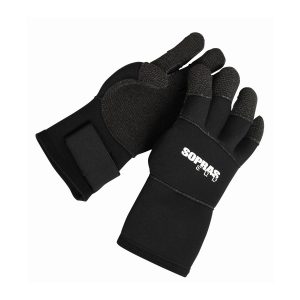
Gloves (12)
-
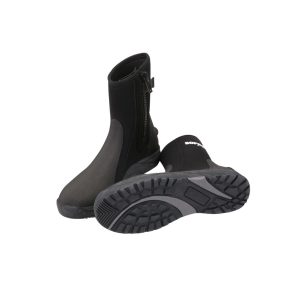
Boots, socks (11)
-
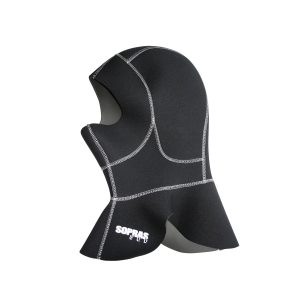
Hoods (5)
-
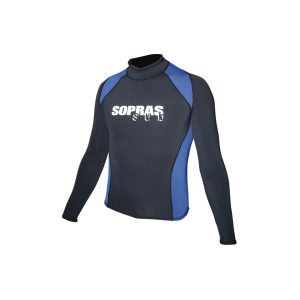
Accessories (10)
-
Made to Measure (4)
-
Neoprene glues (3)
-
Neoprene suits 6/7mm (7)
-
Neoprene suits 5mm (9)
-
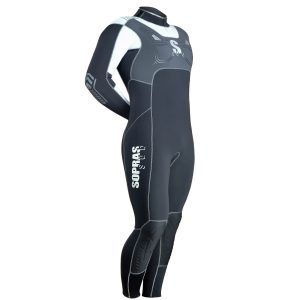
Neoprene suits 2/3mm (10)
Choosing the Right Wetsuit Thickness
Neoprene thickness is measured in millimeters and is the primary variable determining thermal protection. The relationship is direct: thicker neoprene traps a larger layer of water against the skin, which the body heats and which then acts as an insulating barrier. The practical ranges are well-established: 2–3 mm suits are appropriate for water temperatures above approximately 24°C and short exposure times; 5 mm suits cover the 18–24°C range comfortably for 45–60 minute dives; 6–7 mm suits extend thermal endurance into the 10–18°C range that characterizes Central European lakes, quarries, and the northern Atlantic coast.
Suit fit is as important as thickness. A wetsuit that fits correctly allows only a thin layer of water to enter and be retained — this water is heated by body temperature within the first minutes of a dive. A suit that is too large flushes this heated layer continuously as the diver moves, replacing it with cold water and negating the insulation value. A suit that is too tight restricts circulation, accelerates fatigue, and makes breathing more difficult when compressing the chest. When in doubt between two sizes, the tighter fit is generally preferable — neoprene relaxes slightly with use and warmth.
Neoprene suits 2/3mm
Lightweight suits for warm tropical waters and summer recreational diving — full suits (Isida, Vegas, Phantom Jumpsuit), shorties, and 2 mm suits. Ideal for water above 24°C or as thermal underlayers in combination systems.
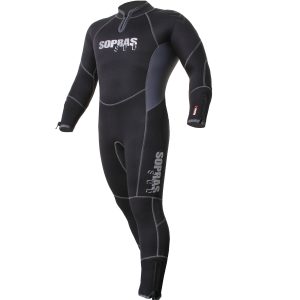
Neoprene suits 5mm
Mid-range thermal protection for water temperatures between 18–24°C. Includes the Antibes, Amalfi Flex, CIPRO, Cannes Man, WHALE skinsuit, and the high-stretch Freddo Extreme series for demanding fit requirements.
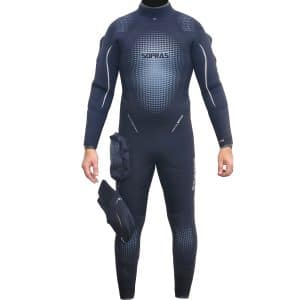
Neoprene suits 6/7mm
Cold water suits for European diving in the 10–18°C range. Includes the Antibes 7mm, Islanda 7mm, Freddo Extreme 7mm extrastretch, and the Alaska semi-dry man — the latter with additional sealing at wrist, ankle, and neck to minimize water flushing.
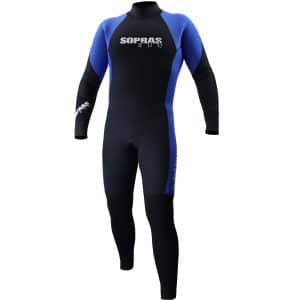
Made to Measure
Custom-fitted 5mm and 7mm suits for divers whose body proportions don’t correspond to standard size ranges. Available in men’s and ladies’ configurations with plush interior lining and nylon exterior.
Gloves
12 models from 2 mm superstretch gloves for warm water through 5 mm Kevlar-reinforced gloves for cold water and abrasive environments. Includes the Donut seal wrist design and the Swimming gloves for surface use.
Boots, socks
11 items covering the full range: 2.5 mm low booties and tropical booties for warm water, 5 mm hard-sole boots for rocky entries, 6 mm cold-water boots, zip boots, neoprene aqua shoes, rock boots, and neoprene socks and cycling socks.
Hoods
Five hood models from the 3 mm light hood for cool-water snorkeling to the 7 mm heavy hood for cold diving — including stretch variants and the long Hood 4.5mm with extended neck skirt for suit neck overlap.
Accessories
Two subcategories: Hangers for wetsuit storage between dives and dive seasons, and Others covering rash guards, undervests, knee protection, and torch-specific hood accessories (Goodman’s glove, torch hood).
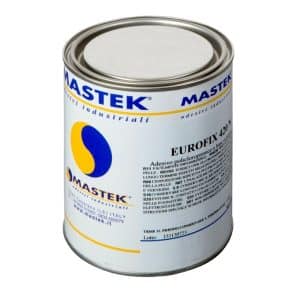
Neoprene glues
Three adhesive products for field and workshop neoprene repair: standard neoprene glue, GA Black Witch (flexible contact adhesive), and Eurofix — covering minor tears, delaminating seams, and boot sole repairs.
Suit Construction: One-Piece vs. Two-Piece, Semi-Dry vs. Wetsuit
Full-length one-piece suits (all the suits listed here) provide better thermal continuity than two-piece systems because there is no water flush point at the mid-body junction. The trade-off is more difficult donning — particularly in the 5–7 mm thickness range where the neoprene is substantially stiffer. The Freddo Extreme series addresses this with an extrastretch neoprene construction that maintains the thermal value of standard 5–7 mm neoprene while requiring significantly less effort to pull on and allowing a greater range of movement during the dive.
The Alaska semi-dry occupies a category between a standard wetsuit and a drysuit. Semi-dry suits use tighter-fitting neoprene seals at the wrist, ankle, and neck — similar in concept to the Donut seal design used on the Gloves 3mm Donut seal and Boots 5mm donut seal — that minimize water entry and prevent the flushing of the heated water layer during movement. In cold European water where a standard 7 mm wetsuit is marginal, a semi-dry suit of the same thickness extends bottom time significantly without the complexity and maintenance demands of a drysuit.
The WHALE skinsuit in the 5 mm category is a different construction: a smooth-skin exterior neoprene suit rather than a fabric-laminated design. Smooth-skin neoprene has lower water absorption and lower water drag, making it popular for snorkeling and freediving. It is more fragile than fabric-laminated neoprene and requires more careful handling against abrasion.
What to Look For
- Water temperature at your dive sites, not air temperature. Divers frequently underestimate the thermal demand of repeated dives over a dive day — the first dive of the day in 18°C water may feel manageable in a 3 mm suit, but by the third dive the core temperature deficit accumulates and the perceived cold becomes significantly more intense. Select suit thickness for the third dive of a cold day, not the first dive of a warm one.
- Suit fit priority: no gaps at wrist, ankle, neck. The three primary water entry points in a wetsuit are the wrist seals, ankle seals, and neck opening. Try the suit fully before purchasing — check that the sleeve ends sit flush against the inner wrist without gaps when the arm is extended forward (as in a fin stroke), that the ankle cuffs don’t gap when the knee is bent, and that the neck seals against the collarbone area without leaving an open channel between the suit and the skin.
- Seam construction and neoprene quality. Entry-level neoprene suits use simple flatlock seaming — the panels are sewn together with the stitching running through the full neoprene thickness, which leaves holes in the seam through which water passes freely. Mid-range and premium suits use blind-stitch (also called glued and blind-stitched) construction where the seam is bonded with neoprene cement and then stitched without the needle penetrating the outer surface, creating a water-resistant seam joint. All Sopras suits in the 5–7 mm range use glued and blind-stitched seam construction.
- Zipper position and type. Back-zip suits are easier to don and doff independently but create a continuous seam at the back of the spine through which cold water can flush. Chest-zip and shoulder-zip designs eliminate this back opening and create a more water-tight seal, but typically require assistance to don. For solo divers, back-zip is more practical; for divers with a consistent buddy, a chest-zip or shoulder-zip is a worthwhile upgrade for thermal performance.
- Accessibility of the Made to Measure option. Standard size ranges cover the majority of body proportions, but divers with non-standard torso-to-leg ratios, very long or short arms, or unusual shoulder widths often cannot achieve a correct fit in off-the-shelf sizes. For these divers, a made-to-measure suit at the price point listed (€280–320) is a practical investment — a suit that fits correctly outperforms a suit three times the price that fits poorly.
Maintenance and Care
Rinse wetsuits inside and out with fresh water after every salt water dive. Rinse the interior first — residual salt inside a suit dries into crystals that abrade the skin on subsequent dives and accelerate neoprene degradation from the inside. Turn the suit inside out after rinsing and allow it to dry completely before turning right-side out for storage. Never dry neoprene in direct sunlight or on a heater — UV radiation and heat both accelerate neoprene breakdown significantly.
Store wetsuits on wide-shouldered hangers that support the full shoulder width without concentrating weight on a narrow point — the Hangers subcategory here offers several options specifically designed for wetsuit storage. A standard wire hanger concentrates the full suit weight on a 5 mm contact point, which permanently deforms the shoulder seam and neoprene over a few months. Alternatively, store suits folded at the waist over a horizontal bar rather than hanging by the shoulders if wide hangers are not available. Never store suits compressed — a rolled or tightly folded wetsuit develops permanent compression set at the fold lines that permanently reduces neoprene thickness and insulation value at those points.
For neoprene repairs, clean the repair area thoroughly before applying adhesive. Neoprene adhesives (the Neoprene glues subcategory) require a clean, dry neoprene surface for effective bonding — any residual salt, silicone, or lubricant prevents the adhesive from bonding. Apply adhesive to both surfaces, allow to become tacky (typically 3–5 minutes), then press together firmly and allow to cure for a minimum of 2 hours before stretching the repaired area. For through-tears that have compromised both the outer fabric and neoprene core, seam tape applied over the adhesive repair provides additional structural reinforcement.
FAQ
What wetsuit thickness should I use for diving in Czech or Slovak lakes?
Czech and Slovak inland diving waters range from approximately 8–12°C at depth year-round in quarries and lakes, with surface temperatures reaching 20–24°C in summer. For bottom diving in these conditions, 5 mm is the minimum acceptable thickness for most divers; 7 mm is more comfortable for multiple dives and extended bottom times. For summer recreational diving in the 18–22°C surface layer only, 3 mm is sufficient. A 5 mm suit with a 3 mm hood and 5 mm gloves covers the majority of Central European recreational diving conditions across the dive season.
What is the difference between the Freddo Extreme and Antibes/Amalfi suits?
The Freddo Extreme uses an extrastretch neoprene compound that provides substantially greater elasticity than standard neoprene at the same thickness. This results in a suit that is significantly easier to pull on, allows a wider range of movement during the dive, and reduces the squeeze pressure on the body that can cause fatigue during extended dives. The Antibes and Amalfi use standard neoprene construction — durable, cost-effective, and thermally equivalent to the Freddo at the same thickness, but less flexible. The Freddo Extreme is the premium option for active divers who prioritize comfort and mobility; the Antibes and Amalfi are practical everyday suits for recreational divers at a lower price point.
How do I put on a 7mm wetsuit without assistance?
The single most effective technique is to use plastic bags on the hands and feet as a donning aid — the plastic slides over the neoprene interior without the friction that bare skin creates. Pull the bag onto one foot, insert the foot into the suit leg, work the neoprene up to knee height, remove the bag, repeat for the other leg, and then work both legs up to waist height before addressing the upper body. Wetsuit lubricants (hair conditioner or dedicated suit lubricant) applied to the wrists and ankles help the suit slide over the skin at the seal points. Never pull the suit by the seams — grip the neoprene panels themselves to avoid seam stress.
How long should a wetsuit last?
With proper care, a quality wetsuit should provide 5–10 years of regular use. The primary aging mechanisms are UV degradation (which softens and stiffens neoprene simultaneously, reducing both flexibility and insulation), compression set (which permanently reduces neoprene thickness at contact points), and seam delamination (which allows increasing water flush through previously sealed seams). Annual inspection of seams, zipper function, and neoprene flexibility identifies suits approaching the end of their effective service life before they fail during a dive.
Can I repair a torn wetsuit myself?
Yes — neoprene adhesive repairs are straightforward for minor tears and delaminating seams. The Neoprene glues subcategory carries three adhesive options appropriate for different repair types. For small tears (under 20 mm), clean both faces of the tear, apply adhesive to both, allow to tack, and press together firmly. For larger tears or through-cuts that penetrate the full suit thickness, add a fabric patch on the interior face for structural reinforcement. Zipper replacement and major seam reconstruction require workshop tools and are more cost-effective as a service from a dive equipment retailer.