

A diving tank stores compressed breathing gas — air, nitrox, trimix, or oxygen — at pressures between 200 and 300 bar and delivers it on demand through the regulator. The valve fitted to the tank neck is the mechanical interface between the stored gas and the regulator first stage: it controls the gas flow, provides a connection point, and incorporates a burst disc as a safety overpressure relief. This category covers steel scuba tanks from 1 to 20 litres, aluminium tanks, tank valves in single-port and dual-port configurations, modular valve components for technical configurations, and all accessories required for safe transport, storage, and maintenance of the tank system.
Tank Materials, Volumes, and Working Pressures
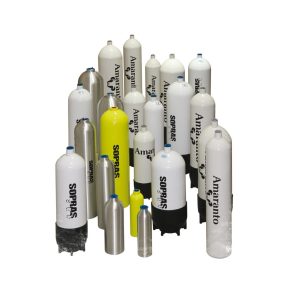
All steel tanks in this range are manufactured from chromium-molybdenum alloy steel and tested to European standard EN 1964. Working pressures available are 200 bar, 232 bar, and 300 bar; the rated working pressure determines how much gas the tank can store at a given geometric volume. A 12-litre tank at 200 bar holds 2,400 litres of free gas; the same 12-litre body at 232 bar holds 2,784 litres. A 300 bar tank of the same volume holds 3,600 litres — effectively the same gas supply as an 18-litre 200-bar tank in a physically smaller cylinder. High-pressure 300 bar tanks are preferred in technical diving where buoyancy neutrality and stage/deco cylinder weight are important, and in environments where tank size constraints apply such as cave diving.
The range includes tanks from 1 litre (argon inflation or pony cylinder use) through 3, 5, 7, 8.5, 10, 12, 15, 18, and 20 litres. The 12-litre and 15-litre cylinders are the standard recreational diving sizes in Europe. The 18-litre and 20-litre cylinders are used by divers with higher air consumption, for long or deep dives, and for sidemount configurations. Small tanks (1–3 litre) are used as argon inflation cylinders for dry suits, or as redundant air sources in certain technical configurations. The concave-bottom 8.5l and 12l tanks are designed for use without a rubber boot where tank diameter is standardised across a manifold configuration. Aluminium tanks (S63 and S80 equivalents) are available for applications where non-magnetic material is required or for travel when returning heavy steel cylinders is impractical.
Accessories
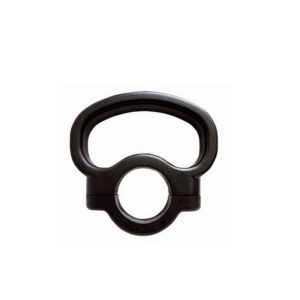
Tank boots, protective nets, carrying handles, argon holders, dust caps, silicone lubricants, tank carriers, and transport carts. Everything needed to handle, protect, and maintain cylinders on the surface.
Tanks
Steel scuba cylinders from 1 to 20 litres at 200, 232, and 300 bar working pressure, plus aluminium tanks. Mono, sidemount, stage, and argon configurations.
Valves
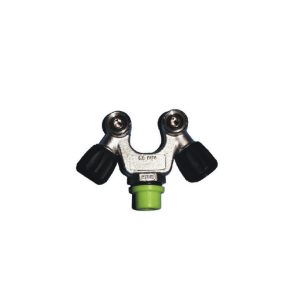
Single-outlet Z valves, dual-outlet H and V valves, and modular valve components for isolator manifold configurations. EN 144, 300 bar, nitrox, and US 3/4″ NPSM thread variants.
Valve Types and Thread Standards
A diving valve screws into the tank neck using a standardised thread — the M25×2 thread is used on European tanks of 10 litres and above in this range. The regulator connection at the top of the valve is a separate standard: DIN (EN 144), in which the regulator screws directly into the valve body with a metal-to-metal seal, or A-clamp (INT/yoke), where the regulator slides over a protruding port and is clamped mechanically with an O-ring seal. DIN is structurally stronger and preferred for 300 bar valves and for technical diving; A-clamp is more common in recreational dive centres. Some valves in the range accept an optional DIN-to-A-clamp adapter insert so a single valve body can be used with either regulator type.
Single-port Z valves (monovalves) have one regulator connection. They are used for recreational single-cylinder diving, sidemount cylinders, stage cylinders, and argon cylinders. The valve handle turns clockwise to close, which is the standard direction for breathing gas valves. Dual-port valves (H-valve and V-valve configurations) provide two regulator connection points on a single tank — useful for redundant primary/backup regulator configurations on a single cylinder, or for connecting an independent pressure gauge on a second port. Valve thread variants include the standard EN 144 (G 5/8″ regulator connection), 300 bar versions with a higher-rated burst disc, nitrox-specific versions with a dedicated 26×2 or G 5/8″ nitrox port, and US 3/4″ NPSM for compatibility with North American regulator first stages.
Modular Valve Components and Manifolds
Technical twin-cylinder configurations use a manifold — a crossbar connecting two tanks at the valve, with an isolator valve in the centre. If a regulator or hose fails on one side, the isolator can be closed to isolate that half of the gas supply, preserving the gas in the opposite tank. The modular valve components in this category — left and right parts for H-valve assemblies, H-adapters, manifold parts with isolator (ISOL), second outlet screws, and closure plugs — allow the diver to configure and reconfigure manifold setups and to replace individual components independently. Both 232 bar and 300 bar manifold components are available.
What to Look For
- Working pressure matched to your fill station. Confirm what maximum pressure your local compressor or fill station provides before selecting a tank. Filling a 300 bar tank to only 232 bar wastes the volume advantage of the higher-rated cylinder. Conversely, a 232 bar tank must never be overfilled to 300 bar regardless of regulator rating.
- Tank volume appropriate for your air consumption and dive plan. A recreational diver with average consumption at 18–20 metres recreational depth will get approximately 50–60 minutes from a 12-litre 232-bar cylinder. Faster consumers, deeper dives, or longer bottom times require a 15-litre or 18-litre cylinder, or a twinset configuration.
- Valve thread compatibility with your regulator. DIN regulators require a DIN valve; yoke regulators require an A-clamp valve or a DIN valve fitted with an A-clamp insert. If you dive with both DIN and A-clamp regulators at different sites, select a DIN valve and carry an insert adapter rather than the reverse — DIN is the structurally stronger connection.
- Nitrox service marking if the cylinder will be used for EAN mixes above 21%. In most training agency standards, a cylinder used for nitrox with oxygen content above 21% must be oxygen-cleaned, labelled with a green-and-yellow band, and fitted with an oxygen-compatible valve. The dedicated nitrox valve variants in this range use nitrox-rated seals.
- Current hydrostatic test date. All pressure vessels must be periodically retested — in the EU, typically every five years for steel cylinders under EN 1964. Confirm the test date on the tank shoulder stamp before purchase or use. Tanks sold new in this store carry a valid CE mark and current test date.
Maintenance and Care
Rinse tank exteriors and valve bodies in fresh water after salt water diving. Do not immerse the valve in water with the regulator removed — the open port allows water ingress into the valve seat and internal components. After rinsing, fit the valve dust cap before storage. Store cylinders upright with a small amount of residual pressure (minimum 20–30 bar) to prevent atmospheric moisture and contaminants from entering through the valve. Do not store tanks fully pressurised in confined spaces or vehicles in direct sunlight — ambient temperature increases raise internal pressure and accelerate seal degradation. Inspect valve O-rings before each use; replace if cracked, compressed flat, or showing surface deterioration. Apply silicone grease (not petroleum-based lubricant) sparingly to O-rings during regulator assembly. Service valves annually or as recommended by the manufacturer — the internal O-ring seat and burst disc should be inspected by a trained technician. Tanks must be hydrostatically tested on the schedule required by local regulation, typically every five years for steel cylinders in the EU.
FAQ
What is the difference between 200 bar, 232 bar, and 300 bar tanks?
The working pressure is the maximum rated fill pressure of the cylinder. A higher working pressure stores more gas in the same physical volume: a 12-litre 300-bar tank holds 3,600 litres of free gas versus 2,784 litres for a 12-litre 232-bar tank. The burst disc in the valve is rated to match the working pressure of the cylinder; never fit a 232-bar valve to a 300-bar cylinder or vice versa. Fill stations must match or exceed the working pressure to fill the tank fully, and must not exceed it under any operating conditions.
What is the difference between DIN and A-clamp valves?
DIN (EN 144) and A-clamp (INT/yoke) are the two regulator-to-valve connection standards used in recreational and technical diving. In a DIN connection, the regulator first stage has a threaded insert that screws into a threaded port in the valve body, compressing an O-ring inside the valve — the O-ring is retained and protected within the connection. In an A-clamp connection, an O-ring sits in a groove on the valve’s protruding port face, and the regulator yoke clamps over it mechanically. DIN is rated for 200, 232, and 300 bar configurations; A-clamp is generally limited to 232 bar. DIN is mechanically stronger and the preferred connection for technical diving; A-clamp remains common in recreational hire and dive centres globally.
How do I choose between a single-port Z valve and a dual-port H/V valve?
A single-port Z valve is appropriate for any configuration where one regulator connects to the tank — recreational single-cylinder diving, sidemount, stage, and argon cylinders. A dual-port valve provides a second regulator connection point on the same cylinder, which is used when the diver wants to breathe from two independent first stages on one tank (a redundant backup configuration), or to connect a separate pressure gauge to one port while using the other for the regulator. For recreational diving, a single-port valve is standard. For technical and cave diving, dual-port or manifold configurations are determined by the diver’s training and team configuration.
What is a manifold isolator and when is it used?
A manifold connects two tanks at their valves with a crossbar that allows gas to flow between both cylinders through a single regulator, effectively doubling the usable gas supply while allowing the diver to breathe from either tank through either regulator. The isolator valve in the centre of the manifold can be closed to separate the two tanks gas-supply-wise if one regulator, hose, or valve develops a fault — isolating the problem to one side while preserving the remaining gas in the other tank. Manifold configuration is standard in twinset technical diving and is covered in technical diving training programmes before use.
How often does a steel diving tank need to be hydrostatically tested?
Under EU regulations and EN 1964, steel diving cylinders must undergo periodic hydrostatic pressure testing — typically every five years. The test date is stamped into the shoulder of the cylinder alongside the manufacturer’s mark, working pressure, and water capacity. A cylinder with an expired test date may not be legally filled at a commercial fill station. Visual inspection (internal and external) is also required at intervals set by the inspection body and local regulation — annually in many jurisdictions. The dive shop or fill station can advise on the current testing requirement applicable in your region.
“`
—
### 3. Meta title
“`
Diving Tanks, Valves & Accessories | Soprassub
“`
### 4. Meta description
“`
Steel and aluminium scuba tanks 1–20l, 200–300 bar. Single and dual-port valves, modular manifold parts and tank accessories. Browse and order now.