

Showing all 12 results
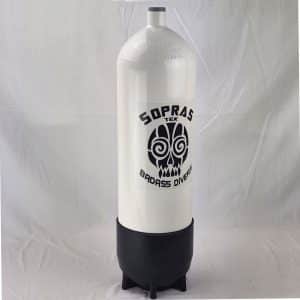
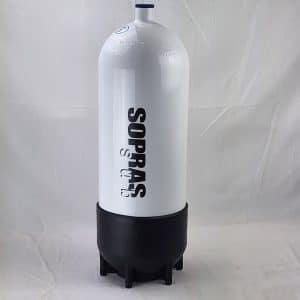
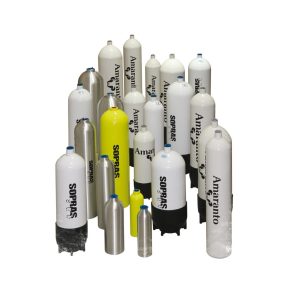
This section lists the steel and aluminium scuba diving cylinders available through Soprassub. The range covers volumes from 1 to 20 litres in working pressures of 200, 232, and 300 bar, including concave-bottom cylinders for manifold twinsets and aluminium tanks for non-magnetic or travel applications. All steel cylinders are manufactured to EN 1964 and carry a current CE mark and hydrostatic test date. Tanks are sold as cylinder bodies only — valves are a separate item in the Valves category.

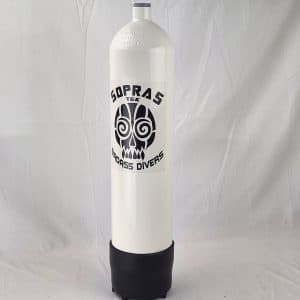
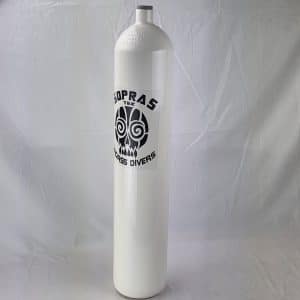
How to Select the Right Tank Volume and Pressure
The amount of gas available for a dive is the product of the tank’s geometric capacity in litres and its fill pressure in bar. A 12-litre tank at 232 bar contains approximately 2,784 litres of free gas at surface pressure. A diver consuming 20 litres per minute at the surface experiences a breathing rate of 60 litres per minute at 20 metres depth (3 bar absolute); a 12-litre 232-bar tank provides roughly 46 minutes at that depth under ideal conditions. Adding a reserve of 50 bar, usable time is reduced to approximately 33 minutes. Divers with higher consumption, planning deeper or longer dives, or working in conditions requiring higher gas reserves should select a larger volume or higher-pressure cylinder accordingly.
For recreational single-cylinder diving in Europe, the 12-litre 232-bar cylinder (body diameter 171 mm or 203 mm) is standard. The 15-litre and 18-litre cylinders are appropriate for high-consumption divers and longer dive plans. The 20-litre cylinder provides maximum gas volume in a single steel cylinder and is used for extended range recreational or light technical diving. The 10-litre cylinder is a compact alternative for shorter, shallower dives or for divers with lower consumption. The 7-litre cylinder is a common sidemount configuration and a pony/bailout cylinder choice. The 5-litre cylinder is used for sidemount, pony, and argon. The 3-litre and 1-litre cylinders are used almost exclusively for argon inflation and small redundant air sources.
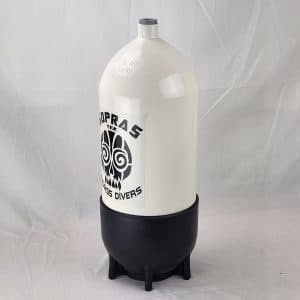
The concave-bottom 8.5l and 12l tanks are a specific configuration for technical twinset use. The concave base geometry allows two cylinders to sit flush against each other in a twinset manifold configuration without the spacing created by conventional flat-base or boot-fitted cylinders, reducing the overall width and weight of the configuration.
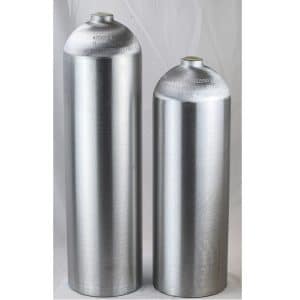
Aluminium tanks (S80/11.1l and S63/8.9l CE equivalents) are made from 6061 aluminium alloy. They are negatively buoyant when full but approach neutral or slightly positive buoyancy when nearly empty — a characteristic that affects weighting calculation for recreational divers, particularly those diving in salt water. Aluminium is non-magnetic, which is relevant for diving near sensitive equipment, and the material is preferred for hire equipment in many warm-water dive centres because it does not rust externally.
Working Pressure: 200, 232, and 300 Bar
The 200-bar working pressure is the historical standard still used in some European markets and for certain tank sizes. The 232-bar standard is the most common fill pressure across European dive centres and the default working pressure for the majority of tanks in this range. The 300-bar standard requires a 300-bar compressor fill cascade and a 300-bar valve — both of which must be matched. The advantage of 300-bar tanks is maximum gas storage in a minimal physical volume: a 10-litre 300-bar tank stores the equivalent of a 15-litre 200-bar cylinder. This is particularly valuable in technical diving configurations where cylinder count and overall equipment weight and buoyancy are optimised.
What to Look For
- Working pressure supported by your fill station. 300-bar tanks can only be filled to capacity at a 300-bar fill station. Confirm availability at your primary fill location before selecting a 300-bar cylinder.
- Body diameter for compatibility with your backplate or BCD. Tank bands on backplates and BCDs are sized for specific cylinder diameters — typically 171 mm or 203 mm. Confirm your harness or BCD tank band diameter before selecting a cylinder with a different body diameter.
- Concave base for twinset configurations only. The concave-bottom cylinders require specific twinset band hardware to mount correctly — they are not compatible with standard single-cylinder backplates without modification. They are intended for manifold twinset use.
- Aluminium buoyancy characteristic at low pressure. If you dive aluminium tanks, include the buoyancy shift from full to near-empty in your weighting calculation. The buoyancy change from full to empty for an S80 equivalent is approximately +2 kg in salt water; this is typically compensated with 2 kg less lead weight compared to diving a steel cylinder of similar volume.
Maintenance and Care
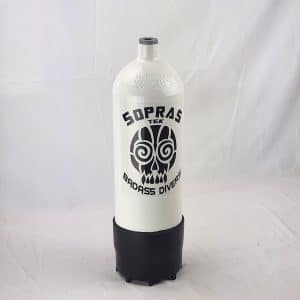
Store cylinders upright with a minimum residual pressure of 20–30 bar to prevent atmospheric humidity and contamination from entering through the valve. Rinse the exterior with fresh water after salt water exposure, paying attention to the valve area and base. Remove the tank boot periodically to inspect and dry the base — trapped salt water under a boot accelerates external corrosion. Do not paint, coat, or obscure the shoulder markings including working pressure, capacity, and hydrostatic test stamps. Inspect the exterior annually for corrosion pitting, mechanical damage, and strap or net abrasion marks. Internal inspection (visual plus) is required periodically — annually in most jurisdictions — by a qualified inspector using an endoscope. Steel cylinders must be hydrostatically retested every five years under EN 1964. Do not use cylinders with expired test dates.
FAQ
Are tanks sold with valves included?
No. Tanks are sold as cylinder bodies only in this category. Valves are sold separately in the Valves section and must be ordered independently. This allows the diver to select the specific valve type, port configuration, thread standard, and pressure rating appropriate for their regulator and use case. If you are assembling a complete tank-and-valve setup and are unsure of compatibility, contact us before ordering.
What size tank do I need for recreational diving?
The 12-litre 232-bar cylinder is the European recreational standard and the most commonly filled size at dive centres across the continent. It is appropriate for most recreational divers at depths up to 30–40 metres on single dives. Divers with higher air consumption, those planning multiple dives per day, or those diving at the deeper end of the recreational range benefit from a 15-litre cylinder. The 18-litre and 20-litre sizes are used by high-consumption recreational divers and for light technical diving within the no-decompression recreational framework.
What is the EN 1964 standard?
EN 1964 is the European standard for the design, manufacture, and testing of seamless steel gas cylinders for transportable use, including diving cylinders. It specifies material properties, manufacturing tolerances, pressure test requirements, and marking requirements. Cylinders manufactured to EN 1964 carry a CE mark, the manufacturer’s identification, the working pressure, the hydraulic test pressure (typically 1.5× working pressure), the water capacity in litres, and the date of the most recent hydrostatic test. This marking on the cylinder shoulder is the primary reference for verifying that a cylinder is within its legal test interval and rated for the intended fill pressure.
Can I use a steel tank for nitrox diving?
Yes, subject to oxygen cleaning and correct labelling. Steel cylinders used for nitrox with oxygen content above 21% must be internally clean — free of hydrocarbon contamination — and must be labelled with the nitrox identification markings (green/yellow banding and EAN content label) required by your training agency or national regulation. The valve must also be rated and cleaned for oxygen service; nitrox-specific valve variants are available in the Valves section. Most fill stations require the cylinder to present a valid oxygen cleaning certificate before filling with nitrox.