

Showing all 10 results
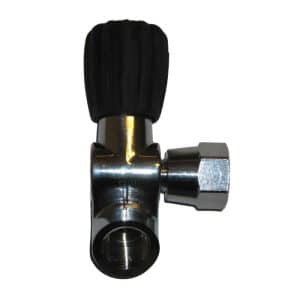
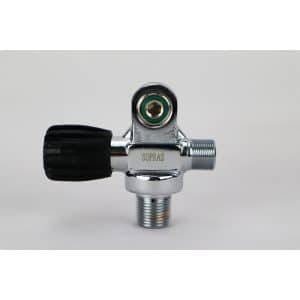
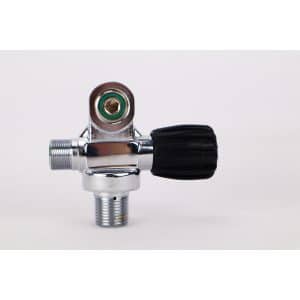
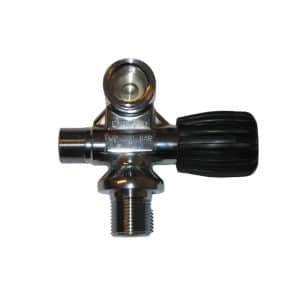
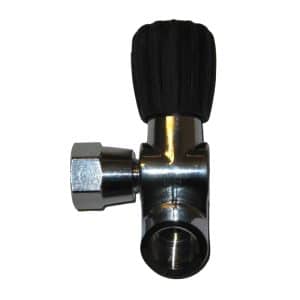
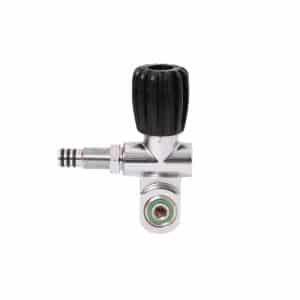
Modular valve components are the individual building blocks used to construct, extend, and service manifold twinset valve systems. Rather than purchasing a complete pre-assembled manifold valve, modular components allow a diver or technician to configure the system to specific pressure ratings, isolation requirements, and cylinder sizes, and to replace individual worn or damaged parts without replacing the entire valve assembly. This category includes modular monovalves (left and right), H-adapters, manifold parts with isolator at 232 and 300 bar, second outlet screw adapters, and closure plugs.
How Modular Valve Systems Work
A manifold twinset valve system consists of a left-hand valve body and a right-hand valve body — one on each cylinder of the twin — connected by a crossbar with an isolator valve in the centre. Gas flows freely between both cylinders through the manifold when the isolator is open, so both regulators draw from the combined gas supply. If one regulator or first stage develops a fault, the diver closes the isolator, separating the two cylinders. Gas in the good cylinder remains available through the good regulator; gas in the faulted cylinder is isolated. This is the fundamental redundancy architecture of backmount twinset technical diving.
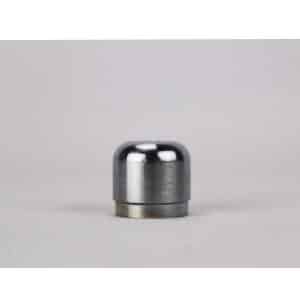
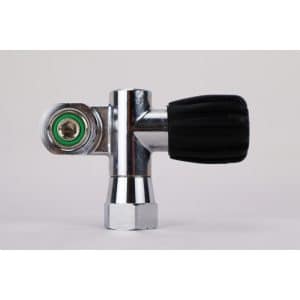
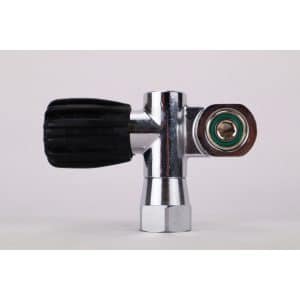
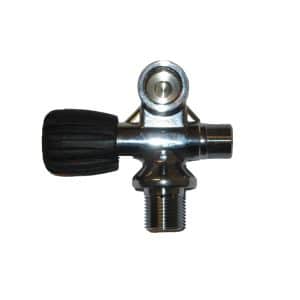
The modular components in this category allow flexible assembly of this system. A modular monovalve left and modular monovalve right (SKU 741300/741302) are the basic valve bodies for each cylinder, configured to accept the manifold crossbar. The H-adapter left and H-adapter right (SKU 741304/741305) convert a standard single-port Z valve body to accept a second regulator port — effectively turning a monovalve into a dual-port valve within a modular system. The closure for valve (SKU 741303) is a blanking plug that seals an unused port in the modular assembly. The left and right parts for manifold 300 bar ISOL (SKU 743301/743302) are the 300-bar rated isolated manifold components for high-pressure twinset configurations. The left and right parts H valve 300 bar (SKU 737301/737302) are the 300-bar modular H-valve halves for twinset assemblies. The second outlet 232 bar screw (SKU 742244/245, left and right) adds a second outlet port to an existing modular valve body at 232 bar.
232 Bar vs. 300 Bar Modular Components
Modular components are pressure-rated and must match the working pressure of the cylinders in the configuration. 232-bar and 300-bar components are not interchangeable — the manifold crossbar, isolator mechanism, and burst discs are all pressure-rated. When assembling a 300-bar twinset, all valve components — both valve bodies, the manifold bar, and all isolator and port components — must be 300-bar rated. Mixed pressure assemblies are not permissible. Confirm the rated working pressure of every component before assembly.
What to Look For
- Left/right pairing. Modular manifold systems use matched left and right components — a left monovalve on the left cylinder, a right monovalve on the right. Order components in the correct orientation for your configuration.
- Consistent pressure rating across the entire assembly. Every component in a manifold system must be rated to the same working pressure. Do not mix 232-bar and 300-bar components in one assembly.
- Isolator valve requirement. The ISOL (isolated) manifold parts include an isolator valve mechanism. If your configuration requires gas isolation capability — which it should for any serious technical diving application — confirm that the manifold parts you select include the isolator mechanism rather than a simple crossbar without isolation.
- Technical diving training before assembling a manifold system. Modular valve configuration, gas management procedures, and valve shutdown drills are taught within technical diving training programmes. These components should not be assembled or used without the relevant training, regardless of mechanical competence.
Maintenance and Care
Modular valve assemblies should be serviced as a complete unit — not component by component in isolation — because the O-ring seats, burst discs, and isolator mechanism interact across the full assembly. Service interval is annual for equipment in regular use. The isolator valve mechanism must be exercised (opened and closed fully) regularly during service to confirm smooth operation; a stiff or partially-seizing isolator in an emergency is a serious problem. Manifold crossbar connections to valve bodies must be inspected for thread condition and O-ring integrity at every service. All components must be cleaned and inspected before reassembly. Any component showing corrosion, pitting, thread damage, or cracked seals must be replaced before the system is returned to service. Second outlets and H-adapters not in use must be sealed with closure plugs — open ports under pressure are a gas loss and contamination risk.
FAQ
Can I build a manifold system from these components, or do I need to buy a complete manifold?
Yes, the modular components in this category are designed to allow a complete manifold valve system to be configured from individual parts. You will need a left valve body, a right valve body, a manifold crossbar with isolator (sold separately at Soprastek), and any additional port components required for your configuration. The advantage of modular assembly is the ability to select exact pressure ratings, port configurations, and replacement parts independently. Assembly should be carried out by a qualified technician familiar with high-pressure valve systems, or guided by a qualified technical diving instructor.
What is the isolator valve and how is it used in an emergency?
The isolator is the valve mechanism in the centre of the manifold crossbar that controls gas flow between the left and right cylinders. Under normal diving conditions, the isolator is fully open, allowing both regulators to draw from both cylinders equally. If a regulator, first stage, or hose on one side develops a catastrophic gas leak, the diver’s immediate response is to identify the faulting regulator, shut down the corresponding tank valve, and if the fault is in the manifold-side plumbing, close the isolator to stop gas loss from both cylinders through the fault. The specific procedure — “valve shutdown drill” — is a core skill in technical diver training and must be practised regularly in controlled conditions before relying on it underwater.
What does the H-adapter do and when would I need one?
The H-adapter converts a modular monovalve body into a dual-port valve by adding a second regulator connection point to the existing body. This is used when the diver wants to connect two first stages to one side of the twinset — for example, to run a primary regulator and a long-hose configuration simultaneously from the same cylinder while maintaining manifold connection to the other cylinder. The H-adapter is a modular extension component; it threads into a port on the modular valve body and provides an additional DIN outlet. Left and right variants are available to match the valve body orientation.