

Showing 1–12 of 18 results
Mask and fin accessories cover the maintenance products, replacement parts, and add-ons that keep your ABC gear performing correctly between dive seasons. Anti-fog solutions, neoprene and silicone mask straps, protective cases, replacement mouthpieces, fin straps, and field repair kits — 18 items for routine care, customization, and on-site repairs.

Anti-Fog Products: Differences and Application
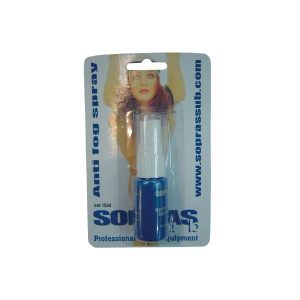
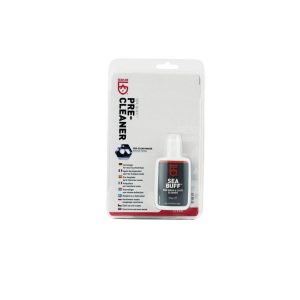
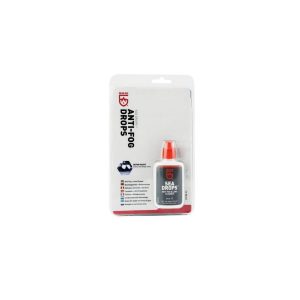
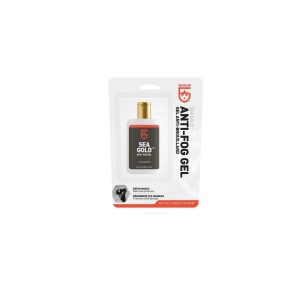
Mask fogging is caused by the temperature difference between the diver’s face and the cooler water on the lens exterior, which causes moisture in the warm air space to condense on the glass. Anti-fog solutions work by depositing a hydrophilic coating on the lens interior that causes condensation to spread into a thin, transparent film rather than forming discrete droplets that scatter light. Three anti-fog products are available here: the Antifog for masks (standard liquid solution), GA Sea Buff (a gel treatment applied and buffed into the lens surface), GA Sea Drops (a drop-format solution), and GA Sea Gold (a film-forming liquid with longer residual effectiveness).
Standard liquid anti-fog solutions are applied immediately before entry: a few drops on the lens interior, spread with a finger, and rinsed with seawater (not fresh water — fresh water washes the coating off). GA Sea Buff is a pre-treatment product applied and buffed dry, building up a residual coating that lasts multiple dives before reapplication is needed. GA Sea Gold is positioned between these approaches — applied with each dive but with a longer-lasting film that requires less frequent reapplication than standard drops. For new masks, none of these solutions will work reliably until the silicone manufacturing residue on the lens is removed by the toothpaste treatment described above.
Mask Straps: Neoprene vs. Silicone
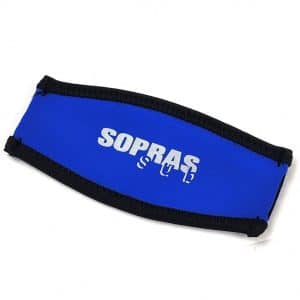
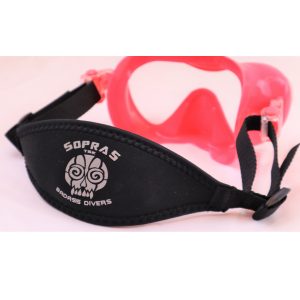
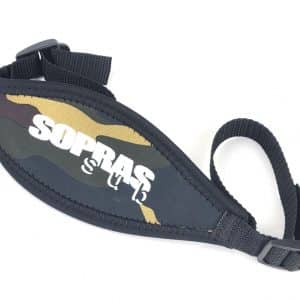
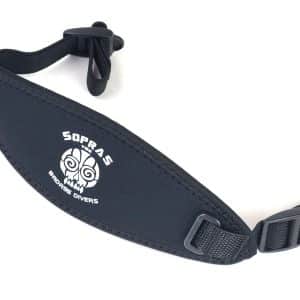
Standard diving mask straps are silicone — durable, salt-water resistant, and UV-stable. The common upgrade is a neoprene mask strap, which replaces the standard strap with a wider, padded neoprene band. Neoprene straps distribute strap pressure over a wider area of the back of the head, which significantly reduces the pressure concentration that causes discomfort and hair pulling in divers with thick or curly hair. The Mask neoprene strap, Neoprene mask strap, and Neoprene mask strap with bungee cover this category — the bungee variant uses an elastic cord in the strap body that stretches with head movement and returns to a set tension, reducing the need to readjust strap tension between dives.
The Mask strap (standard silicone replacement) is a direct like-for-like replacement for a worn or broken original strap, available in black and clear variants. All mask strap replacements attach to standard mask buckles without tools — the strap end loops through the buckle frame in the same configuration as the original.
Protective Storage
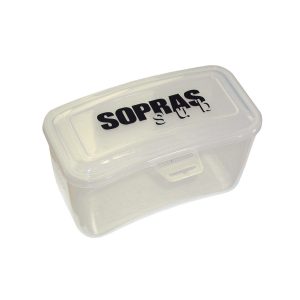
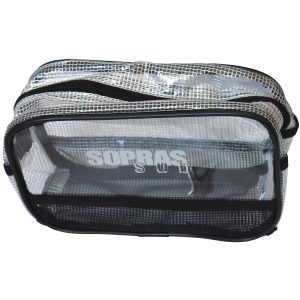
The Mask box is a rigid protective case for storing and transporting masks — the primary cause of lens scratches in dive bags is contact with other hard equipment, and a rigid case prevents this completely. The Mask pouch is a soft fabric alternative that protects against light abrasion but not impact. For travel where masks go into checked luggage alongside regulators and BCD hardware, the rigid box is the safer option. For day trips to local dive sites where the mask is handled carefully, the pouch is lighter and more compact.
What to Look For
- Anti-fog product matched to your usage pattern. If you dive frequently (multiple times per week), a pre-treatment product like GA Sea Buff that doesn’t need reapplication every dive is more convenient. For occasional divers or travelers, standard drops or Sea Gold applied per dive are more practical and have a longer shelf life when the bottle sits unused between dive trips.
- Neoprene strap width and attachment compatibility. Neoprene straps are typically 40–50 mm wide, compared to 15–20 mm for standard silicone straps. Verify that your mask’s buckle frame opening accommodates the neoprene strap’s wider end tab before purchasing — most standard recreational mask buckles accept neoprene straps, but some compact single-lens masks with narrow buckle frames do not.
- Repair kit contents for your common failure modes. The Dive repair kit should contain at minimum: fin strap replacement material, mask strap replacement, snorkel keeper, and a tube of underwater-cure adhesive or neoprene cement. Check the contents list against the items most likely to fail on your equipment configuration.
- Mouthpiece size selection. The Mouthpiece anatomic is available in multiple sizes — confirm the size range available and match to your jaw width. A mouthpiece that’s too wide causes the corners of the mouth to stretch painfully; one that’s too narrow doesn’t seat correctly without biting force. The anatomic design follows the natural curvature of the bite tabs to align the jaw at its natural rest angle.
- Sea Buff application method. GA Sea Buff is a paste that requires buffing into the lens surface with a cloth and allowing to dry before rinsing — a different workflow from standard drops. If you dive from a boat where pre-dive preparation time is limited, factor in the additional time the buffing process requires compared to a simple drop application.
Maintenance and Care
Anti-fog solutions should be stored in a cool location out of direct sunlight — UV exposure degrades the active surfactant compounds in liquid anti-fog products over time, reducing their effectiveness. Replace anti-fog bottles that have been open for more than one dive season, as oxidation of the solution occurs even when the bottle is sealed. The Sea Buff paste has a longer effective shelf life than liquid solutions when the tube is properly sealed between uses.
Neoprene mask straps should be rinsed with fresh water and dried completely after each dive — neoprene that remains damp between uses develops an odor over multiple weeks and the neoprene foam eventually compresses permanently, losing its cushioning properties. The bungee cord element of the neoprene bungee strap should be checked annually for loss of elasticity — stretch the cord to its full extension and release; it should return to its original length within two seconds. A cord that doesn’t recover has lost its tension function and should be replaced.
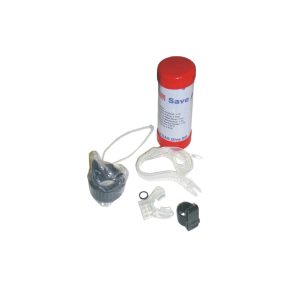
The Dive repair kit should be replenished after use rather than treated as a single-use item. Check the kit at the start of each dive season and replace any items that were used during the previous season. Neoprene cement in repair kits has a limited shelf life once the tube is opened — a tube that has been open for more than 12 months may have thickened to the point of being unusable for the thin-coat application required for effective bonding.
FAQ
Why does my mask still fog even after applying anti-fog solution?
The most common cause is that the lens has not been pre-treated to remove the silicone manufacturing residue that all new masks have on the lens interior. This residue prevents anti-fog solutions from bonding to the glass surface — the drops bead up and run off rather than spreading into a coating. Treat the lens with toothpaste (non-gel, non-whitening) applied and scrubbed with a finger, rinsed, and repeated 4–5 times before the first dive. After this initial treatment, standard anti-fog solutions will work correctly. An alternative cause is touching the inside of the lens after applying anti-fog — skin oils immediately destroy the hydrophilic coating. Apply the solution and avoid contact with the treated surface until you enter the water.
What is the difference between GA Sea Buff, Sea Drops, and Sea Gold?
GA Sea Buff is a paste applied and buffed dry — it builds a residual film that lasts multiple dives before reapplication. GA Sea Drops is a standard pre-dive liquid applied, spread, and rinsed with seawater immediately before entry. GA Sea Gold is also a liquid but forms a more durable coating than standard drops that persists through multiple dives before effectiveness diminishes. For occasional divers, Sea Drops are the simplest workflow. For frequent divers who want to reduce pre-dive time, Sea Buff or Sea Gold reduce the per-dive preparation step.
Do I need a rigid mask box or is a soft pouch sufficient?
A rigid mask box is necessary if the mask will be transported in a bag with other hard diving equipment — regulators, dive computers, and BCD hardware will scratch an unprotected mask lens in a packed dive bag. For day trips where the mask is the only item in the bag or is handled carefully in a separate compartment, a soft pouch provides adequate protection. If you travel by air with checked dive luggage, a rigid box is strongly recommended — checked baggage handling creates impacts that a soft pouch cannot protect against.
Can I replace my mask’s silicone strap with a neoprene strap?
Yes, provided the neoprene strap’s end tabs are compatible with your mask’s buckle frame. Most recreational diving masks use standard buckle dimensions that accept 40–50 mm neoprene strap end tabs. The replacement process doesn’t require tools — unhook the old strap ends from the buckle frames by pushing the tab through the frame slot, and hook in the new strap the same way. If your mask uses an unusual buckle design (some streamlined technical masks have fixed strap attachment systems), confirm compatibility before purchasing a replacement neoprene strap.
What should a basic dive repair kit contain?
The Dive repair kit here is designed as an all-in-one field repair kit for ABC equipment failures. At minimum, a functional kit should address the most common in-the-field failures: broken fin strap (strap material and replacement buckle), broken mask strap (standard silicone replacement), lost snorkel keeper, and minor neoprene or rubber damage (neoprene cement and patch material). The kit contents are listed on the product page — verify it covers your equipment configuration. For technical divers or extended expeditions, supplement the basic kit with model-specific spare parts for your exact equipment.