


Showing all 6 results
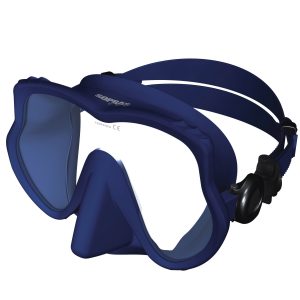
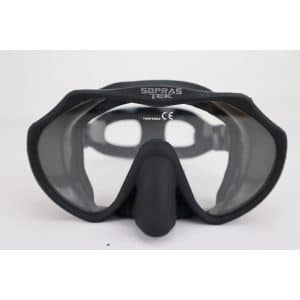
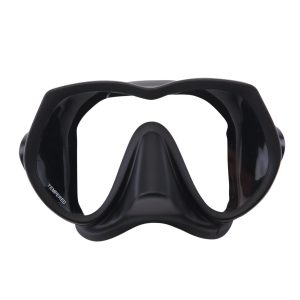
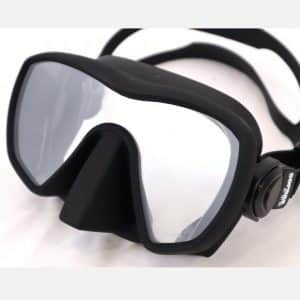
Single-lens diving masks use one continuous tempered glass lens across the full face opening, with no center frame dividing the visual field. Models here range from compact low-volume designs like the Occhio and Frameless series to larger-volume options like the Forte and Excel NEW — each with a different silicone skirt geometry to fit different face shapes.
More masks can be found on SoprasTek or SoprasApnea sites.
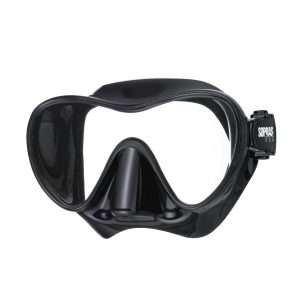
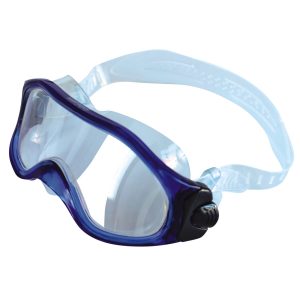
Single-Lens Mask Design and Visual Field
The defining characteristic of a single-lens mask is the absence of a nose bridge frame between the lenses. This creates a continuous, uninterrupted visual field — there is no vertical bar in the center of your vision as there is with twin-lens designs. For many divers this is a significant comfort advantage, particularly over long dives where the divided frame of a two-glass mask can become mentally fatiguing. Photographers and videographers often prefer single-lens masks because the unobstructed field maps more naturally onto a camera viewfinder or screen.
The Frameless and Frameless Star II take the single-lens concept furthest: the tempered glass lens is bonded directly to the silicone skirt without a rigid plastic frame between them. This results in an exceptionally low-profile mask that packs flat, has a minimal internal air volume, and conforms more closely to the face than framed designs. The trade-off is that frameless masks cannot accept prescription lens inserts and the lens cannot be replaced if damaged — the entire mask must be replaced. The Frameless is the thicker-skirted option with a wider seal contact area; the Frameless Star II is a lighter, more streamlined variant.
The Occhio is the standard compact single-lens option with a rigid frame — available in multiple skirt colors and sized for medium face profiles. The Forte has a slightly larger lens area and a stiffer frame, providing more structural support for divers who find soft-frame masks uncomfortable with drysuit hoods that press the mask against the face. The Excel and updated Excel NEW offer a larger lens with a wide-profile skirt designed to accommodate broader face profiles. The Vedo is a compact swim/snorkeling goggle rather than a full diving mask.
Low Volume vs. Standard Volume Single-Lens Masks
Internal air volume — the space between the lens and the diver’s face — directly affects two things: how much air you need to exhale into the mask to equalize pressure on descent, and how much air is needed to clear the mask if it floods. Low-volume masks like the Frameless and Occhio have a reduced lens-to-face distance, which requires less air for equalization and makes clearing easier, particularly for freediving and snorkeling where you’re working with limited breath hold. Standard-volume masks provide slightly more peripheral vision downward (you can look further down toward the chest) and feel less confining to some divers.
For scuba diving, the volume difference between low and standard designs is practically insignificant — you have plenty of air from your regulator for equalization. The preference comes down to how the mask feels over a long dive, and how quickly you can clear it under stress. Divers who are prone to mask flooding incidents — common in training, or when using a hood that disrupts the seal — typically find low-volume masks faster and less disorienting to clear.
What to Look For
- Skirt seal geometry matched to your face shape. Single-lens masks typically have a narrower nose pocket than twin-lens designs, which makes them better for narrower face profiles. Before purchasing, perform the no-strap suction test: press the mask to your face without inhaling and release — it should stay in place from the seal alone. Pay attention to the upper lip area and nose pocket sides, which are the most common leak points in single-lens designs on wider face profiles.
- Frame rigidity versus flexibility. Frameless masks are the most flexible and conform to the widest range of face shapes. Framed single-lens masks like the Forte have more structural rigidity, which can be advantageous when wearing a thick neoprene hood that exerts pressure on the mask perimeter — a soft frame may distort under hood pressure, breaking the seal. If you dive regularly in a 5–7mm hood, a firmer frame is worth prioritizing.
- Lens area and downward visibility. A larger lens area doesn’t automatically mean better visibility, but it does improve downward sight lines toward the instruments and equipment you’re managing. The Excel and Excel NEW have larger lens areas than the Occhio and are worth considering for divers who want to monitor gauges without tilting the head significantly.
- Skirt color — black vs. transparent. Black silicone skirts block peripheral light, improving contrast and reducing distraction from light refraction through the sides of the mask — useful for underwater photography and video work. Transparent skirts let in peripheral light, which feels less claustrophobic and increases the perception of field of view. The functional difference in most recreational diving conditions is minor.
- Buckle system ease of adjustment. Mask strap buckles should allow one-handed adjustment both during the dive (if the strap needs tightening after equalization) and at the surface with cold or gloved hands. Slide-lock buckles are easier to adjust single-handed than standard bar-through buckle designs.
Maintenance and Care
Rinse single-lens masks with fresh water after every dive, lens-side down so debris and salt water drain away from the skirt rather than pooling. Dry the mask completely before storage — moisture trapped between the skirt and the frame on framed models accelerates silicone degradation and can cause the skirt to de-bond from the frame over time. Store in a protective case or mask box to prevent lens scratches, which create optical distortion visible underwater.
Treat new mask lenses with toothpaste before the first dive to remove the silicone manufacturing residue that causes persistent fogging. Apply non-gel toothpaste, scrub gently, rinse completely, and repeat 4–5 times. After this initial treatment, standard liquid anti-fog solutions (available in the ABC Accessories subcategory) are effective. Avoid silicone-based anti-fog sprays on silicone skirts — they can cause the silicone to swell slightly over time, distorting the seal geometry.
For frameless masks, inspect the bond between the lens and skirt annually for any separation, lifting, or cracking at the seal perimeter. Even a small separation in this bond allows water ingress under the lens, causing fogging that cannot be addressed with anti-fog solutions. A frameless mask with any lens-to-skirt separation should be replaced rather than repaired — the bond is not serviceable in the field.
FAQ
Can I fit prescription lenses in a single-lens mask?
Standard single-lens framed masks cannot accept conventional prescription inserts, which are designed to fit into the individual lens frames of two-glass masks. Some manufacturers offer prescription lens grinding directly onto a custom single-lens blank, but this is a specialist service rather than a standard retail option. Divers who require significant vision correction and want a single-lens design should discuss optical inserts with a dive equipment specialist. For mild correction needs, contact lenses worn under a standard mask are a simpler solution.
What is the difference between the Frameless and Frameless Star II?
Both are frameless single-lens masks where the tempered glass is bonded directly to the silicone skirt without a rigid plastic frame. The Frameless has a thicker, wider skirt with a broader seal contact area — it accommodates a wider range of face shapes and provides a more robust seal. The Frameless Star II is a lighter, lower-profile variant with a thinner skirt profile, making it more compact for travel and packing. Both have similarly low internal volumes; the choice comes down to face shape compatibility and whether the thicker seal of the original Frameless provides a better fit.
Is the Vedo mask suitable for scuba diving?
The Vedo is classified as a swim/snorkeling goggle rather than a full diving mask — it covers the eyes only, without a nose pocket that allows pressure equalization by exhaling through the nose. Without a nose pocket, you cannot equalize the air space inside the goggle on descent, which makes it unsuitable for diving below the surface. It is appropriate for surface swimming and pool use only.
How do I stop my single-lens mask from leaking?
Most single-lens mask leaks are caused by one of three things: incorrect strap tension (overtightening distorts the skirt and breaks the seal rather than improving it — the strap should be snug, not tight), hair or stubble caught under the skirt perimeter, or a face shape that doesn’t match the mask geometry. If the mask leaks after verifying the strap tension and clearing the seal perimeter of hair, try a different skirt profile — the Forte’s stiffer frame and the Frameless’s conforming construction solve different fit problems.
What does “low volume” mean and does it matter for scuba diving?
Low volume refers to the distance between the lens and your eyes — a short lens-to-eye distance means less air in the mask space, which requires less effort to equalize and less air to clear if the mask floods. For scuba diving with a tank, the volume difference between low and standard masks is minor because you have ample air supply for both equalization and clearing. For freediving and snorkeling, where you’re managing a finite breath, low volume is a genuine advantage. For most recreational scuba divers, mask selection on fit, comfort, and visual field is more consequential than volume classification.