


Showing all 2 results
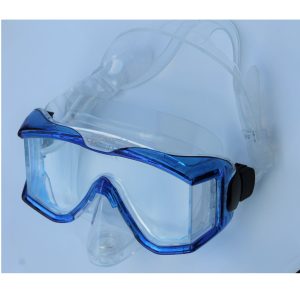
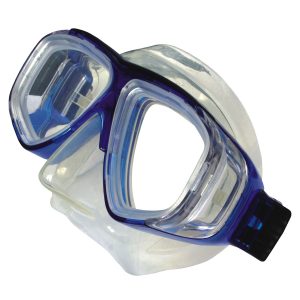
Multi-window diving masks use three or more lens panels — a primary front lens plus side windows — to extend the diver’s peripheral field of view beyond what single or twin-lens designs provide. This category carries the Visual (4-window) and the Potente with purge, covering both entry-level wide-view snorkeling and masks with a purge valve for faster, effortless clearing.
Multi-Window Masks and Peripheral Vision
Standard diving masks create a visual cone defined by the primary lens dimensions — you can see clearly ahead and slightly to the sides, but peripheral vision is blocked by the opaque silicone skirt. Multi-window masks add transparent side panels to the skirt, which allows ambient light from the sides to enter and extends the visible field laterally. The practical effect is a greater sense of spatial awareness underwater — useful for photography, for divers who feel claustrophobic in standard masks, and in shallow water environments where awareness of surrounding marine life matters.
The Visual is a 4-window mask with a large primary lens and two side windows built into the skirt. Its construction is straightforward with a standard plastic frame and silicone skirt — the side windows are flexible transparent silicone panels rather than rigid glass, so they don’t provide the optical clarity of the primary tempered glass lens. They function primarily as light-admitting panels that reduce the sense of visual confinement rather than as clear secondary viewing windows.
The Potente with purge is a more substantial 3+ window design with a notable addition: a one-way purge valve set into the nose pocket. The purge valve allows mask clearing without the standard technique of pressing the top of the frame and exhaling forcefully through the nose — instead, a gentle exhale through the nose forces water out through the valve without tilting the head. This is useful for divers who have difficulty with standard mask clearing, for those with flexible hoods that make pressing the mask top difficult, or for underwater photographers who don’t want to interrupt their work to clear a flooded mask.
What to Look For
- Primary lens quality vs. side window clarity. The side windows in multi-window masks are typically made from flexible silicone rather than tempered glass, which means they are not optically clear in the same way as the primary lens. Expect some distortion in the side window field — the windows admit light and extend peripheral awareness, but you should not expect to read gauges or identify underwater subjects through them.
- Purge valve maintenance accessibility. The Potente’s purge valve is a one-way check valve that must be inspected regularly for debris, sand, or salt crystal accumulation that can hold it partially open and cause a slow leak. Verify that the valve is accessible for cleaning without disassembling the mask, and that replacement purge valves are available.
- Skirt seal integrity around side window edges. The junction between the flexible side window panels and the silicone skirt is an additional seal perimeter that doesn’t exist in standard masks. Inspect this edge for any separation or lifting, particularly after the mask has aged — this is where multi-window masks most commonly develop leaks that standard single or twin-lens masks don’t.
- Hood compatibility with expanded skirt perimeter. Multi-window masks have a wider silicone skirt footprint because the side windows extend the skirt laterally. With a thick neoprene hood, the hood edge may press against the side window area and distort the seal. Test mask-to-hood fit before diving if you use a 5mm or thicker hood.
- Face shape fit. The larger skirt perimeter of multi-window masks accommodates a broader range of face widths than compact single-lens designs, but the nose pocket geometry is still specific. Apply the standard suction test — press the mask to your face without inhaling and release — to verify the nose pocket seal before purchase.
Maintenance and Care
Multi-window masks require additional attention at the side window-to-skirt junctions during rinsing. Salt water that accumulates in these seams dries to form crystal deposits that can cause the flexible side window material to stiffen and eventually crack at the edge. Rinse with fresh water directed specifically into these junction areas and flex the side windows gently underwater during rinsing to flush deposits from the interior of the joint.
For the Potente with purge, flush the purge valve mechanism with fresh water after every dive. Submerge the nose pocket area and press the purge valve several times while submerged to flush any salt or sand from the valve seat. A purge valve that sticks open will cause a slow continuous leak from the nose pocket area; one that sticks closed defeats the purpose of the feature. If the valve sticks despite rinsing, disassemble according to the manufacturer’s instructions and inspect the valve seat and spring for damage.
Store multi-window masks in a rigid case that supports the expanded skirt profile — flexible pouches that compress the side windows can cause permanent deformation of the window-to-skirt junction over time. Avoid prolonged direct sunlight exposure, which degrades the flexible silicone of the side windows faster than the harder silicone of the main skirt body.
FAQ
Do side windows in multi-window masks actually improve underwater visibility?
Side windows improve peripheral light awareness and reduce the sense of visual confinement rather than providing optically clear lateral viewing. The flexible silicone used for side windows typically has some visual distortion — you will perceive movement and light through them, but not with the sharpness of the primary tempered glass lens. For awareness of approaching divers, marine life, or hazards from the side, multi-window masks are genuinely useful. For tasks requiring clear lateral vision, the standard approach is to turn your head.
How does the purge valve on the Potente work?
The purge valve is a spring-loaded one-way check valve located in the lowest point of the nose pocket. When water enters the mask, it drains to the nose pocket by gravity. A gentle exhale through the nose creates enough positive pressure to open the purge valve, allowing water to exit the mask without the diver needing to tilt their head back or press the top of the frame. The valve closes immediately on the inhale stroke to prevent water backflow. It requires no special technique — a gentle nasal exhale clears the mask efficiently in any orientation.
Is the Visual mask suitable for scuba diving?
The Visual is a recreational diving and snorkeling mask — it uses tempered glass primary lenses and standard silicone construction compatible with recreational scuba diving depths. It is not a technical diving mask. The side windows are flexible silicone rather than glass, which is standard practice for multi-window designs. For scuba diving at recreational depths (0–40 m), it is appropriate equipment.
Can the purge valve on the Potente be replaced if it fails?
Yes — the purge valve is a separate serviceable component on the Potente. The valve body unthreads from the nose pocket housing and can be replaced with a new valve unit. This is the most common maintenance item on purge-valve masks, as the spring and valve seat are under cyclic load every time the mask is cleared and accumulate salt deposits that accelerate wear. Keeping a spare purge valve unit when traveling to remote dive locations is a reasonable precaution.
Why are multi-window masks less common in technical diving?
Technical divers typically prioritize low internal volume and structural seal reliability over expanded peripheral vision. The additional seal perimeters at the side window junctions create more potential leak points, and the larger mask profile is more susceptible to displacement in overhead environments or during inverted orientations. For recreational diving where seal reliability under stress is less critical, multi-window masks work well. In technical, cave, or wreck diving, most divers choose compact single or twin-lens designs with the fewest potential failure modes.