

Showing 1–12 of 28 results
Clips and retractors are the hardware that holds a dive kit together — literally. From a simple bronze spring clip used to route a hose along a BCD webbing strap, to a locking retractor keeping a torch within reach at depth, the range covers every attachment need in recreational and technical diving. Materials span stainless steel, aluminium, bronze, and nylon, each with distinct load ratings, corrosion profiles, and handling characteristics that affect which option suits a given application.
Clips and Retractors in Dive Configuration
A diver’s equipment configuration relies on reliable attachment points at each stage: instruments connected to the BCD, a torch tethered so it cannot be lost but remains accessible, hoses routed cleanly to avoid drag and entanglement. Spring clips and snap links handle static attachment — connecting an item to a D-ring and leaving it there. Retractors handle dynamic attachment — maintaining a connection while allowing the item to extend into the working position and retract automatically when released.
The choice between clip types depends on three factors: the material it will be made from, the gate mechanism, and the load it will carry. Heavier items like primary torches or large SMBs require clips with higher load ratings — stainless steel or larger-format aluminium. Lightweight items like slates or secondary lights can use smaller nylon or bronze clips without structural concern. Gate mechanism matters for glove operability: a side-opening Inox spring clip with side opening can be manipulated with a single gloved finger, whereas a standard carabiner gate requires a pinch grip.
Static Clips: Materials and Gate Types
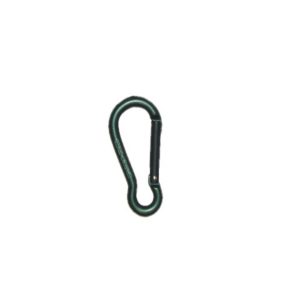
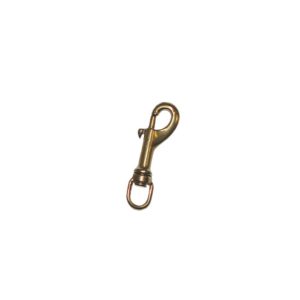
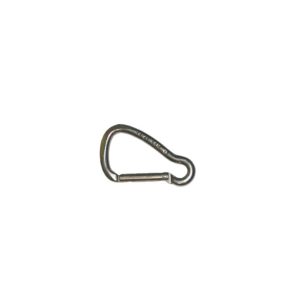
The Inox spring clip with side opening uses a 304 or 316 stainless steel body — the designation “inox” refers to the chromium-nickel alloy used in marine-grade steel — with a gate that opens laterally rather than requiring the gate pin to be retracted in line with the clip body. This geometry is significantly easier to operate one-handed and with thick gloves. The Aluminium spring 50 mm provides a larger gate opening than most compact clips, which simplifies attachment to thicker webbing or D-ring hardware. The Bronze spring clip with pulley incorporates a small wheel within the gate housing that allows the clip to run along a continuous line or cord, useful for rigging equipment where the clip needs to slide rather than stay fixed.
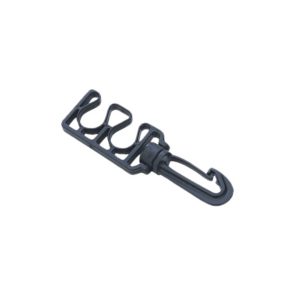
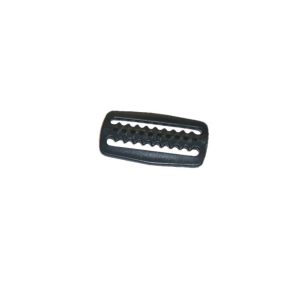
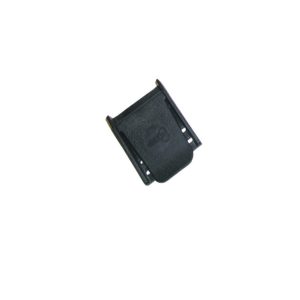
Plastic snap links — available as male and female versions — use an acetal or nylon body that is fully corrosion-proof and suitable for secondary attachments where load is minimal. The Dual air hose holder with clip addresses a specific rigging need: routing two hoses together along a BCD shoulder or chest strap, reducing the profile of dangling hoses. The Nylon weight keeper is a separate function entirely — a clip-type retainer that prevents integrated weight pouches from accidentally releasing during the dive.
Retractors: Fixed, Stopped, and Locking
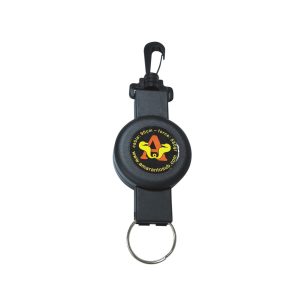
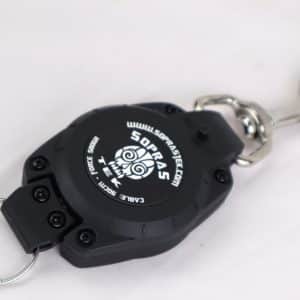
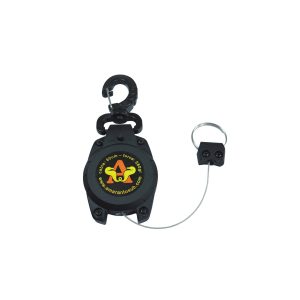
The standard Retractor uses a flat coil spring inside a sealed housing to retract a thin stainless steel cable when the attached item is released. The cable extends to approximately 60–80 cm under light tension, enough to bring a compass, slate, or secondary light into reading position. The Retractor with stop adds a clutch mechanism: pressing a button allows the cord to pay out; releasing it holds the cord at the current length. This is particularly useful with dive computers or pressure gauges that need to remain in a fixed position during extended stops rather than snapping back against the BCD when grip is relaxed. The Retractor with lock provides a positive mechanical lock-off, where the cord is locked until deliberately released — this prevents any cord movement during activities where equipment must remain absolutely stable.
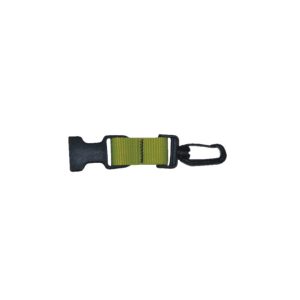
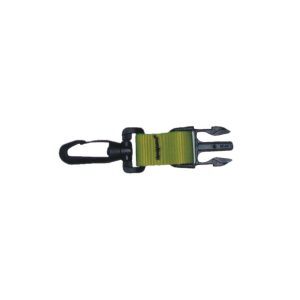
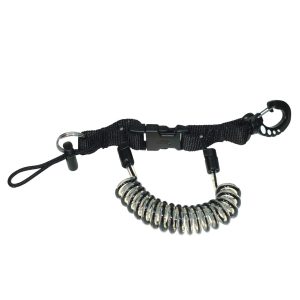
The Quick release coil lanyard takes a different mechanical approach. Rather than a retractable steel cable, it uses an elastic coiled cord — similar in concept to a telephone handset cord — that stretches under load and returns to coiled form when released. The quick-release buckle allows full detachment of the attached item when needed, which suits underwater cameras and video housings where the diver may want to hand off the camera to a buddy or remove it completely to pass through a restriction.
What to Look For
- Match material to salt exposure frequency. Stainless steel and aluminium alloys are the materials of choice for regular saltwater diving. Bronze clips are corrosion-resistant but heavier and more expensive than equivalent stainless models — they are chosen primarily in applications where a very specific gate geometry is needed. Nylon and acetal clips are appropriate for freshwater diving or for secondary attachment points where load is minimal, but they can become brittle after several years of UV and saltwater exposure.
- Gate opening width relative to your D-rings. Check the gate opening dimension against the D-ring gauge on your BCD or harness before purchasing. A clip with a 10 mm gate opening will not fit a 12 mm D-ring bar. Most product specifications include gate dimensions; when in doubt, the Aluminium spring 50 mm and similar larger-format clips accommodate the widest range of hardware.
- Retractor cord strength and UV resistance. The cable in a retractor takes repeated flexing and bending stress over its service life. Stainless cable handles this better than braided cord, which fatigues at the bend points over time. Inspect the cable where it exits the retractor housing — this is where fatigue fractures first appear.
- Locking mechanism ease of operation under stress. The benefit of a locking retractor only materialises if the diver can operate the lock reliably while wearing gloves and potentially in low-visibility or emergency conditions. Test the mechanism before diving to ensure the lock-off and release action can be performed with one hand.
- Clip placement on the BCD. The positioning of clips on a BCD determines whether attached items create drag or entanglement risk. Items clipped to chest D-rings tend to hang in the diver’s field of view; items on hip D-rings can contact the bottom in certain diving positions. Consider where each item will actually sit during the dive, not just at the surface.
Maintenance and Care
Rinse all clips and retractors in fresh water after every salt dive. The most critical areas are the gate mechanism and spring housing, where salt deposits accumulate and cause progressive stiffening or seizing of moving parts. For spring clips, cycle the gate open and closed several times while submerged in fresh water to flush salt from the spring seat. For retractors, extend the cord fully before immersing in the rinse water so that the entire cable length and its guide channels inside the housing are flushed. Retractors with locking mechanisms should have the lock engaged and released several times during the rinse cycle. After rinsing, allow clips and retractors to dry in a position where water drains away from the housing rather than pooling inside it. A small drop of silicone lubricant on spring pivots annually extends service life noticeably; avoid oil-based lubricants, which attract and retain particulate matter.
FAQ
What is the difference between a retractor with stop and a retractor with lock?
A retractor with stop holds the cord at a chosen length when the stop button is released, but the cord can still move under sufficient tension — it is not positively locked. A retractor with lock uses a mechanical latch that prevents any cord movement until deliberately released. The stop version is appropriate for instruments that need to be held at reading distance but where occasional movement under load is acceptable. The locking version is better where cord movement in any direction would be disruptive, such as when a torch is clipped to a specific position on a technical rig.
Can I use nylon snap links for primary equipment attachment?
Nylon snap links are suitable for lightweight secondary attachments — slates, small lights, surface markers stored in a pocket. They are not rated for high loads and should not be used as the sole attachment point for primary torches, heavy cameras, or any item whose loss would directly compromise the dive. Stainless steel or aluminium spring clips with positive gate mechanisms are the appropriate choice for anything critical.
How do I know if a clip will fit my BCD D-ring?
Measure the bar diameter of the D-ring on your BCD — typically between 6 mm and 12 mm — and compare it against the gate opening specification of the clip. Most marine clips have gate openings stated in their product descriptions. If your D-rings are a non-standard size, the Aluminium spring 50 mm with its larger gate geometry accommodates a wider range of hardware than compact spring clips.
Is the quick release coil lanyard suitable for underwater cameras?
Yes, the Quick release coil lanyard is well-suited for camera housings and video equipment. The elastic coiled cord absorbs shock if the camera is dropped, the extension length is sufficient for shooting at arm’s length, and the quick-release buckle allows the camera to be passed to another diver or removed when entering tight spaces. Check that the clip end is compatible with the D-ring or anchor point on your camera housing or tray.
How often should I replace a retractor cable?
There is no fixed service interval, but inspect the cable at least once per season for kinking, fraying, or corrosion at the housing exit point. If the cable shows any visible wire separation or if the retraction force has noticeably decreased, replace the retractor rather than attempting to service only the cable. Retractors are generally not designed for user cable replacement — the spring tension and housing seal make full unit replacement the more reliable option.