

Showing all 12 results
This category covers diving and snorkelling equipment sized and designed specifically for children and teenagers: neoprene wetsuits from 2 mm to 5 mm in full-suit and shorty configurations, a children’s BCD (Explorer jacket), fins, snorkels, a children’s regulator mouthpiece, a snorkelling bag, and a complete Young Diver snorkelling set. Equipment in this range is proportioned for smaller body dimensions — shorter torso, narrower shoulders, smaller hand and foot spans — and uses softer, more flexible materials appropriate for children’s skin and reduced grip strength.
Equipment Range Overview
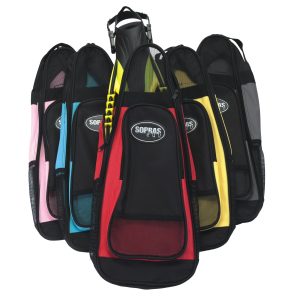
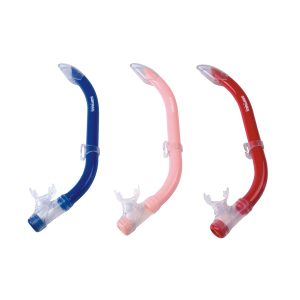
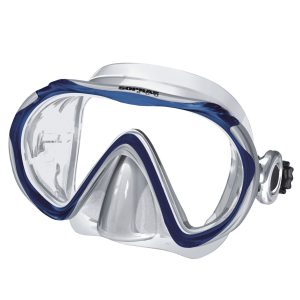
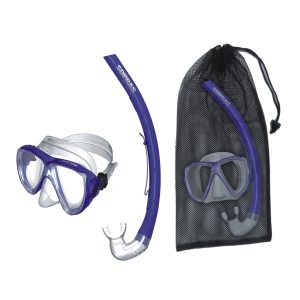
The 12 products in this category cover the full range of equipment a child needs from first snorkelling experiences through entry-level scuba diving. At the snorkelling end, the Young Diver Snorkelling Set (SKU 475010) is a combined mask, fin, and snorkel kit sized for young children — a complete first-time set. The Discover snorkel (SKU 473000) is sold as a standalone snorkel in three colours. The Children snorkelling bag (SKU 851310) is a compact coloured mesh or nylon bag for carrying snorkel gear to the beach or pool. The Talaria small fins (SKU 31702) are open-heel fins scaled for small feet, available in multiple colours.
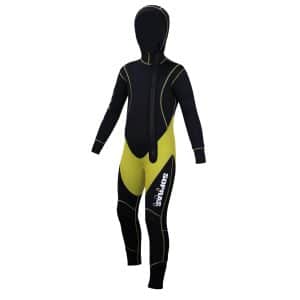
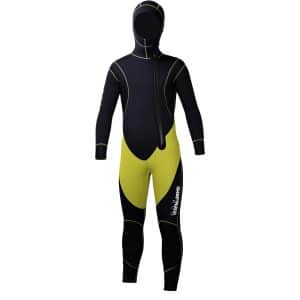
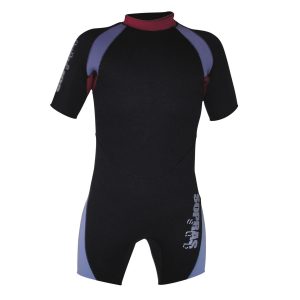
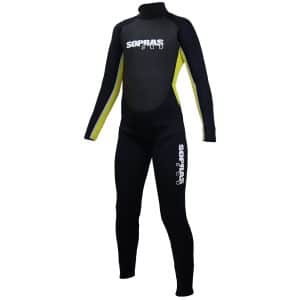
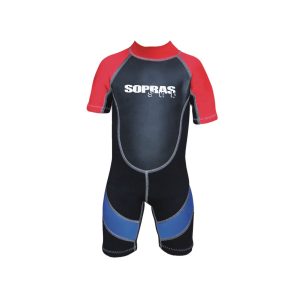
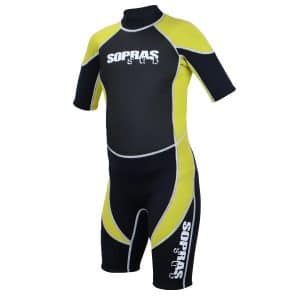
For thermal protection, the range covers multiple thicknesses and cut styles. The Kids shorty 2 mm and Children shorty 3 mm are short-sleeved, short-legged neoprene suits for warm-water snorkelling and entry-level pool and sea use. The Phantom kids 3 mm shorty is a mid-range short neoprene option available in an extended size range. For full thermal protection, the Isida 2 mm children full suit covers the full body in a thin flexible neoprene for warm-water scuba use, and the Amalfi 5 mm kids full suit with hood and Amalfi 5 mm teenagers full suit with hood provide substantial thermal protection for cooler water diving — the hood is integrated and the 5 mm thickness is appropriate for water temperatures from approximately 15°C upward. The teenager variant covers the larger size range (sizes 5–8) for older or larger children.
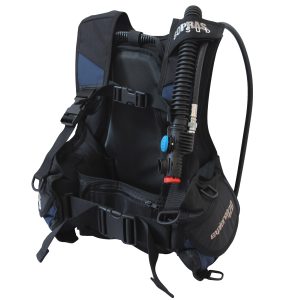
For equipment adapted to scuba use, the Explorer jacket BCD (SKU 20100) is a jacket-style buoyancy compensator designed specifically for children’s proportions, with size variants for different age groups. The Children mouthpiece (SKU 806670) is a smaller-profile replacement regulator mouthpiece sized for a child’s jaw — the standard adult mouthpiece on most regulators is too large for young divers and causes jaw fatigue; the child-sized mouthpiece resolves this without replacing the entire second stage.
Fitting Children’s Equipment
Correct fit is the most important factor in children’s diving equipment — more so than for adult equipment, because children have less physical strength to compensate for poorly fitting gear and less experience to recognise when something is wrong. A mask that does not seal on a child’s face will flood repeatedly and make the experience uncomfortable or frightening. A BCD that is too large will not distribute buoyancy correctly and may invert the child in the water. Wetsuits that are too large trap water against the body and lose thermal insulation efficiency; suits that are too small restrict breathing and movement.
When selecting wetsuits, use the manufacturer’s size chart based on height and chest/waist measurements rather than age alone — children’s proportions vary significantly at the same age. For the BCD, have the child try it on with the cylinder mounted and adjust all straps fully; the shoulder straps, cummerbund, and sternum strap should all be snug with no vertical movement when the BCD is lifted. For fins, open-heel models allow use with neoprene bootees; closed-heel models should be fitted with socks or light footwear of the same thickness the child will wear in use.
What to Look For
- Wetsuit thickness matched to water temperature. 2 mm suits for water temperatures above 25°C (pool and warm tropical sea); 3 mm for 22–26°C; 5 mm with hood for 15–22°C. Children lose body heat faster than adults of the same size — err toward the thicker option at any borderline temperature.
- Full suit vs. shorty for the activity. Snorkelling at the surface in warm water: a shorty or thin full suit provides adequate protection and is easier to put on independently. Scuba diving or extended snorkelling in cooler water: a full suit with hood is strongly preferred. The Amalfi 5 mm full suit with integrated hood is appropriate for most European open water conditions for children.
- Child-specific mouthpiece for scuba use. If a child is diving with a standard adult regulator, fit the Children mouthpiece before the first confined water or open water session. Jaw fatigue from an oversized mouthpiece is a common complaint in junior scuba programmes and is easily prevented.
- BCD sizing for the specific child, not an age range. The Explorer jacket is available in two size variants. Fit it with the actual cylinder the child will dive before the first session — the weight of the cylinder affects how the harness sits on the child’s body and where adjustments need to be made.
Maintenance and Care
Children’s neoprene suits should be rinsed in fresh water immediately after each use and hung to dry on a wide hanger — not folded or stored compressed. Neoprene folds cause permanent crease marks and accelerate delamination at fold lines. Inspect suit seams regularly; children’s use typically involves more rough handling than adult equipment. The BCD should be rinsed internally (through the inflator hose) and externally after salt water use; operate the dump valve during rinsing to ensure the bladder interior is flushed. Fin straps and buckles on all children’s items should be inspected each season — rubber straps degrade faster on smaller fins that are more frequently flexed. The Children mouthpiece is a replaceable rubber or silicone component; replace it annually or immediately if it shows cracking, tearing at the bite tabs, or deformation.
FAQ
At what age can children start scuba diving?
Most major training agencies allow children to begin structured scuba training from age 8 in pool or confined water environments, and from age 10 for open water certification programmes. The specific age limits and depth restrictions vary by agency and programme — PADI’s Bubblemaker programme starts at age 8; Junior Open Water Diver certification is typically available from age 10. Equipment selection should match the programme the child is enrolled in. The Explorer jacket BCD and 5 mm full suit are appropriate for entry-level open water junior scuba programmes; snorkelling sets and shorties are suitable for the youngest age groups in pool-based introduction sessions.
What is the difference between the Amalfi kids and teenagers full suit?
Both suits are the Amalfi 5 mm full-length hooded neoprene suit with the same construction and material specification. The difference is the size range: the kids variant covers sizes 1–4, which corresponds to smaller children (approximate height range 100–140 cm depending on the size chart); the teenagers variant covers sizes 5–8, which extends the range to larger children and teenagers up to approximately 160–175 cm. Select based on the child’s current measurements against the size chart — a child at the upper end of the kids size range may fit the lower end of the teenagers range, and the overlap should be checked before ordering.
Can the Talaria small fins be used with neoprene socks or bootees?
The Talaria small is a closed-heel fin. Closed-heel fins are sized to be worn directly on the foot without footwear, or with a thin sock of consistent thickness. For cold water use where a neoprene bootee adds 2–5 mm of thickness, closed-heel fin sizing must account for the bootee — order one size up from the child’s bare foot measurement if bootees will be worn. For warm water snorkelling and pool use without footwear, measure the child’s foot length and select the size that matches the fin’s size table. Open-heel fins, which accommodate a wider range of foot sizes with adjustable straps, are available in the main ABC category if an adjustable-fit option is preferred.
Is the children’s snorkelling set complete for beach use?
The Young Diver Snorkelling Set includes a mask, fins, and snorkel — the three core items for surface snorkelling. For most beach snorkelling use, this is a complete set. A thin shorty wetsuit or rash guard is recommended for extended sessions in cooler water or to protect against sunburn and mild jellyfish contact; the children’s shorty and full suit options in this category can be combined with the snorkelling set. The Children snorkelling bag provides a convenient carry option for the complete set and other small beach items.