

Diving hoses are the pressurised conduits that connect every functional element of a breathing system — from the first stage on the cylinder to the second stage in the diver’s mouth, from the regulator port to the BCD inflator, from the first stage HP port to the console gauge. Each hose operates under a specific pressure regime, connects via standardised thread fittings, and is made from materials selected for flexibility, burst resistance, and long-term saltwater durability. Choosing the correct hose type and construction for each application is a straightforward technical decision once the pressure requirements and connection standards are understood.
Hose Types and Their Roles in a Dive System
A typical scuba configuration involves four distinct hose types operating at different pressures. High-pressure (HP) hoses connect the first stage HP port to a submersible pressure gauge or dive computer air integration sensor; they carry tank pressure — up to 300 bar in a filled steel cylinder — and require a construction rated for that load. Low-pressure (LP) regulator hoses deliver intermediate-pressure gas from the first stage LP ports to the primary second stage; intermediate pressure is typically 8–10 bar above ambient. Octopus hoses carry the same LP intermediate pressure to a backup second stage and are conventionally longer than primary regulator hoses to allow easy donation to a diver in distress. BC and dry suit hoses also operate at LP intermediate pressure but terminate at inflator mechanisms rather than second stages.
BC & Dry suit Hoses
Low-pressure inflator hoses for BCDs and dry suits in rubber, smooth, and braided constructions. Covers both standard jacket-style BCDs and dry suit inflation systems, available in multiple lengths.
HP Hoses
High-pressure hoses for connecting the first stage HP port to a pressure gauge, console, or air-integrated computer. Available in rubber, ACCPur, and braided constructions, plus an HP swivel fitting for eliminating hose torque.
Regulator Hoses
Low-pressure hoses for the primary second stage in rubber, smooth, extra-soft, and braided versions. Range covers 62 cm to 210 cm lengths, including technical diving configurations requiring extended routing.
Octopus Hoses
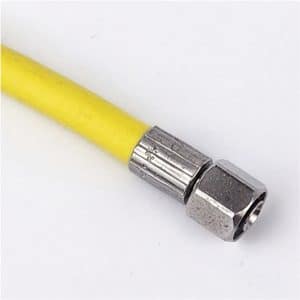
Low-pressure hoses for backup second stages, conventionally in yellow for easy identification. Available in rubber, braided, Classic NBR, Smooth, and Braided Tek constructions at standard octopus lengths.
Construction Types: Rubber, Smooth, Braided, and NBR
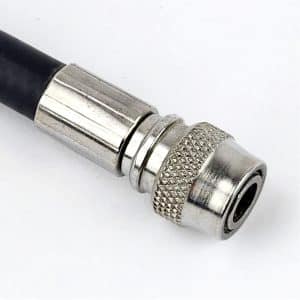
The outer sheath construction of a diving hose affects flexibility, weight, durability, and how the hose routes along a BCD harness. Rubber hoses — such as the Hose for regulators rubber black and Hose for jacket rubber black — use a reinforced rubber tube with a textile braid layer and an outer rubber jacket. They are the standard construction for recreational diving, providing adequate flexibility across a temperature range from tropical to temperate water and durability over years of regular use. Cold water stiffens rubber somewhat, but not to the degree that affects function.
Smooth hoses — BCD hoses SMOOTH, DRY SUIT hoses SMOOTH, REGULATOR hoses SMOOTH — replace the outer rubber jacket with a smooth polyurethane or similar polymer coating that resists abrasion, reduces drag along harness webbing, and gives a cleaner visual profile. The smooth surface also picks up less sediment and salt deposit than a textured rubber exterior. NBR (nitrile butadiene rubber) formulations, seen in the CLASSIC NBR series, provide enhanced resistance to ozone degradation and a wider operating temperature range than standard rubber, which makes them particularly suitable for cold-water diving or storage in environments with high UV or ozone exposure. Braided hoses — including the Hose for jacket braided, Regulator hose braided, Octopus hose braided, and the Braided Tek series — use a stainless steel or synthetic braid as the outer layer, providing the highest abrasion resistance and a tactile grip texture that prevents the hose from slipping in the hand during adjustment.
Thread Standards and Connection Compatibility
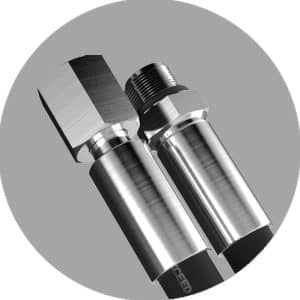
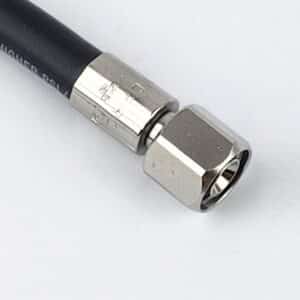
Diving hose fittings use two primary thread standards: 3/8″ UNF for LP connections (second stages, inflator hoses, octopus hoses) and 7/16″ UNF for HP connections (pressure gauges, console hoses). A small number of regulators from specific manufacturers use metric threads or proprietary fittings. Before ordering a replacement hose, confirm the thread specification of both the first stage port and the instrument or second stage being connected. The HP swivel fitting in the HP hoses category addresses a specific installation issue: it allows the gauge end of an HP hose to rotate independently of the hose body, eliminating the torque that causes an HP hose to coil unnaturally or pull the gauge out of position when the diver moves.
What to Look For
- Pressure rating matched to the hose role. LP hoses and HP hoses are not interchangeable — an LP hose connected to an HP port will fail, potentially catastrophically. HP hoses are identifiable by their smaller internal bore and heavier wall construction relative to LP hoses of the same outer diameter. If you are unsure whether a port is HP or LP, consult the regulator manufacturer’s documentation before connecting any hose.
- Hose length and routing geometry. Length determines how a hose routes along the BCD and whether it sits cleanly or creates a dangling loop. Standard primary regulator hoses are 70–75 cm, placing the second stage comfortably at the diver’s mouth in a neutral position. Technical diving configurations — particularly sidemount and backmount long-hose setups — use hoses from 100 cm to 210 cm. Inflator hoses for jackets typically run 60–70 cm; dry suit inflator connections may require a longer hose depending on suit design and regulator position.
- Construction material for your water temperature. NBR and smooth polyurethane constructions maintain flexibility at lower temperatures better than standard rubber. Divers who regularly dive below 10°C should consider NBR or smooth hoses for positions where stiffness affects ergonomics — inflator hoses and primary second stage hoses in particular.
- Fitting material. Stainless steel fittings on hose ends resist corrosion significantly better than brass or chrome-plated alloy fittings. Inspect fitting condition at each service interval — corrosion at the fitting base is the most common failure point in aged hoses.
- Replacement interval. Hoses do not have a mandatory replacement interval under most recreational diving standards, but visual inspection at each annual regulator service is the minimum standard. Bulging, cracking, delamination of the outer layer, or any sign of weeping at a fitting are grounds for immediate replacement regardless of age.
Maintenance and Care
Rinse all hoses in fresh water after every salt dive, paying attention to the fitting ends where salt accumulates in the thread recess. Do not leave hoses coiled tightly during storage — a tightly wound hose develops a compression set at the bend points over time that weakens the wall and causes cracking at those locations. Store hoses hanging or in a loose coil with a minimum bend radius of approximately 10 cm. After rinsing, allow hoses to dry fully before storing inside a bag — trapped moisture at fittings accelerates corrosion on brass components. During annual regulator servicing, a qualified technician should check each hose for outer jacket integrity, fitting torque, and internal condition. HP hoses should be pressure-tested at each service interval given the consequences of failure at tank pressure.
FAQ
How do I know if a hose is HP or LP?
High-pressure hoses have a smaller internal bore than low-pressure hoses of the same apparent outer diameter — the wall is proportionally thicker to handle tank pressure up to 300 bar. HP hoses also typically use a 7/16″ UNF fitting at the gauge end, while LP hoses use 3/8″ UNF at the second stage or inflator end. In practice, always check against your regulator’s port specifications in the manufacturer documentation before connecting a hose to an unfamiliar port. Connecting an LP hose to an HP port risks rupture at depth.
What length hose should I use for my primary second stage?
For standard backmount recreational diving, a 70–75 cm regulator hose positions the second stage comfortably at mouth level with the hose routing over the right shoulder. Divers who use a drysuit or thick undergarment may benefit from a slightly longer hose — 80 cm — if the added insulation thickness pulls the regulator out of comfortable position. Technical sidemount divers typically use the same 70–75 cm range on a right-side-routed primary. Long-hose backmount configurations for cave or technical diving use a 100 cm or longer hose on the primary to allow donation without the donor having to unclip the second stage.
Why is my octopus hose yellow?
Yellow is the international convention for backup second stage (octopus) hoses. The colour allows a diver in distress — and their buddy — to locate the octopus immediately under stress, without searching through equipment. The same colour convention applies to the octopus second stage housing itself in most systems. When donating air to a diver in out-of-air emergency, the few seconds saved by immediately identifying the correct hose can be significant. Equipping an octopus with a yellow hose rather than black is a standard safety practice rather than a personal choice.
When should I replace a diving hose?
Replace any hose that shows visible outer jacket cracking, swelling or bulging along the hose body, delamination of the outer layer, or any sign of moisture seeping from the hose wall or fittings. In the absence of visible damage, most manufacturers recommend hose replacement every 3–5 years as a precautionary interval, though hoses that are rinsed consistently and stored correctly often remain serviceable beyond this. HP hoses warrant more conservative replacement intervals given that a failure occurs at tank pressure. Always replace a hose immediately if it shows distortion at a fitting base — this indicates the inner braid is beginning to fail and the hose is at risk of rapid pressure loss.
Can I swap hoses between different regulator brands?
In most cases yes, provided the thread standard matches. The majority of regulators from European and major international manufacturers use the 3/8″ UNF LP thread and 7/16″ UNF HP thread as standard, making hoses interchangeable across brands. Exceptions include some older European regulators that use metric threads and a small number of proprietary fitting designs. If you are connecting a hose to a regulator you are unfamiliar with, verify the port thread specification before applying any torque — cross-threading a regulator port fitting requires professional repair.
“`
—
### 3. Meta title
“`
Diving Hoses – HP, LP, Regulator & Octopus Hoses
“`
—
### 4. Meta description
“`
High-pressure, regulator, octopus and BCD inflator hoses in rubber, NBR, smooth and braided constructions. Multiple lengths. Shop now.