

Showing all 4 results
High-pressure (HP) diving hoses connect the first stage HP port to a submersible pressure gauge, console, or air-integrated dive computer sensor. Unlike low-pressure hoses, they carry the full working pressure of the cylinder — up to 300 bar in a filled steel tank — which places significantly higher demands on wall construction, fitting strength, and long-term fatigue resistance. The four products here cover rubber, ACCPur, and braided constructions, plus an HP swivel for eliminating the torsional stress that causes gauge consoles to rotate out of position.
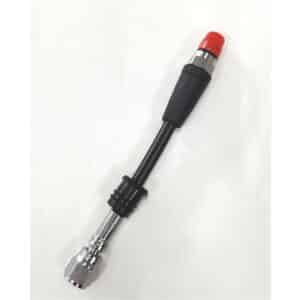
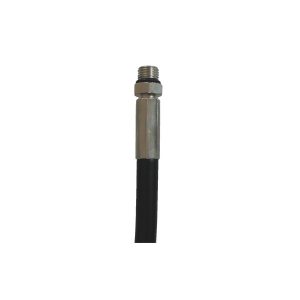
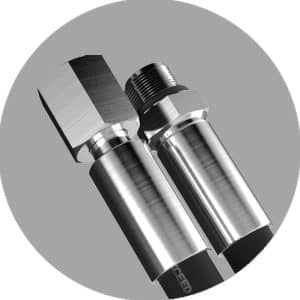
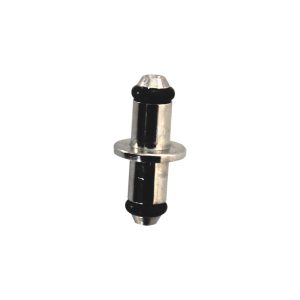
High-Pressure Hoses: Construction and Pressure Requirements
An HP hose operates under conditions that no other hose in a dive system faces: pressure cycles from ambient up to 300 bar on every pressurisation, repeated flexing as the diver moves, and the full consequences of a wall failure — not a gradual gas loss but a rapid blowout at tank pressure. This is why HP hoses have a fundamentally different wall construction from LP hoses: a smaller internal bore, a thicker reinforced wall with multiple braid layers, and heavier-duty end fittings crimped or swaged to withstand the full pressure load at the fitting junction — the most mechanically stressed point in the assembly.
The HP hose rubber black uses a conventional reinforced rubber construction with a stainless steel or brass fitting assembly, covering the standard application for recreational pressure gauge connection. It is available in four lengths corresponding to the most common console routing distances. The HP hoses ACCPur uses an ACCPur thermoplastic inner tube construction that provides superior resistance to the intermittent oxygen-enriched gas mixtures used in nitrox diving — standard rubber degrades faster in contact with elevated oxygen partial pressures over time. The Braided high pressure hoses add a stainless textile outer braid for abrasion resistance in technical configurations where the HP hose passes through hardware or is routed along a metal backplate. The HP swivel is a small rotary fitting that allows the gauge end of an HP hose to rotate 360° independently of the hose body, eliminating the twisting force that causes a console to hang at an angle or pull the HP port fitting under torsional stress.
Thread Standards and Installation
HP hoses terminate in a 7/16″ UNF male fitting at the gauge or computer end. At the first stage end, the male fitting connects to the HP port, which uses the same 7/16″ UNF thread in the vast majority of regulators from European and international manufacturers. Correct installation torque for HP fittings is higher than for LP connections — typically in the 14–20 Nm range depending on manufacturer specification — because the sealing O-ring must resist substantially higher pressure. Never use thread sealant compounds on HP regulator fittings; the connection seals on the O-ring alone, and sealant residue can contaminate the HP seat or passage.
What to Look For
- Construction material matched to gas mixture. If diving with nitrox mixtures above 21% oxygen, use an oxygen-compatible hose such as the HP hoses ACCPur. Standard rubber inner tubes degrade faster in contact with enriched air at the elevated partial pressures occurring at depth. This is a functional requirement, not a precautionary recommendation — oxygen-incompatible materials in HP hoses used for nitrox present a genuine risk over repeated use.
- Correct length for your console position. HP hoses are available in short lengths — typically 15 cm and 60 cm — because a pressure gauge or console sits relatively close to the first stage. An excessively long HP hose creates a dangling run that increases the risk of snagging and puts repeated bending stress on the hose at the fitting entry point. Measure the routing path from your first stage HP port to your console clip point before selecting length.
- Fitting condition at inspection intervals. The fitting base is the point of highest stress concentration in an HP hose assembly. Inspect the junction between the metal fitting and the hose outer jacket for any sign of cracking, lifting, or corrosion at each annual regulator service. A fitting that shows play relative to the hose body — where the crimp has loosened — requires immediate replacement.
- HP swivel if console rotation is a recurring problem. If a pressure gauge console consistently hangs at an angle or pulls away from its clip point, the HP hose is under torsional stress from the routing geometry. The HP swivel eliminates this by allowing independent rotation at the gauge end. It installs between the hose end fitting and the gauge port and requires no modification to either.
- Replacement interval more conservative than LP hoses. Because HP hose failure occurs at tank pressure, a conservative replacement policy is warranted. Most technical diving organisations recommend replacing HP hoses every 2–3 years in regular use, regardless of external appearance. A hose that looks fine externally may have internal braid fatigue that is not visible without pressure testing.
Maintenance and Care
Rinse HP hoses in fresh water after every salt dive, focusing on the fitting ends where salt concentrates in the thread recess and under the fitting base collar. Dry before storing to prevent corrosion at the brass or stainless fittings. Store the hose in a straight or gentle-curve configuration — HP hoses with a tight coil set at the fitting entry point show accelerated fatigue cracking at that location. During annual regulator service, the technician should visually inspect the full hose length and both fittings, and ideally pressure-test the hose at service pressure before returning it to service. Any HP hose that has been kinked under pressure — even once — should be replaced regardless of apparent condition, as kinking induces localised braid damage that is not externally visible.
FAQ
How is an HP hose different from an LP hose?
HP hoses carry tank pressure (up to 300 bar) and have a smaller internal bore, thicker reinforced walls, and heavier end fittings than LP hoses. LP hoses carry intermediate pressure (8–10 bar above ambient) and have a larger bore and more flexible construction optimised for comfort and routing. They are not interchangeable — connecting an LP hose to an HP port risks rupture. HP hoses typically use a 7/16″ UNF fitting; LP hoses use 3/8″ UNF. If uncertain whether a port is HP or LP, consult the regulator documentation.
Do I need an oxygen-compatible HP hose for nitrox diving?
Yes, if the nitrox mixture exceeds 21% oxygen. The HP hoses ACCPur is specifically constructed for compatibility with oxygen-enriched gas mixtures. Standard rubber inner tubes degrade when in repeated contact with oxygen at elevated partial pressures — at depth, even a 32% EANx mixture delivers a significantly higher oxygen partial pressure than air at the same depth. The ACCPur thermoplastic inner tube resists this degradation. This requirement applies to any hose that carries the gas mixture, not just the primary second stage hose.
What does the HP swivel do and do I need one?
The HP swivel installs between the HP hose fitting and the pressure gauge port, allowing the gauge to rotate freely relative to the hose. This eliminates the torsional stress that causes some console configurations to hang at an angle or pull the HP fitting sideways — a condition that stresses both the hose and the first stage port over time. If your console sits at the correct angle and does not rotate out of position, you do not need a swivel. If it consistently hangs at an unintended angle, a swivel resolves it without requiring a different hose length or routing path.
Can I install an HP hose myself?
HP hose installation is a straightforward threaded fitting operation, but it requires a calibrated torque wrench and knowledge of the correct fitting torque for your first stage model. Under-torquing risks gas seepage at depth; over-torquing risks thread damage to the HP port. If you are comfortable with the correct procedure and have the tools, installation is within the scope of a careful and experienced diver. If uncertain, have the installation performed by a qualified regulator technician at the next service — the consequences of an HP fitting failure at depth make this a situation where professional verification is worthwhile.
How often should HP hoses be replaced?
Most technical diving standards recommend replacing HP hoses every 2–3 years in regular use. For recreational divers using air, a 5-year precautionary replacement interval is widely observed. Any hose showing fitting base cracking, outer jacket delamination, or a fitting with detectable play should be replaced immediately. Nitrox divers should inspect HP hoses more frequently since oxygen-induced material degradation can be internal and not visible externally — replacement at 2–3 years is appropriate regardless of apparent condition.