

For more gauges please check SoprasTek gauges.
Diving instruments provide the three data points essential for every scuba dive: tank pressure (how much gas remains), depth (current and maximum), and direction (compass bearing). The range covers all three as standalone gauges and as two- and three-instrument consoles. Gauges are available in metric (bar/metres) and imperial (PSI/feet) scales, in standard and compact Mini/Tek form factors, with optional thermometer integration. Tank pressure equalizers and testers serve dive centre and technical diving maintenance functions. All instruments use high-pressure or low-pressure connections to standard first stage regulator ports.
-
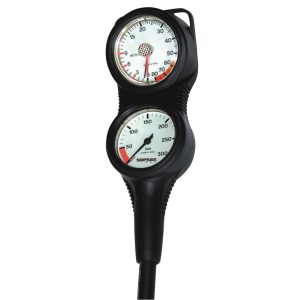
Double consoles (16)
-
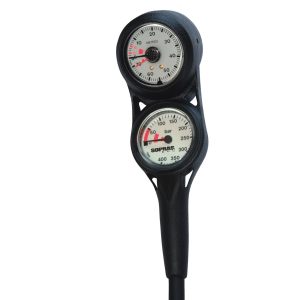
Triple consoles (7)
-
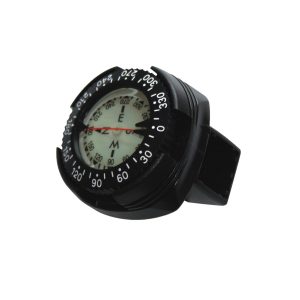
Compasses (3)
-
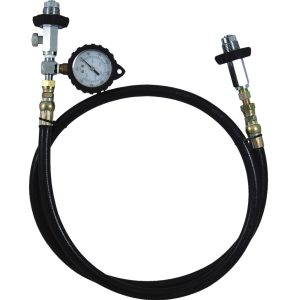
Tank pressure equalizer, testers (6)
-
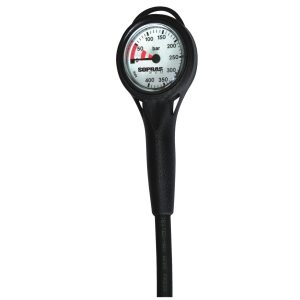
Pressure gauges (15)
-
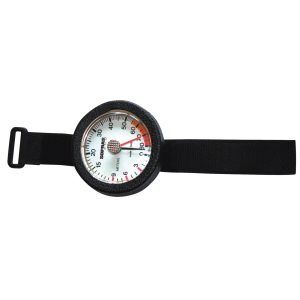
Depth gauges (4)
Standalone Gauges vs. Consoles
A standalone pressure gauge connects directly to the first stage high-pressure (HP) port via a short HP hose and is clipped or tucked into a BCD pocket. It displays only tank pressure. A console mounts two or three instruments together on a shared housing connected by a single HP hose — this consolidates instrument monitoring into one location, reduces the number of separate hose connections on the first stage, and keeps all critical readings in one visual field. The trade-off is a larger, heavier console unit compared to individual gauges. The Combo 2 series combines a pressure gauge with either a depth gauge or a compass (two separate configurations); the Combo 3 series combines all three. Technical and sidemount divers frequently prefer standalone instruments to reduce console bulk, while recreational divers typically find a Combo 2 or Combo 3 console the most practical all-in-one solution.
Pressure gauges
Standalone HP gauges in Mini 400bar, Standard 300bar, and Tek 300bar form factors. Metric and PSI scales, nitrox/oxygen-compatible models, thermometer variants, and individual gauge head available separately.
Depth gauges
Standalone depth gauges in Mini (70m/200ft) and Standard (80m/230ft) form factors. Mechanical bourdon-tube design with maximum depth indicator needle.
Double consoles
Two-instrument consoles: Combo 2 (pressure + depth) and Combo 2 compass (pressure + compass). Available in Standard 300bar, Mini 400bar, Tek, and Thermo variants. Metric and imperial scales.
Triple consoles
Three-instrument consoles: Combo 3 combines pressure gauge, depth gauge, and compass. Standard 300bar, Mini 400bar, and Thermo variants. Metric and imperial scales.
Compasses
Three standalone compass models: Standard, Mini, and Compass with holster. All use a liquid-filled compass card for stability at depth.
Tank pressure equalizer, testers
Tank pressure equalizers (DIN and INT) with and without pressure gauge for transferring gas between cylinders. Tank testers (DIN and INT) for valve and regulator seat verification.
Gauge Form Factors: Standard, Mini, and Tek
Three gauge head sizes are used across the range. The Standard form factor uses a larger dial face (typically 52–63 mm) with maximum readability in low-visibility conditions and with gloves; the scale goes to 300 bar. The Mini form factor (400 bar scale) uses a compact dial optimised for modern high-pressure cylinders and for divers who want a smaller profile console or standalone gauge. The smaller face is less readable at a glance but the 400 bar scale provides more resolution in the upper half of the range where standard gauges can be harder to read precisely. The Tek form factor uses a braided HP hose, a swivel end fitting, and a side-entry hose connection to the gauge body — designed for technical divers where the console is stowed at the diver’s side rather than held in front, reducing drag and snag risk. Tek variants are available in the double console range (Combo 2 Tek 300bar/5000 PSI).
Thermometer Integration
Thermo variants of the Standard pressure gauge and several consoles add a bimetallic or fluid thermometer element integrated into the gauge body or console housing. This displays ambient water temperature without requiring a separate thermometer. Temperature data is useful for dive planning (knowing thermocline depth and thermal protection requirements), for verifying gear performance at temperature, and for log records. Thermo variants add a small cost premium over standard models; the temperature reading is passive and requires no battery or maintenance.
Metric vs. Imperial Variants
Every gauge and console in the range is available in both metric (bar for pressure, metres for depth) and imperial (PSI for pressure, feet for depth) scales. The metric variants are the 300 bar and 400 bar pressure scales and 70m/80m depth scales. The imperial variants are labelled 5000 PSI and 200ft/230ft. Both use identical internal mechanisms — only the dial printing differs. Selection is determined by the diver’s training background and the conventions used by the dive operation they work with. Divers trained in Europe predominantly use metric; divers trained in the US and many Caribbean and Asian operations use imperial. Mixed diving environments may carry both instrument types for clarity.
What to Look For
- Match instrument to cylinder working pressure. Standard 300bar and Combo 2/3 300bar instruments are correctly ranged for steel cylinders with a 200 or 232 bar working pressure. Mini 400bar instruments cover 300 bar cylinders and provide additional range for high-pressure steel cylinders up to 300 bar rated. Using a 300bar gauge on a 300bar cylinder is correct; the gauge reads full at the cylinder’s rated pressure. A 400bar gauge on the same cylinder reads about three-quarters of full scale at the same pressure — the gauge is not wrong, but it uses less of the dial range and may be slightly harder to read at low pressures.
- Console vs. standalone for instrument placement preference. Divers who prefer to monitor instruments at arm’s length will find a Combo 2 or Combo 3 console the most practical configuration. Divers who use a dive computer as their primary dive data source and carry analog instruments as backup may prefer the smaller profile of standalone gauges stored in a BCD pocket and accessed only when needed.
- Nitrox/oxygen-compatible gauges for enriched air diving. The Mini Oxygen/Nitrox 400bar gauge uses oxygen-compatible materials and is cleaned for oxygen service — required for use with nitrox mixes above 40% oxygen or pure oxygen. Standard gauges should not be used in oxygen-enriched service; the lubrication and sealing compounds inside may not be compatible with high partial pressures of oxygen.
- Standalone compass vs. console compass for navigation preference. A compass integrated into a double console is always available when the diver references their instrument panel. A standalone compass — particularly the compass with holster, which can be wrist-mounted — allows navigation without requiring the diver to bring the console to eye level. Technical and overhead environment divers frequently prefer a standalone wrist-mounted compass; recreational divers typically find a console compass entirely sufficient.
Maintenance and Care
Rinse all instruments in fresh water immediately after salt water use — particularly the hose fitting and the gauge face surrounds where salt deposits accelerate corrosion of metal components. Do not use pressurised fresh water directly on gauge faces; the water jet can force water into the back of the gauge past the pressure element seal. Soak instruments in a rinse bucket rather than spraying directly. Store in a bag or pouch to protect the dial face from scratching; the compass fluid in compass instruments can develop bubbles if stored at elevated temperatures — if a bubble appears, the instrument should be inspected and replaced if the bubble is persistent. Inspect HP hoses at the same time as regulator service for signs of cracking, pinching, or fitting corrosion. Console straps and retaining clips should be verified before each dive season — a console that drops and impacts the reef or seabed can damage both the instrument and the environment.
FAQ
Do I need a pressure gauge if I use a dive computer?
Most modern dive computers include a tank pressure transmitter option that wirelessly receives pressure from a transmitter on the first stage, displaying remaining gas and SAC rate on the computer display. If a diver uses a computer with an integrated pressure transmitter, a separate analog gauge serves as redundant backup rather than primary instrumentation. Recreational training agencies recommend carrying an analog pressure gauge as a backup regardless of whether a computer with wireless pressure is in use — if the transmitter battery fails or the wireless link drops, the analog gauge provides reliable backup tank pressure information. Technical diving training makes an analog backup gauge mandatory.
What is the difference between the Combo 2 and Combo 2 compass?
Both are two-instrument consoles connected by a single HP hose. The Combo 2 (SKU 531400 series) combines a pressure gauge with a depth gauge in one housing — it displays both tank pressure and current/maximum depth. The Combo 2 compass (SKU 535300 series) combines a pressure gauge with a compass — it displays tank pressure and provides directional navigation, but does not include a depth gauge. Divers who use a dive computer for depth and time data but want analog tank pressure and a console compass would choose the Combo 2 compass. Divers who want full analog instrument backup including depth would choose the standard Combo 2 and add a standalone compass separately if required, or select the Combo 3 which includes all three instruments.
What does the tank pressure equalizer do?
A tank pressure equalizer is a hose assembly with DIN or INT fittings at both ends and a control valve in the middle. It connects two cylinders — typically a partially full travel cylinder and a fill source or buddy’s cylinder — and equalises the pressure between them by allowing gas to flow from the higher-pressure side to the lower-pressure side until pressures balance. This is used at dive centres for topping up partially filled tanks from higher-pressure tanks without requiring a compressor, and by technical divers for managing twin cylinder sets or transferring gas between stages. The variant with a pressure gauge adds a direct pressure readout at the equalizer so the diver can monitor the transfer without referencing the regulator gauge. Tank testers (DIN and INT) are simpler devices for verifying that a valve outlet and regulator first stage seat correctly before attaching the regulator — they apply regulated pressure to check for leaks without requiring a full first stage to be rigged.