


Showing all 4 results
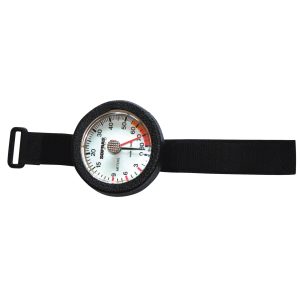
Diving depth gauges with a beryllium membrane, in metres or feet: the 55 mm Mini to 70 m or 200 ft and the 65 mm Standard to 80 m or 230 ft, with luminous dial and maximum depth indicator.

What’s in This Category
| Product | Range | Notes |
|---|---|---|
| Mini 70 m | 70 m | 55 mm |
| Mini 200 ft | 200 ft | 55 mm |
| Standard 80 m | 80 m | 65 mm |
| Standard 230 ft | 230 ft | 65 mm |
How they work
The depth gauges use a beryllium membrane that moves with the water pressure and drives the needle. The maximum depth indicator stays at the deepest point of the dive, so you can read it after surfacing. Accuracy is ±1.5%, and the luminous dial is easy to read during a dive or a decompression stop.
Who needs a depth gauge
Most divers today use a dive computer. An analogue depth gauge is a backup that works without batteries: if the computer fails, you can still control depth and finish the dive safely. In instruction and technical diving, a backup instrument is often required.
What to look for
- Range. 70 m or 80 m covers recreational and most technical diving.
- Units. Metres or feet, to match your training and computer.
- Mounting. On a wrist strap or in a console.
Care and maintenance
Rinse the depth gauge in fresh water after every dive, let it dry and keep it away from heat and knocks. Check before a dive that the needle rests at zero.
Frequently asked questions
What is a maximum depth indicator?
A second needle that stays at the deepest point of the dive, so you know your maximum depth after the dive.