


Showing all 11 results
Neoprene boots and socks protect the feet from cold water and physical abrasion, and provide the thermal base for open-heel dive fins. The range here covers 11 items from 2.5 mm tropical booties for warm water and travel through 6 mm hard-sole cold-water boots and rock boots for shore entries over rough terrain — plus neoprene socks, cycling socks, and aqua shoes for surface applications.
Boot Types and Their Applications
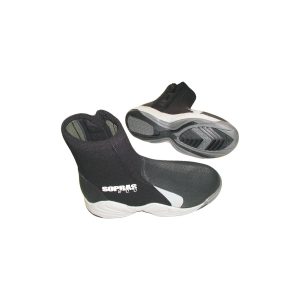
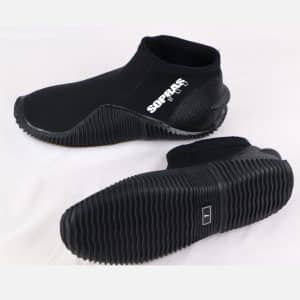
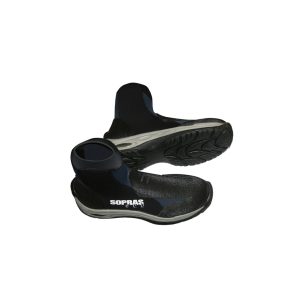
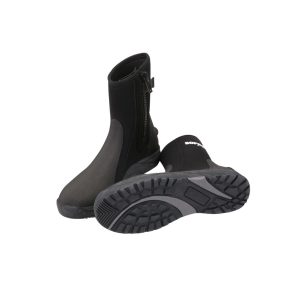
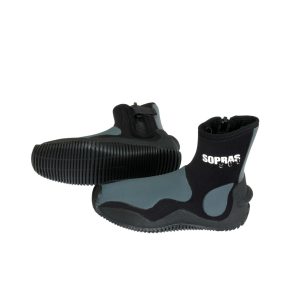
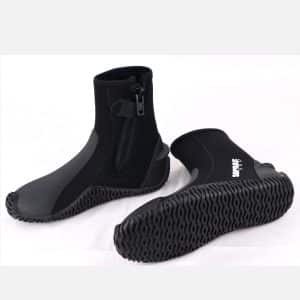
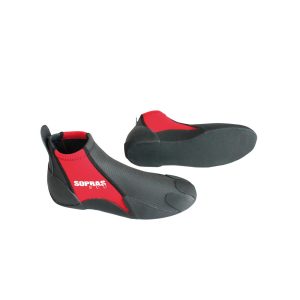
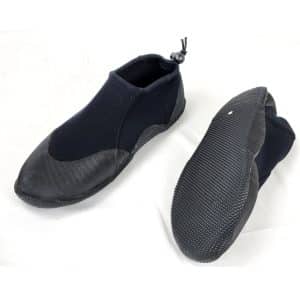
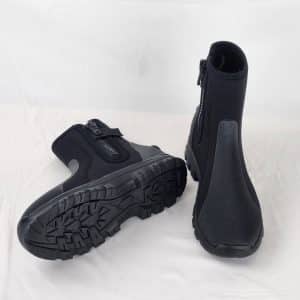
Dive boots divide into three functional groups based on sole type and thickness. Soft-sole boots (2.5 mm tropical, Low booties tropical, Neoprene aqua shoe) use a flexible neoprene or rubber sole without reinforcement — appropriate for sandy or gentle entries, and for use inside full-foot fins where the pocket provides the structural support. These boots prioritize flexibility and packability over protective capability on rough terrain. Hard-sole boots (5mm hard sole, 5mm with hard sole, 6mm with hard sole, Rock boots 6mm) use a rubber sole bonded to the neoprene upper — appropriate for rocky shoreline entries, boat steps, and any surface where bare neoprene would be cut or worn through. The hard sole distributes weight and protects the underfoot from abrasion. Zip boots (Boots in 5mm neoprene with zip) add a side or rear zipper that makes the boot faster to don and doff than pull-on designs, at the cost of a potential leak path at the zipper seam.
Thickness selection follows the same temperature logic as suits: the 2.5 mm Low booties tropical and Neoprene aqua shoe are warm-water and summer items appropriate above 22°C; the 5 mm range covers the 12–22°C zone; the 6 mm boots (hard sole and rock boots) are appropriate below 12°C. Boots are typically worn in slightly colder conditions than the hands because feet are more active during diving (constant fin movement generates heat) but are simultaneously closer to the ground and exposed to bottom cold water during kneeling or prone positions.
The Boots 5mm donut seal uses the same donut wrist-seal concept applied to the ankle — a folded tube seal at the top of the boot that creates a tighter, more water-resistant junction with the suit’s ankle cuff. This is the boot equivalent of the donut seal gloves: meaningful for cold-water diving where ankle water entry accelerates heat loss. The Rock boots in 6mm have an extended rubber rand around the boot perimeter (the wrap-around rubber edge), which provides additional protection against abrasion from rocks on the upper sides and front of the boot, not just the sole.
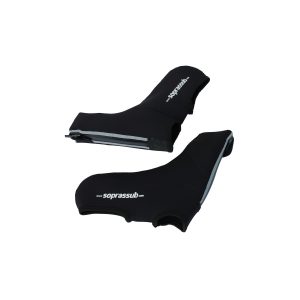
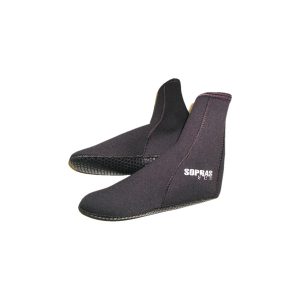
The Socks 3mm and Cycling socks 3mm are thinner neoprene items without reinforced soles — the diving socks are designed to be worn inside full-foot fins as a thin thermal layer and light padding; the cycling socks are designed for watersports cycling and triathlon use where a thin neoprene layer provides thermal protection without the bulk of a boot.
What to Look For
- Boot sizing for your fins, not your shoe size alone. Open-heel fins are sized to accommodate the boot — always size boots and fins together. A boot that fits correctly on the bare foot may be too wide for the fin foot pocket it needs to fit into, or may compress the foot in the pocket such that the toes are cramped. Bring your fins when trying boots, or verify the boot size against the fin manufacturer’s compatibility guide.
- Sole type for your entry/exit environment. If you regularly dive from shore over rocky or coarse surfaces, a hard-sole boot is essential — soft neoprene soles wear through on rock entries within a single dive season of regular use. If you dive exclusively from boats onto ladders and platforms, soft-sole boots are adequate and more flexible inside the fin foot pocket. The Rock boots are the most durable shore-entry option with their extended rubber rand providing side and front protection in addition to the sole.
- Boot height and suit ankle overlap. Standard height boots (5 mm hard sole, 5 mm donut seal) reach to mid-ankle. For maximum ankle thermal protection, verify that the boot top overlaps with the suit ankle cuff by at least 3–5 cm when the leg is extended. If the boot is too short, there is an exposed neoprene-to-neoprene gap at the ankle that allows water entry. The donut seal boot resolves this with its positive seal design; standard boots rely on physical overlap.
- Zip boots for ease of use vs. seal performance. Zipped boots (Boots in 5mm neoprene with zip) are significantly faster to put on and take off than pull-on designs, which matters on multi-dive boat trips where the time between dives is short. The trade-off is a potential leak path at the zipper seam if the zipper is not fully closed or if the zipper degrades over time. For divers who value speed over absolute thermal seal, the zip design is practical. For divers prioritizing warmth in the coldest conditions, pull-on boots without a zipper are more water-tight.
- Low booties vs. full boots for fin type. The Low booties tropical 2.5mm and Boots 2.5mm low are designed for warm-water use inside full-foot fins where a full-height boot would make the foot pocket too tight. These low-profile designs provide a thin thermal and abrasion protection layer without adding foot bulk. They are not appropriate for open-heel fins (where a taller boot is needed for strap retention) or for rocky entry diving (where sole protection is needed).
Maintenance and Care
Rinse boots inside and out after every salt water dive. The interior of neoprene boots retains water and organic material that, if not rinsed and dried, produces a persistent odor within a few dive sessions. Fill each boot with fresh water, agitate, drain, and repeat. For hard-sole boots, inspect the sole-to-upper bond around the perimeter after the dive season — salt water accelerates separation at the rubber-to-neoprene adhesive joint. Early-stage separation (visible as a small gap or lifting at the edge) can be rebonded with neoprene adhesive before water ingress expands the delamination. Once the full perimeter of a hard sole has lifted, the boot should be replaced rather than repaired.
Store boots upright or hanging by the boot opening — storing them crushed flat under gear compresses the neoprene and creates permanent fold lines in the ankle area. For zipper boots, rinse the zipper mechanism thoroughly and apply zipper lubricant after every few dives. A dry or salt-laden zipper on a cold morning is a frustrating start to a dive; a few seconds of maintenance per dive prevents this. The Cycling socks should be rinsed like any neoprene item and stored flat — they have no structural component that requires hanging storage.
FAQ
What boot thickness should I use with my 5mm wetsuit?
For water in the 18–24°C range where a 5 mm suit is appropriate, 3–5 mm boots provide adequate foot thermal protection. The 5 mm donut seal or 5 mm hard sole boots are the natural match for a 5 mm suit in temperate water. In warmer conditions (22–26°C) with a 5 mm suit, 2.5 mm low booties are sufficient. Match boot thickness to water temperature rather than automatically matching the suit thickness — feet often tolerate slightly less insulation than the torso because fin movement generates heat at the feet.
What is the difference between the 5mm hard sole and 5mm with hard sole models?
Both are 5 mm neoprene boots with reinforced rubber soles — the difference is in the construction details. The Boots 5mm hard sole (SKU 152100) is available in large sizes (11–13) specifically, while the Boots 5mm with hard sole (SKU 15800) covers the standard 5–13 range with a slightly different boot geometry and sole profile. Both provide equivalent protection for shore entry and boat diving; the choice between them is based on size availability and fit preference for the specific foot shape.
Can I use neoprene socks instead of boots for cold water diving?
Neoprene socks (Socks 3mm) are designed for use inside full-foot fins or as a thin thermal layer inside hard-shell dive boots — they are not a substitute for a dive boot in cold water or for rocky entry diving. Socks provide no sole protection and minimal thermal value compared to a 5 mm boot. For cold water (below 15°C) or shore diving, use appropriate neoprene boots. Socks are appropriate for warm-water diving inside full-foot fins where a thin thermal and abrasion protection layer is all that’s needed.
How do I prevent my boots from developing a bad smell?
Boot odor is caused by bacteria growing in the warm, damp interior — the same mechanism as with gloves. The prevention is the same: rinse the interior thoroughly with fresh water after every dive, dry the interior completely before storage, and do not store damp boots sealed in a gear bag. Adding a small amount of wetsuit shampoo or enzyme-based odor treatment to the rinse water periodically eliminates bacterial buildup before it becomes a persistent problem. Once an odor is well-established, soaking in diluted white vinegar for 30 minutes followed by a fresh water rinse is effective — but prevention by consistent rinsing and drying is far easier.
What are rock boots and who needs them?
Rock boots (Rock boots in 6mm) are a heavy-duty shore-entry boot with a thick rubber rand that wraps around the perimeter of the boot from sole to mid-upper — providing abrasion protection not just on the sole but on the sides and front of the boot where standard sole-only protection doesn’t reach. They are appropriate for divers who regularly enter and exit from rocky coastlines with irregular surfaces, barnacled rock platforms, or loose rubble where the foot is exposed to lateral impact and abrasion in addition to underfoot pressure. For boat diving or sandy beach entries, standard hard-sole boots are adequate; the rock boot construction provides durability benefits that are relevant only in genuinely rough terrain environments.