

Regulator accessories extend, adapt, and support the core first and second stage system — covering everything from backup air sources and cylinder valve adapters through port swivels, dust protection, and octopus management. Browse ExtraAir integrated backup systems, the full range of DIN/INT adapters and 360° swivel connections, plus dust caps, hose wraps, octopus holders, and O-ring storage.
Supporting and Extending Your Regulator System
A well-configured regulator setup is more than just a first and second stage. The connections, adapters, protective items, and redundant air sources that support the core system have a direct impact on safety, flexibility, and equipment longevity. The accessories in this category address three practical needs: redundant air supply (ExtraAir), connection compatibility (adapters and connections), and equipment protection and management (other accessories).
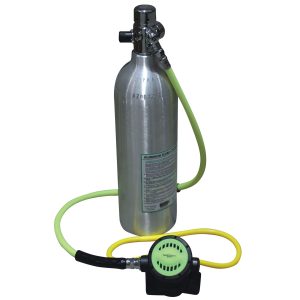
ExtraAir
Integrated backup air source systems using a compact independent cylinder mounted on the BCD — first stage, regulator, and quick-disconnect filler included.
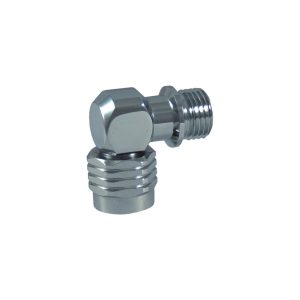
Adapters and Connections
DIN/INT conversion adapters, 90° and 110° hose connections, 360° LP and HP swivels, ON/OFF valves, and port-to-port thread adapters for every hose routing requirement.
Other
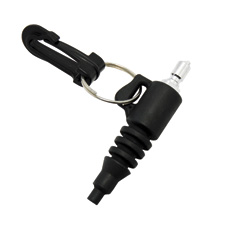
Dust caps (plastic and aluminium DIN), octopus holders (standard and magnetic), silicone mouthpiece covers, hose wraps, air pistol, and aluminium O-ring storage containers.
What to Look For
- Thread compatibility before ordering adapters: Regulator hose threads follow specific standards — 9/16″-18 UNF, 3/8″-24 UNF, and 7/16″-20 UNF are the most common. Confirm both male and female thread specs on the adapter against your existing first stage and hose fittings before purchasing.
- ON/OFF valve function: The 2nd stage ON/OFF valves allow isolating individual second stages on a single first stage — useful for technical setups or when managing a free-flowing octopus underwater. Confirm the valve operates smoothly and holds pressure reliably before relying on it in the water.
- Swivel quality and gas tightness: The 360° regulator swivel and LP port adapter introduce additional O-ring sealing points into the breathing circuit. Use only metal-bodied swivel adapters from established manufacturers; inspect O-rings regularly for wear and replace at each service.
- Dust cap material: Plastic DIN dust caps provide basic protection from particulates during storage and transport. The aluminium DIN cap is more durable for frequent equipment handling and provides a better seal. Keep the dust cap on whenever the first stage is disconnected from a cylinder.
- Octopus holder retention strength: The magnetic octopus holder provides quick deployment without wrestling with a clip, but the magnet strength should be tested against the buoyancy of the second stage in water — it should hold securely under neutral buoyancy but release cleanly on deliberate pull.
Maintenance and Care
Rinse all metal adapters and connections in fresh water after each dive. Pay particular attention to swivel bodies — their internal O-rings are exposed to the breathing circuit and must be free of salt and particulate. Inspect O-ring grooves in adapters for corrosion, particularly on aluminium components in saltwater environments. Replace O-rings at every service interval; carrying a small aluminium O-ring storage tank on a dive trip ensures replacements are available in the field. Dust caps should be kept clean and intact; a cracked or deformed dust cap may allow water or debris into the DIN thread, potentially contaminating the first stage inlet filter. Octopus holders and hose wraps require only periodic rinsing and inspection for UV degradation.
FAQ
What is the difference between the 90° and 110° hose connections?
Both are elbow adapters that change the exit angle of a hose from a regulator port — useful when a straight hose exit creates an awkward routing against the diver’s body or cylinder. The 90° connection creates a right-angle exit; the 110° provides a slightly shallower angle. The choice depends on the specific hose routing geometry needed in the diver’s configuration — try both on a rigged setup before committing if possible.
Can I use the DIN/INT adapter to convert my DIN regulator for travel?
Yes. The DIN-to-INT adapter (Adapter DIN/INT) allows a DIN first stage to connect to INT (yoke) cylinder valves, which are common at rental facilities and dive centres worldwide. The INT-to-DIN adapter converts an INT first stage for use with DIN valves. Carrying a DIN-to-INT adapter is standard practice for divers who own DIN equipment and travel internationally.
What thread is the LP port on Sopras first stages?
Sopras first stages use standard 9/16″-18 UNF LP port threads, which are compatible with most universal regulator hoses. The BC standard adapter (M9/16 to F BC standard) is available for BCD inflator hoses that use the BC standard thread. Port-to-port adapters and swivels in the accessories range cover all common thread conversion combinations.
What does the OPV for 1st stage do?
The OPV (overpressure protection valve) fitted to the first stage protects LP hoses and downstream devices from excessive intermediate pressure if the IP creeps above specification — a failure mode that can damage BCD inflator bladders or second stage internals. The OPV for 1st stage reg is set to open at 12 bar above ambient and is a useful addition to any first stage that lacks a built-in IP relief.
Are octopus holders required or just a convenience?
While not a regulatory requirement, a properly positioned octopus holder is a safety item. An octopus that dangles freely can drag through silt, get caught on overhead environments, and is harder to locate under stress. Both standard clip holders and magnetic holders position the octopus in the rescue triangle — accessible to both the diver and a potential recipient — and keep it streamlined. Magnetic holders offer particularly fast single-hand deployment.