

Showing 1–12 of 19 results
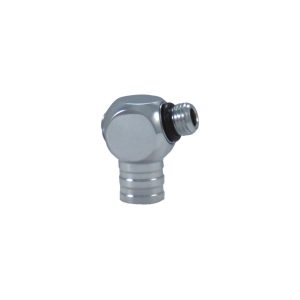
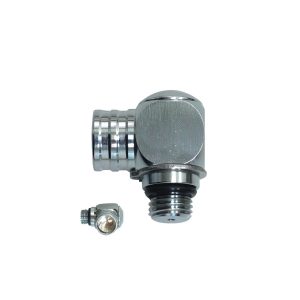
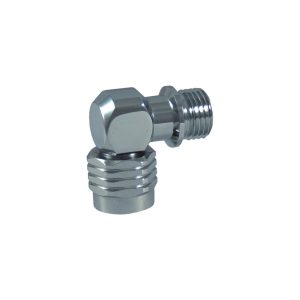
Regulator adapters and connection hardware solve the practical geometry and compatibility challenges of building or modifying a dive regulator system. This range covers DIN/INT cylinder valve adapters, high-pressure 300 bar port connections, 360° swivels for both LP and HP ports, angled hose elbows, ON/OFF isolation valves, and thread conversion adapters spanning the full range of 9/16″, 3/8″, 7/16″, and BC standard fittings.
Regulator Connection Standards and Why They Matter
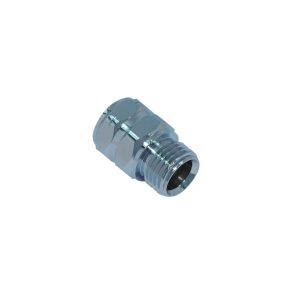
The scuba regulator ecosystem uses several thread and connection standards that evolved separately across manufacturers and regions. The main LP hose thread is 9/16″-18 UNF (male), used on the majority of second stages and inflator hoses. BC standard (BCD inflator connection) uses a different thread profile. HP port connections use 7/16″-20 UNF. Some legacy or specialised hoses use 3/8″-24 UNF. Where equipment from different manufacturers or generations is combined, thread adapters prevent incompatibility from becoming a safety issue.
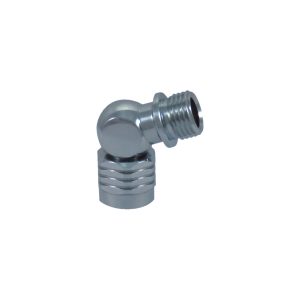
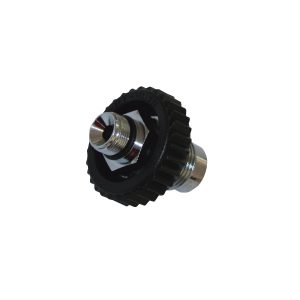
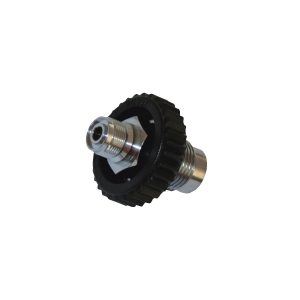
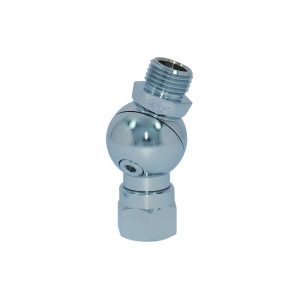
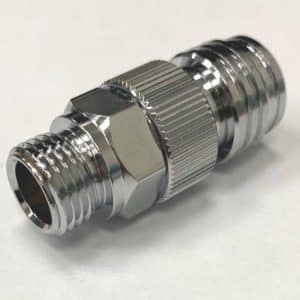
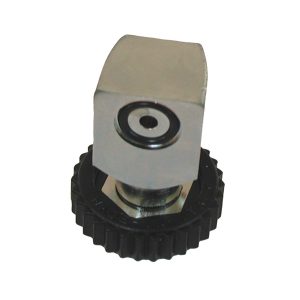
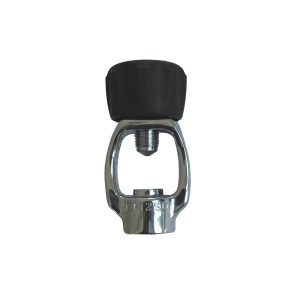
The Adapter DIN/INT and Adapter INT/DIN solve the most common field compatibility problem — a diver with DIN equipment at an INT-only facility, or vice versa. The 300 bar connection adapters for Jupiter/Neptune and Genius/Zenith extend the first stages to high-pressure cylinder service without replacing the full regulator. The 360° regulator swivel and 360° 1st stage LP port adapter allow hose exits to be rotated to any position without gas leakage, eliminating hose torque and kinking in complex configurations.
ON/OFF Valves and Port Management
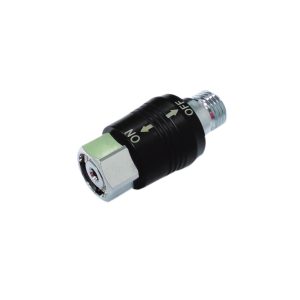
The ON/OFF valves (available in male and female 9/16″ to BC configurations) allow individual second stages to be isolated at the first stage LP port without closing the main cylinder valve. This is useful for shutting down a free-flowing octopus during a dive, or for sidemount and technical configurations where individual gas sources need to be isolated independently. The OPV for 1st stage reg (12 bars) provides downstream overpressure protection, opening to vent excess intermediate pressure before it damages hoses or BCD bladders. The adapter single male 9/16-18 to double female 3/8-24 splits a single LP port into two outputs — useful when port count on the first stage is insufficient for the planned hose configuration.
What to Look For
- Confirm thread specs at both ends: Every adapter has a defined male/female thread at each end. Write down the thread spec of the existing fitting and the thread spec needed for the new connection before selecting an adapter — mixing up male/female or thread pitch results in an unusable or leaking connection.
- Material — brass vs. chrome vs. aluminium: Most regulator adapters are brass or chrome-plated brass, which is appropriate for saltwater and compressed air service. Aluminium adapters are lighter but more prone to galvanic corrosion in saltwater in contact with brass or steel fittings. Inspect aluminium adapters carefully after saltwater use.
- Torque on swivel adapters: The 360° swivel contains internal O-rings that must seal under IP. Apply thread sealant (PTFE tape on connection threads, not O-ring seats) and hand-tighten then snug with a tool — overtightening crushes O-rings and undertightening leaks. Verify gas-tightness by checking with soapy water or an IP gauge after fitting.
- ON/OFF valve full-open position: When an ON/OFF valve is in the open position, it should be fully open — a partially restricted valve increases breathing resistance at the second stage and may not be obvious until the diver is under effort underwater. Test each valve for full flow before committing to a diving configuration.
- 300 bar connection compatibility: The 300 bar connection adapters are model-specific — Jupiter/Neptune uses a different fitting than Genius/Zenith. Confirm the first stage model before ordering; an incompatible high-pressure connection is not interchangeable.
Maintenance and Care
Rinse all adapters in fresh water after each dive and allow to dry before storage. Inspect O-rings in swivel bodies and port adapters at each service; replace if any sign of compression set, cracking, or extrusion is visible. Apply a thin film of oxygen-compatible grease (Christo-Lube OXY or equivalent) to O-rings when reassembling — dry O-rings in a compressed gas environment wear rapidly and are more likely to leak. For ON/OFF valves, cycle the valve fully open and closed several times during the annual service to check for sticking or leakage around the valve stem. Store adapters in a small case or bag to prevent thread damage from contact with other metal hardware in the equipment bag.
FAQ
What is BC standard thread and how does it differ from 9/16″?
BC standard (BCD inflator standard) is a thread specification used on BCD inflator hoses and some adapters, with a different diameter and pitch from the standard 9/16″-18 UNF LP port thread. The two are not directly interchangeable — the ADAPTER M9/16 TO F BC standard and Adapter male 9/16 to female BC standard bridge between the two standards, allowing LP hoses with one thread type to connect to ports or inflators with the other.
Can I use a 360° swivel on the HP hose to my pressure gauge?
Yes — the 360° swivel for HP hose is specifically designed for high-pressure hose connections to the pressure gauge or dive computer. It allows the HP hose to rotate freely without kinking while maintaining a gas-tight seal at the pressure differential of the HP port (up to 300 bar). Use only HP-rated swivels on HP ports; LP swivels are not rated for high-pressure service.
What is the swivel attachment to 2nd stage used for?
The swivel attachment to 2nd stage adds a 360° rotating joint at the hose-to-second-stage connection. This allows the hose to rotate relative to the second stage body in the mouth, reducing the twisting force on the jaw and neck during the dive — particularly useful for divers who turn their heads frequently, dive in currents, or experience jaw fatigue on long dives. It is a separate addition to the 360° regulator swivel at the first stage port.
How do I know if I need the DIN/INT or INT/DIN adapter?
The Adapter DIN/INT has a DIN male input and INT/yoke output — it allows a DIN regulator to connect to INT cylinder valves. The Adapter INT/DIN has an INT/yoke input and DIN female output — it allows an INT regulator to connect to DIN cylinder valves. If you own DIN equipment and encounter INT cylinders (common when travelling), you need DIN/INT. If you own INT equipment and encounter DIN cylinders, you need INT/DIN.
What does the OPV for 1st stage reg protect against?
The OPV (overpressure protection valve) is a pressure relief valve set to open at 12 bar above ambient. If the first stage intermediate pressure creeps above specification — due to a worn seat, contamination, or temperature — the OPV vents excess pressure before it reaches the second stage demand diaphragm, BCD bladder, or drysuit valve. It is a passive safety device that does not affect normal regulator operation but provides a meaningful safety margin against IP failure modes.