

Showing all 4 results
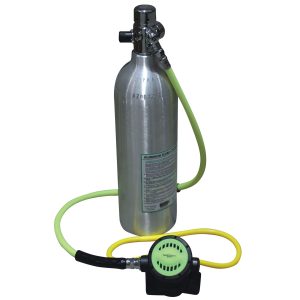
The ExtraAir system provides a fully independent backup air source integrated into the BCD inflator — combining a compact first stage with a built-in second stage on a small independent cylinder. Unlike a conventional octopus connected to the main cylinder, ExtraAir draws from its own separate gas supply, giving the diver a genuine redundant source in a streamlined, always-accessible configuration.
How ExtraAir Works
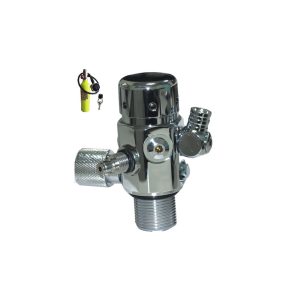
The ExtraAir first stage mounts on a small independent cylinder (typically S6 or S13, held on the BCD with a dedicated harness) and connects to the BCD inflator via a 3/4″ NPSM or similar connection, replacing the standard inflator hose. The integrated second stage is built into the inflator body itself — in an out-of-air emergency, the diver simply breathes from the inflator mouthpiece while ascending. The Extra air source set includes the 1st stage and connection fittings as a complete unit. The Extra air source 1st stage 3/4″ is available separately for divers who need to replace or upgrade just the first stage component.
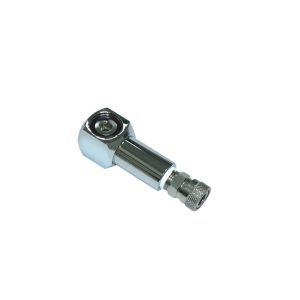
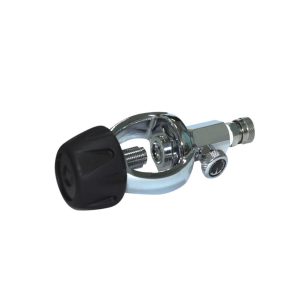
Filling the independent ExtraAir cylinder is handled by the Station QD filler (for DIN/station connections) and the YOKE QD filler (for INT/yoke fill station connections). The quick-disconnect design allows the small cylinder to be removed, filled at any standard fill station, and reattached rapidly without dismantling the BCD.
ExtraAir vs. Conventional Octopus
A conventional octopus is a second second stage connected to the main cylinder’s first stage. It provides an alternate breathing source for a buddy but draws from the same gas supply as the primary regulator — in a true out-of-air scenario, both divers are breathing down the same tank during the ascent. ExtraAir uses a completely independent cylinder, meaning the backup supply is unaffected by primary cylinder pressure. This is particularly relevant for solo divers, instructors managing students, or divers in environments where buddy proximity cannot be guaranteed.
What to Look For
- Complete set vs. replacement stage: New ExtraAir users should start with the complete Extra air source set, which includes the first stage and all connection hardware. The standalone 1st stage unit is suited for replacing an existing component or building a custom configuration.
- Fill station connector compatibility: Select the QD filler (Station or YOKE) that matches the fill connections at your regular dive centre. Station QD is for DIN-type fill station connections; YOKE QD is for INT-type connections. Having both covers most fill scenarios when travelling.
- BCD harness compatibility: The ExtraAir independent cylinder requires a dedicated harness or mounting strap on the BCD. Confirm the ExtraAir system is compatible with your BCD model or that a suitable harness (available separately under BCD accessories) is included.
- Cylinder volume and dive duration: Small ExtraAir cylinders (S6 = 0.6 l, S13 = 1.3 l at 200 bar) hold enough air for an emergency ascent but not an extended bottom dive. They are designed for emergency use only, not as a primary gas extension. Refill after every dive session.
- Regular testing of the integrated second stage: The ExtraAir second stage within the inflator body must be tested for correct function at the start of every dive — breathe from the mouthpiece to confirm it delivers air cleanly and purges closed correctly before entering the water.
Maintenance and Care
After each dive, rinse the entire ExtraAir unit in fresh water, paying attention to the quick-disconnect filler port and any exposed O-rings on the cylinder connection. Dry the inflator/second stage mouthpiece section thoroughly — water trapped in the mouthpiece channel can enter the valve body. Keep the independent cylinder charged between dives; a cylinder left empty for extended periods risks moisture ingress and internal corrosion. Test the QD filler connection O-rings before each fill; a damaged O-ring on the filler will cause a blowback when disconnecting. Service the ExtraAir first stage on the same schedule as the main regulator — annually or after 100–200 dives — using the same O-ring kits and oxygen-compatible lubricants.
FAQ
How much air does an ExtraAir cylinder hold?
Standard ExtraAir systems use small cylinders designated S6 (0.6 litre internal volume) or S13 (1.3 litre). At a fill pressure of 200 bar, an S6 holds 120 litres of free gas and an S13 holds 260 litres. For context, a diver at 10 metres consuming 20 litres per minute would have approximately 6–13 minutes of air from an S13 — enough for a controlled emergency ascent from recreational depths, but not a leisure dive.
Can I fill the ExtraAir cylinder at any dive centre?
Yes, using the appropriate QD filler. The Station QD filler connects to DIN fill stations (common in Europe); the YOKE QD filler connects to INT/yoke fill points. Most dive centres in the Czech Republic and Europe use DIN fill stations, so the Station QD filler covers the majority of local fills. When travelling internationally, carrying both fillers ensures compatibility regardless of the local standard.
Does ExtraAir replace the need for a buddy?
No. ExtraAir provides a redundant air source for the individual diver in an out-of-air emergency, enabling a controlled independent ascent. It does not replace the safety benefits of a dive buddy — shared situational awareness, mutual assistance, and emergency response capability. Most certification agencies and dive operators require buddy diving regardless of equipment redundancy.
How do I breathe from ExtraAir in an emergency?
The ExtraAir integrated second stage is accessed through the BCD inflator mouthpiece. In an emergency, hold the inflator body with the mouthpiece facing you, place the mouthpiece in your mouth, and inhale normally — the demand valve delivers air on inhalation exactly as a standard second stage. The inflator button functions are typically still accessible on the same unit. Practice this access and breathing procedure in shallow water before relying on it.
Is ExtraAir suitable for technical diving?
ExtraAir is designed for recreational diving as a backup to the primary single-cylinder setup. Technical divers typically use a fully redundant primary gas system (double manifold or sidemount) with a separate pony bottle and dedicated stage regulator, which provides significantly more backup gas volume and a more robust redundancy architecture. ExtraAir is best suited to recreational divers, instructors, and dive masters operating in recreational depth ranges.