

Showing all 12 results
Regulator servicing requires specific tools and materials to be done correctly — improvisised approaches risk damaged seats, misadjusted intermediate pressure, and contaminated lubricant in oxygen-service equipment. This range covers the complete workshop toolkit: O-ring sets for first and second stage service, Christo-Lube OXY grease for oxygen-compatible lubrication, intermediate and middle pressure gauges for IP verification, specialist adjustment tools, and complete service kits.

Why Regulator Servicing Tools Matter
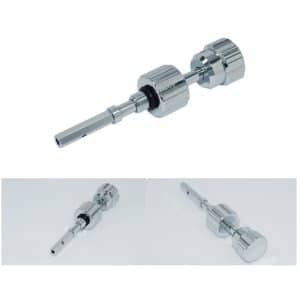
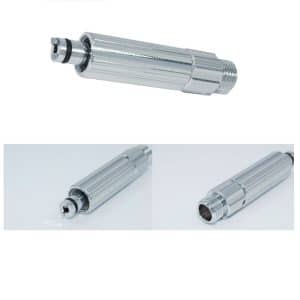
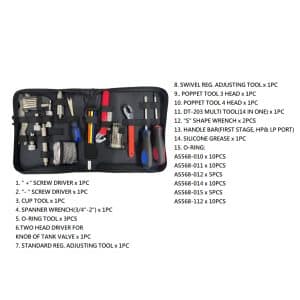
Regulator internals operate under pressures from ambient (0 bar at the surface) through intermediate (8–10 bar above ambient) to high pressure (200–300 bar at the cylinder). The precision of valve seats, spring preloads, and O-ring compression is what keeps intermediate pressure stable and the second stage breathing correctly. Servicing requires tools designed to disassemble and reassemble these components without damaging them — generic tools slip on soft brass seat components and score O-ring grooves. The regulator adjustment tools (hexagonal and flat) are matched to the specific Sopras regulator architecture; the Scuba service tool kit consolidates the complete set into a single case for workshop or mobile servicing use.
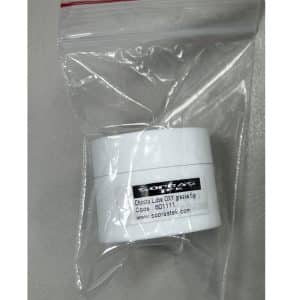
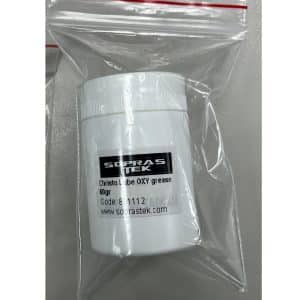
Christo-Lube OXY is the specified lubricant for all Sopras regulator O-rings and moving components. It is a perfluorocarbon (PFPE) grease rated for use in oxygen-enriched atmospheres — critical for regulators used with enriched air nitrox (EAN) or pure oxygen, where hydrocarbon-based lubricants present an ignition hazard under elevated O₂ partial pressure. Available in 5 gr (field/travel quantity) and 60 gr (workshop quantity).
Pressure Testing and Adjustment
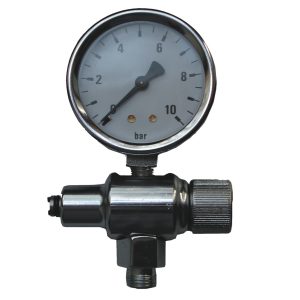
Correct intermediate pressure (IP) is the single most important measurable parameter in regulator service. The intermediate pressure gauge connects to an LP port on the first stage and reads IP directly at rest and under simulated breathing load — a properly functioning first stage should deliver a stable, consistent IP with no creep. The middle pressure gauge (for regulating 2nd stage) connects in-line between the first and second stage to verify the IP the second stage actually receives, and is used during second stage cracking effort adjustment. The special instruments for regulators package covers the full test and adjustment setup for Sopras first and second stages. The 2nd stage cover remover is a dedicated tool for removing the second stage cover without marking or distorting the soft exhaust diaphragm housing.
What to Look For
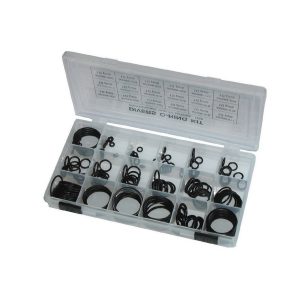
- O-ring kit specificity: The Set of O rings is available in variants covering different first stage and second stage models — confirm the kit matches the specific Sopras regulator being serviced. A service O-ring kit should include all O-rings that are replaced at a standard service interval, not just a random assortment of common sizes.
- Christo-Lube OXY vs. standard silicone grease: Standard silicone grease is not suitable for oxygen-service equipment. For any regulator used with nitrox above 21% O₂, only oxygen-compatible lubricants rated for the relevant partial pressure may be used. Even for air-only use, Christo-Lube OXY is the recommended lubricant — using the correct grease from the start avoids contamination complications if the diver later switches to nitrox.
- IP gauge accuracy and pressure range: The intermediate pressure gauge must be calibrated for the IP range (typically 0–20 bar gauge pressure). Confirm the gauge is accurate and has been calibrated — an inaccurate IP gauge is worse than no gauge, as it may mislead the technician into accepting an out-of-specification IP setting.
- Adjustment tool compatibility: The hexagonal and flat REG ADJUST TOOLS are designed for Sopras regulator architectures. If servicing multiple regulator brands, confirm which tools are required for each model to avoid damaging soft internal components with mismatched tools.
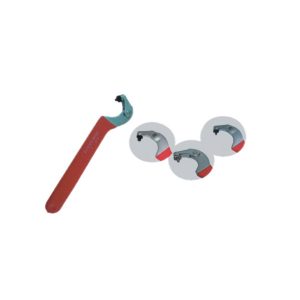
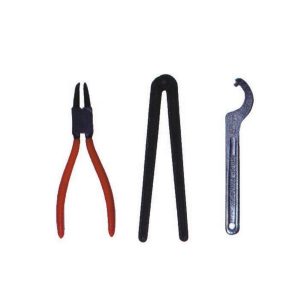
- Spanner wrench application: The spanner wrench is used for removing and installing retaining rings and covers on first stage bodies — tasks that require controlled torque to avoid overtightening or stripping threads. Confirm the spanner pin diameter and span match the retaining ring on the specific first stage model.
Maintenance and Care
Service tools should be kept clean, dry, and free of contamination from non-oxygen-compatible lubricants. Dedicated tools for oxygen-service regulators should be segregated from general workshop tools and labelled clearly. Store Christo-Lube OXY with the cap tightly sealed — exposure to air degrades the grease over time. The 5 gr tube is designed for single or limited-use field applications; the 60 gr pot is more economical for regular workshop servicing of multiple regulators. Pressure gauges should be stored with the port capped to prevent dust and moisture ingress. After use, purge any residual pressure from the gauge by opening the port briefly before storage. O-ring sets should be kept in a sealed container away from UV and ozone sources, which degrade silicone and EPDM O-rings in storage.
FAQ
Can I service my own regulator, or should I use a professional technician?
First and second stage regulator servicing involves disassembly of pressure-critical components, O-ring replacement, reassembly to specified torques, and pressure testing with calibrated gauges. It requires training, the correct tools, and familiarity with the specific model’s service manual. Divers who have completed a manufacturer-approved service technician course can perform their own servicing with appropriate tools. For most recreational divers, factory-authorised service by a qualified technician ensures correct IP setting, proper O-ring lubrication, and documented service history — which is important for warranty claims and equipment accountability.
Why is Christo-Lube OXY required for nitrox regulators?
At oxygen partial pressures above approximately 0.5 bar (achieved by breathing 40% EAN at just 25 metres, or any enriched air at greater depths), many hydrocarbon-based lubricants can ignite or support combustion in the presence of compressed oxygen. Christo-Lube OXY is a perfluorocarbon ester grease that is chemically inert in oxygen environments at the pressures encountered in scuba. It is specified by Sopras and most regulator manufacturers for all oxygen-service regulators. Even for air use, it is the standard lubricant — using an inappropriate grease in a regulator later used with nitrox creates a contamination problem that requires full disassembly and cleaning before the regulator can be used safely.
What is intermediate pressure and why does it need to be checked?
Intermediate pressure (IP) is the pressure between the first and second stage — the output pressure of the first stage. It is typically set to 8–10 bar above ambient (so at the surface, approximately 8–10 bar absolute). If IP is too low, the second stage breathes hard; if too high, it tends to free-flow. IP can drift over time as the first stage seat wears, the spring fatigues, or the environmental diaphragm deforms. An IP gauge check is the primary quantitative verification step in any regulator service — without it, a service is incomplete regardless of how many O-rings were replaced.
How do I use the O-ring tools?
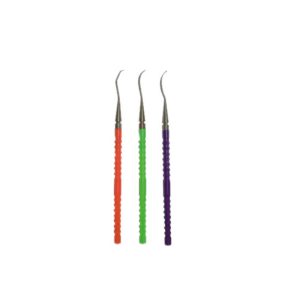
The set of tools for O-rings includes picks and insertion tools designed to remove and install O-rings without cutting or scoring the O-ring groove walls. Metal picks — even blunt ones — can score soft brass or aluminium O-ring seats, causing the seat to leak even with a new O-ring installed. Use only purpose-made O-ring tools: an O-ring pick with a nylon or plastic tip for removal, and the insertion tool to press new O-rings into grooves evenly without rolling or distortion. Inspect each O-ring groove for scratches or contamination before fitting new O-rings.
What is included in the Scuba service tool kit?
The Scuba service tool kit consolidates the core tools needed for first and second stage regulator servicing — adjustment tools, O-ring tools, and related hardware — in a single case. It is designed for technicians servicing Sopras regulators and covers the tool requirements for the main service procedures on the Genius, Jupiter, and Venus range. The kit is suited both for a fixed workshop setup and for mobile or travel servicing of regulators in the field. Confirm the kit contents against the specific service manual requirements for the regulator models being worked on.