

Showing all 9 results
A snorkel allows a diver to breathe at the surface without lifting the face from the water, conserving energy between dive cycles and during surface swims to and from the entry point. The range here covers basic open-tube models for recreational snorkeling and scuba, flexible-tube semi-dry designs, and dry-top snorkels with float valve splash guards — nine models to suit different preferences and water conditions.
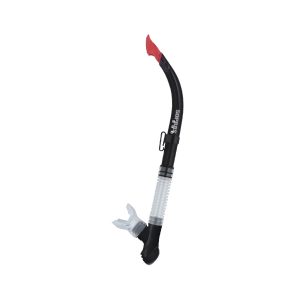
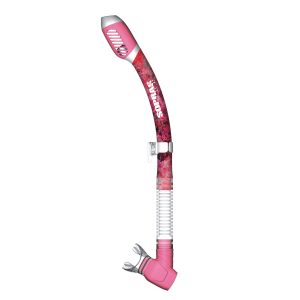

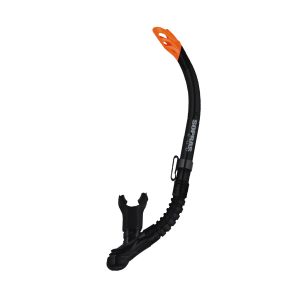
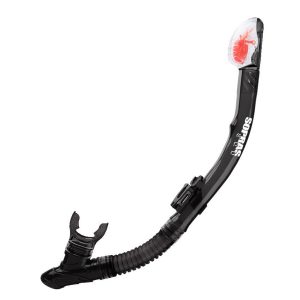
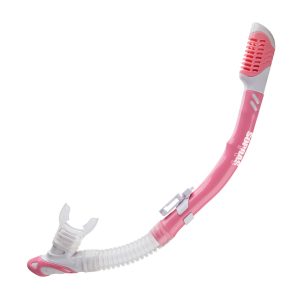
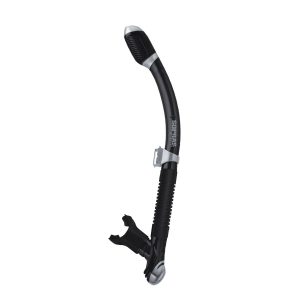
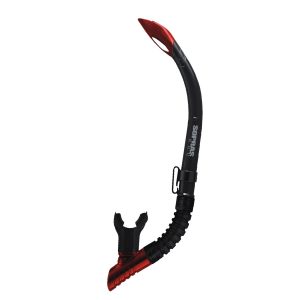
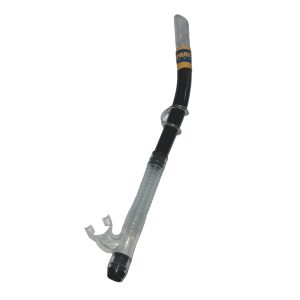
Snorkel Types: Open Tube, Semi-Dry, and Dry
Snorkels divide into three functional categories based on how they handle water ingress. An open-tube snorkel is a simple J-shaped tube with a mouthpiece and no splash-guard mechanism — any wave that breaks over the top of the tube, or any submersion during a dive entry, fills the tube completely with water. Clearing requires a sharp, forceful exhale that drives the water out through the top. Models like the Vesuvio, Tornado, and Morbido fall into this category. They are simple, light, inexpensive, and have no mechanism to fail — preferred by many experienced divers precisely because there is nothing to go wrong.
A semi-dry snorkel adds a splash guard or deflector at the top of the tube that redirects wave spray away from the tube opening without fully sealing it. The Mykonos, Santorini, Ciclone, and Shic are semi-dry designs. They reduce water entry in choppy conditions but do not prevent flooding during full submersion — they are not “dry” when you dive below the surface. Semi-dry models are the practical middle ground for most recreational divers: better surface performance than open tubes without the mechanism complexity of dry-top designs.
A dry snorkel uses a float valve at the top of the tube that rises to seal the opening when submerged, preventing water entry entirely. The Luminoso dry snorkel uses this mechanism. Dry snorkels are most useful for pure snorkeling where you spend most time on the surface and only occasionally duck-dive — the float valve means you resurface into a clear tube without needing to clear it. For scuba divers who will be descending repeatedly, dry snorkels offer less advantage because the float valve can pop against your head under pressure at depth and because many divers remove the snorkel entirely below the surface. The Gentile has a flexible tube section that allows the snorkel to fold flat against the mask strap when submerged, reducing drag and the risk of the snorkel dislodging on descent.
Mouthpiece Comfort and Bore Diameter
The mouthpiece is the most direct point of contact between the diver and the snorkel and the most consequential factor for comfort over extended use. All models here use silicone mouthpieces rather than harder PVC variants — silicone is softer, molds more closely to the individual jaw shape, and remains comfortable for 30–45 minutes of surface swimming without the jaw fatigue that harder materials cause. If the standard mouthpiece geometry doesn’t fit comfortably, the Mouthpiece anatomic in the ABC Accessories subcategory is available in multiple sizes.
Internal bore diameter affects breathing resistance. Standard recreational snorkel bore is approximately 22–25 mm internal diameter — sufficient for normal breathing at the surface without effort. Narrower bores increase resistance, which is noticeable during rapid breathing after surfacing from a dive. Wider bores are slightly easier to breathe through but require a more forceful blow-clear to fully empty after submersion.
What to Look For
- Tube flexibility and mask strap integration. Semi-rigid or fully rigid tube snorkels hold their position relative to the mask strap but project further from the head and are more susceptible to being caught on equipment or lines. Flexible-tube designs like the Gentile fold away when not in use and create less drag during descent. For scuba divers who use the snorkel only at the surface, a flexible design that clips flat against the mask strap is more practical.
- Dry valve mechanism durability. If choosing the Luminoso dry snorkel, inspect the float valve chamber for debris after dives in sandy or particle-heavy water — sand in the valve chamber can prevent the float from seating correctly and cause the valve to leak. Clean the valve chamber by submerging and shaking the snorkel several times in fresh water after each dive.
- Mouthpiece size fit. Mouthpieces that are too large cause excessive jaw opening angle, which fatigues the jaw muscles. Mouthpieces that are too small don’t seat properly and require the diver to clench to maintain the seal. Test the mouthpiece fit by biting gently — it should seat naturally with the jaws at a comfortable angle and the lips sealing around the tube without effort.
- Snorkel keeper or clip design. The snorkel keeper that attaches the snorkel to the mask strap should hold the snorkel securely without pinching or deforming the strap. Clip-style keepers are easier to reposition than sleeve-style; both are available in the ABC Accessories subcategory as replacement parts.
- Purge valve option. Some snorkel models include a one-way purge valve at the base of the mouthpiece that makes clearing easier — water can be expelled through the valve with a lighter exhale than is needed to blow clear through the top of the tube. The Ciclone includes this feature. For divers who struggle with standard blow-clear technique, a purge valve at the mouthpiece is a practical comfort addition.
Maintenance and Care
Rinse snorkels with fresh water after every salt water dive, running water through the interior of the tube as well as over the exterior. Salt that dries inside the tube creates abrasive deposits that accelerate mouthpiece degradation at the attachment point. For snorkels with purge valves at the mouthpiece, submerge the mouthpiece assembly and flex the purge valve several times under fresh water to flush salt from the valve seat. Dry snorkel models require particular attention to the float valve chamber — rinse with the snorkel inverted so the chamber fills with fresh water and drain by righting the snorkel again.
Inspect mouthpiece silicone annually for cracking, surface tackiness (indicating silicone degradation), or permanent deformation at the bite tabs. A cracked mouthpiece can develop a slow leak that is difficult to notice during a dive but causes progressive jaw fatigue as you unconsciously bite harder to maintain the seal. Replacement mouthpieces are available in the Accessories subcategory.
Store snorkels with the mouthpiece facing up or in a position where the mouthpiece is not compressed under other equipment. Permanent compression deformation of the silicone bite tabs causes them to lose their original angle, which changes the jaw position required for a comfortable seal. For clip-on mask strap snorkels, remove the snorkel from the mask strap before storing to prevent the clip from permanently indenting the strap material.
FAQ
Do scuba divers actually need a snorkel?
Many certification agencies require snorkels as part of the basic equipment list, and they are genuinely useful for specific situations — surface swimming to a dive site when the boat is anchored some distance away, waiting at the surface between dives without expending energy treading water, and navigating surface swims in areas where current makes head-up swimming difficult. Some experienced divers forgo snorkels entirely for simplicity, particularly in technical diving configurations where an extra item hanging from the mask strap is a snag hazard. For recreational divers completing a standard open water certification, carrying a snorkel is the practical choice.
Is a dry snorkel better than a standard open tube?
For surface snorkeling in choppy water, a dry snorkel is more comfortable because you don’t need to clear it after every wave passes over the top. For scuba diving, the advantage diminishes — you’ll be descending below the surface repeatedly, which submerges the dry valve and puts pressure on it, and many divers find the valve mechanism presses against their head at depth. Most experienced scuba divers prefer simple semi-dry or open tube designs for their scuba diving and keep a dry snorkel for dedicated snorkeling trips. Both are functional; the choice is preference and context.
How do I clear a flooded snorkel?
The displacement method: as you ascend and break the surface, tilt your head slightly back so the snorkel top is above the water line, then give a short sharp exhale through the tube. The air pressure from the exhale pushes water out through the top of the tube. The blast method achieves the same result with a single forceful exhale. If the tube is not fully clear after one clear attempt, inhale cautiously through the corner of your mouth rather than the snorkel until you can attempt a second clear. With practice, clearing a flooded snorkel takes less than one breath cycle.
Can I use a snorkel keeper to attach any snorkel to any mask?
Snorkel keepers work with most standard mask straps up to approximately 20–22 mm strap width. The Mask neoprene strap and standard mask straps in the Accessories subcategory are within this range. Very wide technical diving mask straps or custom harness-integrated mask retainers may not be compatible with standard clip-style keepers. In those cases, a sleeve-style keeper that routes through the strap rather than clipping to it is the alternative.
How long should a snorkel last?
With proper maintenance, a quality snorkel should last 4–6 years of regular use. The first component to fail is typically the mouthpiece, which shows cracking or surface degradation before the tube itself shows wear. Replacing the mouthpiece extends the functional life of the snorkel without replacing the entire unit — mouthpiece replacement is far less costly than a new snorkel. The tube body itself can last significantly longer if it’s not stored under compression or in direct UV exposure for extended periods.