

Showing all 6 results
BCD and dry suit inflator hoses are low-pressure hoses connecting the first stage LP port to the BCD corrugated inflator or dry suit inflation valve. They carry intermediate pressure — typically 8–10 bar above ambient — and terminate in a standard quick-disconnect fitting that mates with the inflator mechanism. The range here covers six variants: rubber, smooth, NBR, and braided constructions across standard BCD jacket and dry suit applications, giving divers a direct replacement or upgrade option for every configuration.
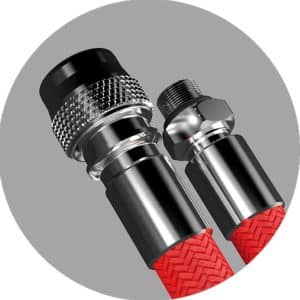
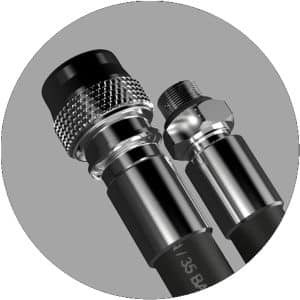
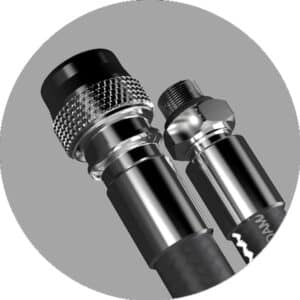
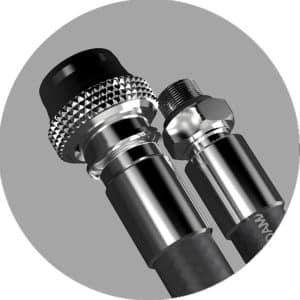
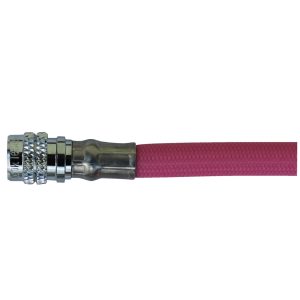
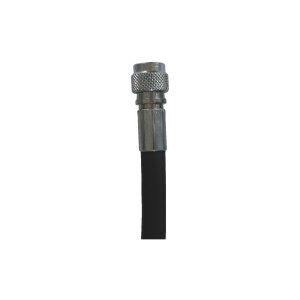
Inflator Hoses in BCD and Dry Suit Systems
The inflator hose routes from the first stage LP port — typically on the left shoulder of the harness, pointing forward toward the BCD corrugated hose assembly — to the quick-disconnect female connector at the inflator mechanism. In a dry suit system, the same LP pressure source connects to a separate hose routed to the suit’s inflation nipple, usually positioned on the chest or left forearm of the suit. The physical path of the hose determines the appropriate length: too short restricts movement and puts mechanical stress on the fitting joints; too long creates a dangling section that can snag.
The construction differences across the six models here affect durability, flexibility, and how the hose handles repeated connection and disconnection cycles. The BCD hoses CLASSIC NBR uses an NBR (nitrile butadiene rubber) formulation that resists ozone degradation and handles a wider temperature range than standard rubber — relevant for cold-water diving where inflator hoses are repeatedly handled with cold, wet gloves. The BCD hoses SMOOTH and DRY SUIT hoses SMOOTH use a polyurethane outer jacket that slides cleanly against harness webbing without gripping, reducing the friction-induced wear that shortens hose life in abrasion-prone routing positions. The BCD hoses Braided Tek and Hose for jacket braided provide maximum abrasion resistance with a textile or stainless braid outer layer — appropriate for technical configurations where the hose routes through a harness in contact with metal hardware. The Hose for jacket rubber black is the standard rubber construction suited to the majority of recreational jacket-style BCDs.
Length Selection and Routing
Standard BCD inflator hoses run 60–75 cm, which covers most jacket BCD configurations where the first stage sits at shoulder level on the right and the inflator assembly is at the left chest. Divers using a sidemount harness or a backplate-and-wing with a different D-ring geometry may need a longer routing — the Hose for jacket braided is available in extended lengths to accommodate these setups. Dry suit inflator lengths depend on where the inflation nipple is positioned on the suit; chest valves typically require a shorter hose than forearm valves. When replacing an inflator hose, measure the existing hose length and routing path before ordering rather than estimating from the regulator’s port position alone.
What to Look For
- Quick-disconnect fitting compatibility. BCD inflator hoses use a standardised female quick-disconnect fitting that mates with the male nipple on the BCD inflator corrugated hose. Virtually all recreational BCDs use the same standard. Dry suit inflation valves use a different fitting — confirm the correct termination before ordering a dry suit hose, as BCD and dry suit fittings are not always interchangeable.
- Construction material for water temperature. NBR and smooth polyurethane constructions maintain flexibility in cold water better than standard rubber. If the hose stiffens enough to make the quick-disconnect difficult to engage or release with gloves, it is the wrong material for the conditions being dived. Braided constructions also remain flexible in cold water and add the benefit of abrasion resistance.
- Fitting thread and first stage port specification. Inflator hoses connect to LP ports with a 3/8″ UNF thread in the majority of regulators. Verify the first stage port thread before installation — cross-threading an LP port is a common installation error that requires professional repair.
- Routing clearance on the harness. A braided or thick-walled hose requires more bend radius than a smooth or standard rubber hose. If the routing path on your harness requires a tight bend at the first stage connection point, a more flexible construction — extra-soft if available in this category, or smooth — is preferable over a stiffer braided option.
- Visual inspection at each use. Inflator hoses take repeated mechanical stress at both ends from connection cycles and from the hose being grabbed and pulled during buoyancy adjustments. Inspect the fitting base and the first 5 cm of hose at each end before every dive — this is where fatigue failure originates.
Maintenance and Care
After each salt dive, disconnect the inflator hose from the BCD corrugated assembly if practical, rinse both ends and the full hose length in fresh water, and allow to dry before reconnecting for storage. Salt accumulates inside the quick-disconnect fitting and at the thread recess of the first stage fitting — these areas should be flushed specifically rather than relying on a surface rinse. Do not store the BCD with the inflator hose connected under any residual pressure — this keeps the LP seat under tension and can cause the O-ring to deform over time. Store hoses in a loose configuration without tight bends at the fitting junction points, where wall stress concentrates during storage.
FAQ
Can I use a BCD hose on a dry suit?
BCD inflator hoses and dry suit inflation hoses use the same LP pressure source but have different termination fittings at the suit or BCD end. A BCD quick-disconnect female fitting does not mate with a dry suit inflation nipple in most cases. Dry suit inflation valves use a proprietary nipple design that varies by suit manufacturer. Use the correct hose for each application — the DRY SUIT hoses SMOOTH listed in this category are designed specifically for dry suit inflation connections.
How do I know if my inflator hose needs replacing?
Inspect the outer jacket for cracking, swelling, or delamination, and check the fitting bases for corrosion, play in the crimped section, or any sign of moisture. A hose that is stiff enough in cold water to make the quick-disconnect difficult to operate should be replaced with a more flexible construction. If the hose has been in service for more than five years with regular salt diving, replacement at the next regulator service is prudent regardless of apparent external condition.
What is the difference between the Classic NBR and Smooth constructions?
The Classic NBR uses a nitrile butadiene rubber outer jacket that resists ozone and UV degradation better than standard rubber and maintains flexibility across a wider temperature range. The Smooth construction uses a polyurethane or similar polymer outer layer that reduces friction against harness webbing, picks up less sediment, and gives a cleaner appearance. Both are improvements over standard rubber in different respects — NBR for longevity and cold-water flexibility, Smooth for routing ease and cleanliness. The correct choice depends on your primary diving conditions and how your harness routes the hose.
Do I need to use a torque wrench when installing an inflator hose?
A calibrated torque wrench is the correct tool for any regulator fitting installation. Most LP fitting torque specifications fall in the range of 4–8 Nm — enough to compress the sealing O-ring without damaging the thread. Hand-tight plus a defined number of turns is an acceptable field approximation when a torque wrench is not available, but the fitting should be checked by a qualified technician at the next service interval. Over-torquing LP fittings is a common installation error that damages the port thread.
Can I route a longer inflator hose to improve comfort in a technical configuration?
Yes. The Hose for jacket braided is available in extended lengths that accommodate non-standard routing paths on sidemount harnesses, backplate-and-wing systems, or configurations where the first stage is positioned differently from a conventional jacket BCD. When selecting a longer hose, route the intended path on the harness before ordering to confirm the required length — add 10–15 cm to the measured path to allow for the hose to flex without pulling under the compression of the fitting joints.