

Showing all 6 results
Octopus hoses are dedicated low-pressure hoses for backup second stages — the alternate air source carried by recreational and technical divers for out-of-air emergencies. They are functionally identical to primary regulator hoses in pressure rating and thread standard but are conventionally longer to allow easy donation to a distressed diver, and almost universally yellow for immediate identification. The six products here cover rubber, braided, Classic NBR, Smooth, and Braided Tek constructions at standard octopus lengths.
Octopus Hoses and Emergency Donation Protocol
An octopus — the backup second stage — functions as an emergency alternate air source. In a standard recreational out-of-air scenario, the donor passes the octopus second stage to the distressed diver; both divers then ascend sharing gas from the donor’s cylinder. The hose length for this application needs to be sufficient for the distressed diver to take the second stage and bring it to their mouth while face-to-face with the donor at close range. Standard octopus hose lengths are 80–100 cm, slightly longer than a primary regulator hose, to provide this clearance without creating an excessively long dangling hose during normal diving.
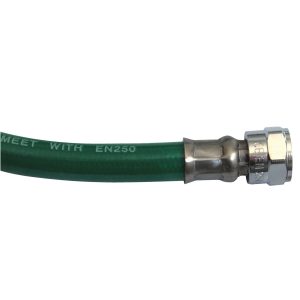
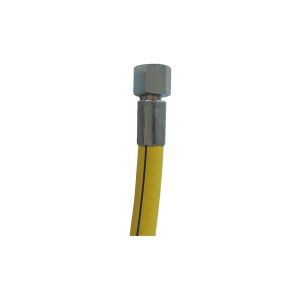
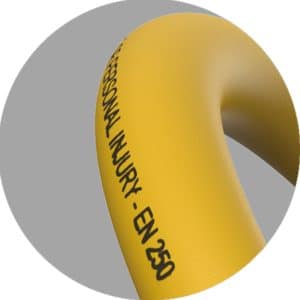
The conventional yellow colour for octopus hoses is not purely cosmetic. In a genuine emergency, the distressed diver may be panicking and moving erratically — a bright yellow hose and second stage housing allows identification and retrieval under stress without requiring the distressed diver to examine the equipment calmly. The Hose for octopus rubber yellow, OCTOPUS hoses CLASSIC NBR, and OCTOPUS hoses SMOOTH all use yellow outer jackets to maintain this convention. The Octopus hose braided, OCTOPUS hoses Braided Tek, and Extra strong octopus hose are available in standard yellow or other colourways depending on the specific variant.
Construction Differences Across the Range
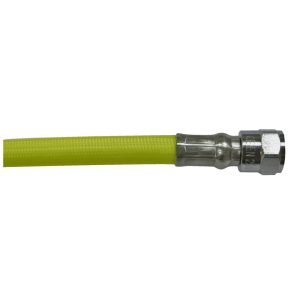
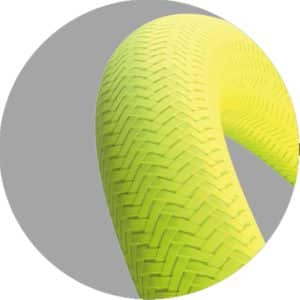
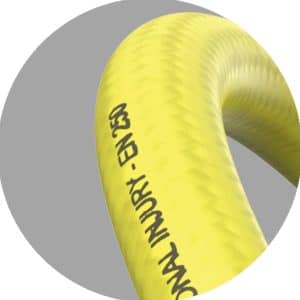
The Hose for octopus rubber yellow is the standard rubber construction and the default replacement choice for the majority of recreational setups — durable, flexible in temperate to tropical water, and available in multiple lengths. The Extra strong octopus hose uses an enhanced wall construction for additional burst resistance, suited to technical diving where the second stage may be routed in a configuration that puts more mechanical stress on the hose. The Octopus hose braided and OCTOPUS hoses Braided Tek add stainless textile braid outer layers for maximum abrasion resistance in technical harness configurations. The OCTOPUS hoses CLASSIC NBR provides improved ozone and cold-water flexibility in the NBR rubber compound. The REGULATOR hoses SMOOTH listed in this category is the smooth polyurethane outer jacket version in yellow, reducing friction against harness webbing on the octopus routing path — typically clipped to the chest or lower right BCD in recreational configurations.
What to Look For
- Yellow colour for emergency identification. An octopus hose in a non-standard colour reduces the immediate identifiability of the alternate air source. Unless the backup second stage is stored in a specific easily-identified location with a consistent retrieval protocol known to both divers, a yellow hose on the octopus second stage is the safest default. This is a safety convention with a specific functional justification, not an aesthetic preference.
- Hose length matched to your BCD storage position. If the octopus is stored in a low-drag clip position on the lower right chest — the conventional recreational position — the hose routes from the right LP port down to chest level, requiring approximately 80–100 cm. If stored in a different position or on a technical harness with a different geometry, measure the intended routing path before selecting length.
- Construction material for cold water. In cold water, a stiff octopus hose makes donation more difficult because the hose will not extend smoothly to reach the distressed diver. NBR and smooth constructions maintain flexibility at lower temperatures than standard rubber. For cold-water diving where glove dexterity is already compromised, a more flexible hose construction reduces the physical effort required during a donation.
- Secure low-drag storage on the BCD. An octopus hose that dangles freely is both an entanglement risk and a snag hazard. The hose length should match the storage position closely — a hose significantly longer than the storage path will create a loop that must be managed. Use a clip or holder designed to hold the second stage securely but allow immediate single-hand retrieval.
- Fitting thread compatibility. Octopus hoses use 3/8″ UNF LP fittings at both ends, standard for the vast majority of regulators. Verify thread compatibility if installing on a non-standard or older regulator model.
Maintenance and Care
The octopus second stage and hose must be treated as primary safety equipment — it is used infrequently in normal diving, which means problems that develop between uses may go unnoticed until the equipment is needed in an emergency. Rinse the octopus hose and second stage in fresh water after every dive regardless of whether the octopus was used during the dive. Actuate the purge button during the rinse to flush salt from the internal passage. Allow the second stage to dry with the mouthpiece up so water drains from the second stage body before storage. At annual regulator service, the octopus second stage must be serviced to the same standard as the primary — an octopus that has been ignored for several seasons while the primary was serviced regularly is an unreliable emergency device. Inspect the hose jacket and fitting bases at the same time.
FAQ
Why is an octopus hose yellow?
Yellow is the internationally recognised colour convention for backup second stages in recreational diving. The convention exists so that a distressed out-of-air diver — who may be panicking and unable to assess equipment calmly — can immediately identify the alternate air source on a donor’s BCD by colour rather than needing to distinguish between multiple black hoses and second stages. The yellow colour applies to both the hose and the second stage housing itself in a standard recreational octopus setup. Some technical diving configurations use different identification systems, but yellow remains the standard for recreational buddy diving.
How long should an octopus hose be?
The standard octopus hose length for recreational diving is 80–100 cm. This is slightly longer than a primary regulator hose to ensure the second stage can reach a distressed diver’s mouth when both divers are face-to-face at close range, with the octopus routed from the donor’s right LP port. A hose shorter than 80 cm may not reach the distressed diver without the donor needing to awkwardly position themselves. A hose significantly longer than 100 cm creates more dangling hose to manage during normal diving. Measure your specific configuration if in doubt.
Does an octopus second stage need to be serviced separately from the primary?
Yes. The octopus second stage is a functional breathing device that must be maintained to the same service standard as the primary second stage. Because it is used infrequently in normal recreational diving, internal components can corrode, seat materials can degrade, and O-rings can deform without producing any detectable symptom during casual inspection. An octopus that has not been serviced may free-flow, fail to deliver gas, or deliver gas at incorrect intermediate pressure in the moment it is actually needed. Annual service with the rest of the regulator system is the correct maintenance interval.
Can I use an octopus hose as a replacement for my primary regulator hose?
Octopus hoses and primary regulator hoses are interchangeable at the fitting level — both use 3/8″ UNF LP connections and carry the same intermediate pressure. The practical difference is length: an octopus hose is typically 80–100 cm while a standard primary hose is 70–75 cm. A longer hose on the primary second stage creates excess slack in the routing unless the configuration specifically calls for it. In an emergency replacement situation, an octopus hose can serve as a temporary primary hose until the correct length is sourced.
What is the Extra strong octopus hose designed for?
The Extra strong octopus hose uses an enhanced wall construction with higher burst resistance than the standard rubber version. It is designed for technical diving configurations where the second stage is routed in a position that puts more mechanical stress on the hose — for example, in a sidemount configuration where the hose routes closely around the body and equipment, or in a technical backmount setup where the octopus is clipped under tension rather than in a low-drag chest position. For standard recreational diving with a conventionally clipped octopus, the standard rubber construction is adequate.
“`
—
### 3. Meta title
“`
Octopus Hoses – Yellow, Braided & NBR Constructions
“`
—
### 4. Meta description
“`
Backup second stage hoses in rubber, NBR, smooth and braided Tek. Yellow convention for emergency identification. Multiple lengths. Order now.