

Showing all 8 results
Open-heel fins with an adjustable strap are the standard fin configuration for scuba diving in temperate and cold water. The heel strap accommodates neoprene dive boots of varying thickness, and the adjustable buckle system allows a secure fit across different foot sizes. This category ranges from lightweight recreational fins for pool and warm-water diving to stiffer, high-thrust blades for current and technical diving applications.
For more fins please check SoprasTek.
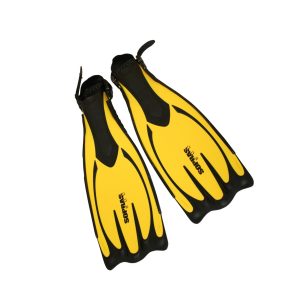
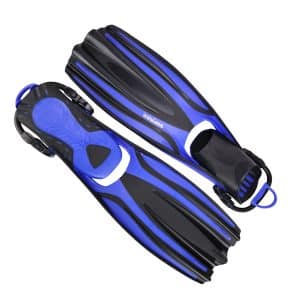
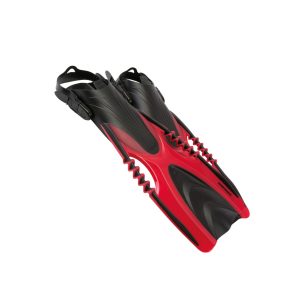
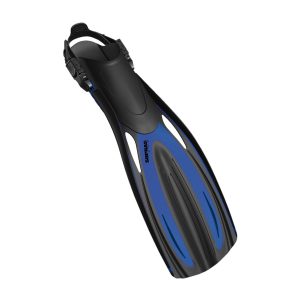
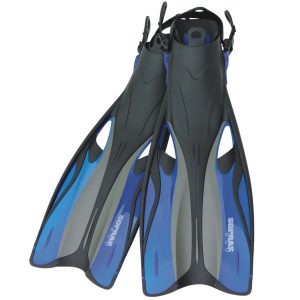
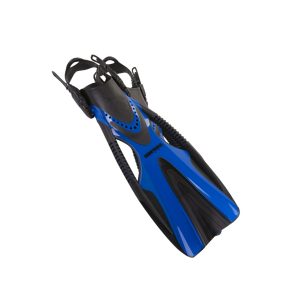
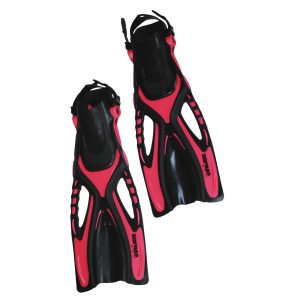
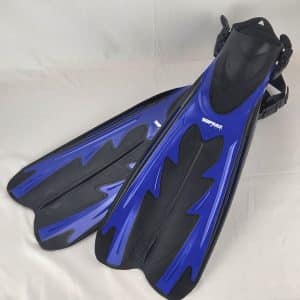
Open-Heel Fin Construction and Dive Boot Compatibility
An open-heel fin consists of three main components: the foot pocket, which holds the boot securely; the blade, which generates thrust; and the heel strap, which retains the fin on the foot. The foot pocket material is typically softer rubber or thermoplastic elastomer (TPE) that conforms to the boot shape under load; the blade is a stiffer composite or plastic that stores and releases energy during the kick cycle. The heel strap is usually adjustable via a cam buckle or spring-loaded buckle that can be operated single-handed with a gloved hand — an important feature when donning fins from a dive boat in moving water.
Fin performance across the range here varies primarily in blade stiffness and blade length. The JUMP and SHIC are shorter, softer blades designed for entry-level recreational use, pool training, and travel — their reduced blade area and soft flex require less muscular effort but generate proportionally less thrust. The Nemo is a mid-length, medium-stiffness all-rounder suited to reef and wreck recreational diving. The NAUTILUS and EXCEED are longer-bladed with more substantial blade areas, providing greater thrust efficiency for divers covering ground on a single breath or diving in mild current. The POWER and Forza cinque are the stiffest, highest-thrust options in this category — five-blade composite construction on the Forza cinque provides high energy transfer and is suited to divers with strong leg muscles diving in demanding conditions. The Veloce with adjustable strap is a versatile open-heel fin with an adjustable strap system that fits a wide range of boot sizes.
Blade Geometry and Kick Efficiency
Fin blade geometry determines not just raw thrust but how different kick styles interact with the blade. Standard paddle blade designs like the NAUTILUS and POWER generate thrust through both the down-stroke and up-stroke of the flutter kick, which is the kick style used in most recreational scuba diving. Split-blade and channel-blade designs (not in this range) are optimized for specific technical kick styles. The rule of thumb for recreational divers: match blade stiffness to your diving environment and fitness level, not to the stiffest blade available.
A stiffer blade that you cannot drive through its full flex range per kick cycle generates less effective thrust than a softer blade you can cycle efficiently — muscle fatigue from overly stiff fins reduces overall kick frequency and duration more than the blade stiffness gains from each individual stroke. For most recreational divers doing 45–60 minute dives with moderate activity, a medium-stiffness blade like the NAUTILUS or EXCEED is more efficient over the full dive than a high-stiffness option like the POWER.
What to Look For
- Foot pocket fit over your specific boots. Always size open-heel fins while wearing the neoprene boots you’ll dive in — sizing over bare feet almost always results in a loose fit over boots, which wastes kick energy and can cause blisters at the boot heel. The foot pocket should grip the boot firmly across the width without pinching the sides, and the heel strap should lock the boot heel flat against the fin foot pocket floor.
- Heel strap buckle single-hand operation. You’ll be donning and removing fins in the water, often one-handed while holding a line or the boat. The heel strap release should be operable with one gloved hand from behind the fin. Spring-lever buckles are easier single-handed than traditional cam buckles that require squeezing and pulling simultaneously.
- Blade length versus travel practicality. Longer blades pack less conveniently and add bag weight. If you travel frequently to warm-water destinations where current is mild, a shorter blade like the Nemo or JUMP is a practical compromise. If you dive regularly in local cold water with current, the POWER or EXCEED’s performance advantage justifies the transport inconvenience.
- Foot pocket comfort at the ankle and heel. The heel strap pressure point at the Achilles tendon is a common blister location when fin foot pockets don’t fit correctly. Check that the heel strap contact area is padded or that the strap width distributes pressure evenly — a narrow strap on a stiff boot creates a concentrated pressure point that becomes painful after 30 minutes.
- Blade material durability for your diving conditions. Hard plastic blades are more durable against impact damage (rocks, boat hulls, equipment) but are less forgiving in cold water where some plastics stiffen significantly below 10°C. Rubber-composite blades maintain consistent stiffness across a wider temperature range — relevant if you dive in cold water where a blade that’s supple at 20°C on land may be significantly stiffer at 8°C underwater.
Maintenance and Care
Rinse open-heel fins with fresh water after every salt water dive, directing water into the foot pocket interior and running it through the heel strap buckle mechanism while actuating the release several times. Salt that dries in heel strap buckles can cause the release mechanism to stick under load — a jammed heel strap release makes fin removal at the surface significantly slower and more difficult. Store fins flat or hanging by the strap tip rather than standing on the blade tip, which can cause a permanent curl at the tip over time.
Inspect the heel strap for cracking, fraying at the buckle attachment points, or loss of elasticity annually. Rubber heel straps that have been repeatedly dried in direct sunlight lose elasticity significantly faster than those stored in shade. A stretched or cracked heel strap that fails during a dive leaves the fin loose on the boot, wasting kick energy and risking fin loss in current. Replacement heel straps are a standard spare part available from dive equipment suppliers.
The foot pocket interior should be rinsed and dried completely after each use to prevent mold growth and odor. Wet neoprene boots left in fin foot pockets between uses trap moisture in the pocket interior — remove boots from fins after every dive. Periodically inspect the foot pocket interior for delamination or tears at the toe area, which is the highest-stress point in the pocket and the most common location for foot pocket failure.
FAQ
What thickness of dive boots should I use with these fins?
Most open-heel fins in this range are sized to accommodate boots from 3–7 mm neoprene thickness in standard European shoe sizes. The foot pocket and strap adjustment range is the determining factor — a fin with a wide foot pocket and a strap adjustment range of 10+ cm can fit both thin summer boots and thick cold-water boots. When ordering for the first time, specify the boot thickness you’ll use most frequently and use the size guide for that specific model. If you dive in both warm and cold conditions with different boot thicknesses, fin sizing for the thicker boot and using a fin retainer band for thin-boot use is the practical approach.
What makes the Forza cinque different from the POWER fins?
The Forza cinque uses a five-channel composite blade construction that segments the blade into parallel channels, which allows the blade to flex in a more controlled, progressive way — each channel flexes independently, creating a more uniform load distribution across the blade width during the power stroke. The POWER uses a conventional solid paddle blade geometry. Both are high-thrust options; the Forza cinque’s blade architecture is better suited to divers with a deliberate, full-extension kick style, while the POWER performs more uniformly across different kick techniques.
Can I use open-heel fins without dive boots?
Technically yes, but open-heel fins are not designed for bare foot use and the experience is uncomfortable — the hard foot pocket edges cause abrasion at the heel and the sides of the foot without the cushioning of a neoprene boot. For barefoot or thin-sock diving in warm water, full-foot fins are the appropriate choice. The functional overlap between the two designs is minimal: open-heel fins are cold-water boot fins, full-foot fins are warm-water barefoot fins.
How often should I replace heel straps?
Inspect heel straps at the start of each dive season and replace them if you observe cracking in the rubber, visible fraying at the buckle attachment loops, or any loss of elasticity — a strap that doesn’t spring back to its full length when released has lost its retention capacity. In practice, rubber heel straps in regular use typically need replacement every 2–4 years, depending on UV exposure and frequency of use. Keeping a spare strap in your kit bag is a sensible precaution, since a strap failure is typically discovered at a dive site rather than at home.
What fin should a beginner choose from this range?
For a beginner diver completing recreational certification, the JUMP or Nemo are appropriate starting points — both have soft-to-medium blade stiffness that doesn’t require strong leg muscles to use effectively, and both are in a length range that doesn’t make underwater maneuvering difficult while still learning. The NAUTILUS is a step up in blade area and performance for divers who progress past the initial certification and start doing longer, more active dives. Avoid the POWER and Forza cinque until your kick technique is established — their stiffness rewards proper full-extension kicks but creates fatigue and inefficiency with the shorter, less controlled kicks common in early-stage diving.